

26 African Countries Under Full or Partial U.S. Travel Ban (Post-December Update)
26 African Countries Under Full or Partial U.S. Travel Ban (Post-December Update) Following the December update to U.S.…
Read article →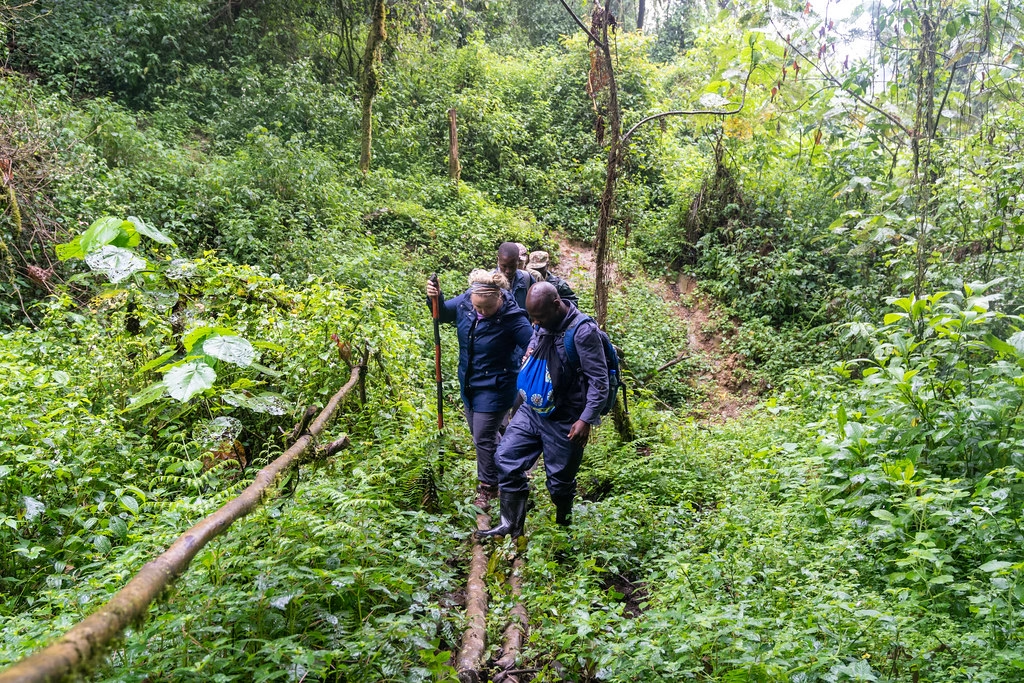
Travel Guide
Embark on a captivating hike from Buhoma to Nkuringo through Uganda's Bwindi Impenetrable Forest. Discover trail details, wildlife encounters, preparation tips, and cultural experiences in this comprehensive guide.
The Bwindi Forest hike Buhoma to Nkuringo provides a completely different way to experience Uganda’s famous gorilla landscape. Instead of entering the forest solely to locate a habituated gorilla family, hikers travel through the wider environment and gain a stronger appreciation of the vegetation, terrain, sounds and smaller wildlife that make Bwindi such an extraordinary ecosystem.
Buhoma and Nkuringo are important tourism areas around Bwindi Impenetrable National Park.
Travel between them by road can involve a substantial journey because of the terrain surrounding the forest. A properly arranged hiking experience can instead turn the connection between the two areas into an adventure of its own.
This is not a casual urban walk. Preparation, official arrangements and experienced guiding are essential.
Most international visitors know Bwindi because of mountain gorillas.
Gorilla trekking deserves its reputation, but the forest is much larger than the small area experienced during one gorilla encounter.
A through-hike allows visitors to concentrate on the forest itself.
Without the pressure of locating a gorilla family, hikers can notice vegetation, bird calls, insects, streams and changing terrain.
The slower perspective creates a deeper understanding of why Bwindi is worth protecting.
Buhoma is one of Bwindi’s established tourism sectors.
It has accommodation options and access to several forest-related activities.
For travelers already staying in Buhoma, beginning a hike toward Nkuringo can create a logical continuation of the itinerary.
The exact route and arrangements should be confirmed through the relevant authorized guides and park systems rather than attempted independently.
Bwindi is a protected forest, not an unrestricted public footpath.
Nkuringo lies within Bwindi’s southern tourism region.
The wider landscape is known for steep hills and dramatic views.
Reaching the area after hiking through the forest creates a strong sense of progression.
Travelers should ensure that luggage transfer and accommodation arrangements are organized beforehand so that only necessary day-hiking equipment needs to be carried.
The word “Impenetrable” gives travelers an indication of Bwindi’s character.
Vegetation can be dense, and the landscape includes slopes, roots and potentially muddy sections.
The actual difficulty experienced on a particular hike depends on route conditions, weather and individual fitness.
Travelers should not underestimate the physical demands simply because the activity does not involve climbing a high mountain summit.
Bwindi is a rainforest environment.
Rain can occur even during periods generally considered relatively dry.
A lightweight waterproof jacket should remain easily accessible rather than buried at the bottom of a bag.
Camera equipment and phones should also be protected.
After rainfall, trails may become slippery, increasing the importance of appropriate footwear.
Strong hiking boots or shoes with good grip are essential.
Footwear should be tested before the trip.
New boots can create painful blisters during a long forest walk.
Long socks can provide additional comfort and protection.
Gaiters may also be useful in muddy conditions.
The objective is to remain comfortable enough to enjoy the forest instead of thinking about sore feet throughout the hike.
Long trousers and long sleeves are practical.
They provide protection from vegetation and insects.
Lightweight layers work well because hikers can become warm during climbs but cool quickly during stops or rain.
Bright fashion is unnecessary.
Choose durable clothing that can tolerate mud and contact with vegetation.
Hiking through Bwindi requires sufficient drinking water.
The amount depends on the route, weather and individual needs.
Food arrangements should also be confirmed beforehand.
Packed meals or snacks may be appropriate depending on the itinerary.
Do not leave food packaging in the forest.
Everything carried in should be removed again unless guides specifically manage waste.
An experienced guide is central to the Bwindi Forest hike Buhoma to Nkuringo.
Guides understand the route and can interpret the forest.
They may identify bird calls, animal signs and plants that visitors would otherwise overlook.
They also understand protected-area regulations.
Following guide instructions improves both safety and the quality of the experience.
Bwindi is an important birding environment.
Even travelers who are not dedicated birders should carry binoculars if possible.
Dense forest often means a bird is heard before it is seen.
A knowledgeable guide can identify calls and help locate movement within the canopy.
Stopping quietly can reveal far more than walking continuously.
Bwindi supports several primates and other forest animals.
Sightings during a hike should be considered a bonus rather than guaranteed.
Wildlife moves naturally and dense vegetation limits visibility.
The possibility of an unexpected encounter is part of the attraction.
Visitors should remain quiet and follow the guide whenever animals are observed.
A forest hike should not be treated as a substitute for an official gorilla trekking permit.
If travelers want the standard mountain gorilla experience, they should book the appropriate permit separately.
Gorilla tourism is strictly controlled to manage visitor numbers and reduce disturbance.
Hikers must follow guide instructions if they encounter wildlife unexpectedly.
Porter assistance can make a demanding hike considerably easier.
A porter can carry the daypack and help on difficult terrain.
This also creates local employment linked to conservation tourism.
Travelers should not wait until they are exhausted before appreciating the value of assistance.
Using a porter from the beginning can make the entire hike more comfortable.
One of the pleasures of walking through Bwindi is listening.
Bird calls, insects, moving leaves and flowing water create a soundscape completely different from a vehicle safari.
Periods of silence are worthwhile.
Talking continuously can cause hikers to miss subtle wildlife activity.
The forest often reveals itself most clearly when visitors slow down.
Forest photography can be technically challenging.
Light levels are lower beneath the canopy, while bright openings create strong contrast.
A camera capable of handling higher ISO settings is useful.
Photographers should carry equipment they can comfortably manage.
A huge collection of lenses becomes a burden during a long hike.
Weather protection is essential.
Travelers do not need to be elite athletes, but basic fitness improves the experience.
Regular walking, hills or stair climbing before the trip can help.
Anyone with significant health or mobility concerns should discuss the activity before booking.
It is better to select an appropriate route than to discover halfway through that the physical demands are unsuitable.
The Buhoma-to-Nkuringo experience works particularly well within a longer Bwindi itinerary.
A traveler might trek gorillas in one sector and dedicate another day to experiencing the forest as a landscape.
This avoids reducing Bwindi to a single one-hour wildlife encounter.
The hike provides context for the habitat on which mountain gorillas depend.
The wider areas around Bwindi include communities whose livelihoods are closely connected with tourism and the forest landscape.
Where organized cultural or community activities are available, they can complement the hike.
Visits should be conducted respectfully.
Ask before photographing individuals and support genuine local enterprises where appropriate.
Travelers moving from a Buhoma lodge to accommodation around Nkuringo should arrange luggage transportation separately.
Carrying a full safari suitcase through the forest is unnecessary.
A daypack should contain only essentials.
The main luggage can travel by vehicle according to arrangements made by the operator.
Confirm this before the hiking day rather than assuming it happens automatically.
The Bwindi Forest hike Buhoma to Nkuringo reveals a side of Bwindi that visitors focused exclusively on gorilla trekking may miss.
The forest becomes the main attraction rather than merely the background to a gorilla photograph.
Bird calls, vegetation, streams and changing terrain turn the journey between two tourism areas into an immersive nature experience.
For travelers comfortable with hiking, it can be one of the most rewarding ways to appreciate why Bwindi is described as an extraordinary forest.
The route reminds visitors that mountain gorillas are only one part of a much larger ecosystem whose conservation protects an exceptional diversity of life.

26 African Countries Under Full or Partial U.S. Travel Ban (Post-December Update) Following the December update to U.S.…
Read article →
3 Days Congo Gorilla Safari – Encounter the Gentle Giants of Virunga A 3 Days Congo Gorilla Safari…
Read article →
Children and Kids on Safari – Family-Friendly Adventures in Africa Taking children on an African safari is one…
Read article →
How to Plan a Safari in Uganda—Your Complete Travel Guide Planning a safari in Uganda is the start…
Read article →