
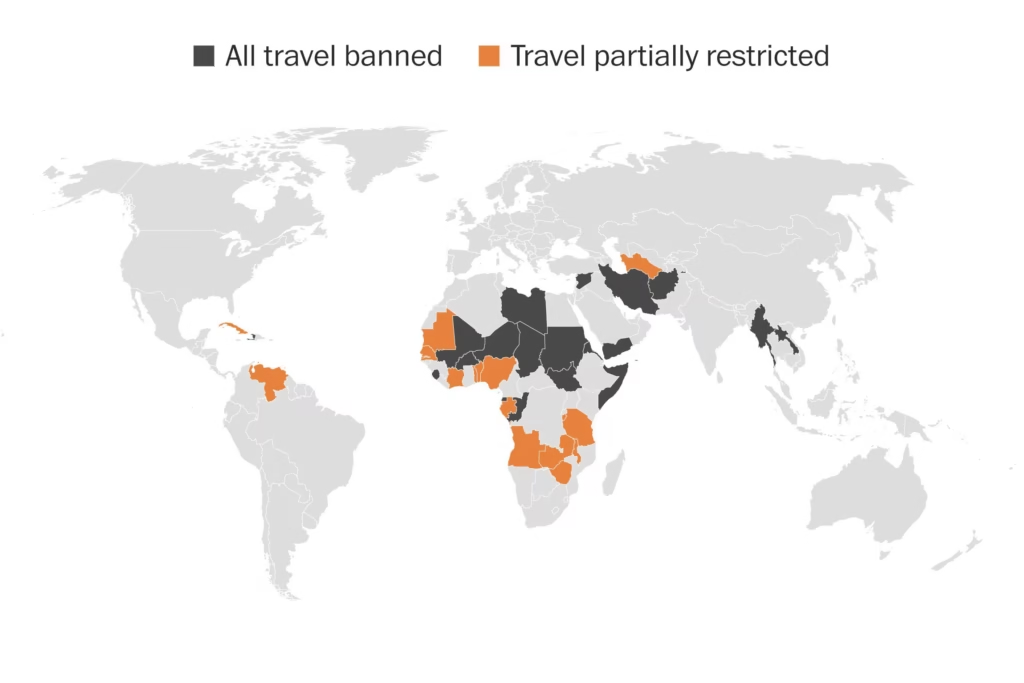
26 African Countries Under Full or Partial U.S. Travel Ban (Post-December Update)
26 African Countries Under Full or Partial U.S. Travel Ban (Post-December Update) Following the December update to U.S.…
Read article →
Travel Guide
Discover Busitema Forest Reserve, a peaceful and biodiverse woodland in Eastern Uganda. Learn about its wildlife, location, and ecotourism potential.
Busitema Forest Reserve is a lesser-known woodland destination in eastern Uganda where travelers can experience native vegetation, birdlife, small wildlife, environmental research, and connections with surrounding communities. Located along the Jinja-Tororo highway, the forest is easily passed by travelers heading toward Busia and the Kenyan border, yet the supplied source presents it as an ecologically valuable landscape worth greater attention.
Unlike Uganda’s major national parks, Busitema is not described as a conventional safari destination filled with large mammals and extensive tourism infrastructure.
Its appeal is quieter.
Visitors can take nature walks, watch birds, learn about forest ecology, explore plant life, and potentially engage with university-supported conservation and research activities.
The reserve therefore suits travelers interested in low-impact, educational, and sustainable tourism.
According to the supplied source, Busitema Forest Reserve stretches along the highway in Busia District in eastern Uganda.
The source describes the forest as covering approximately 25 square kilometers.
Its location near major road connections makes it relatively accessible compared with remote wilderness areas.
Travelers moving between Jinja, Tororo, Busia, and the Kenyan border can potentially include the forest within a broader eastern Uganda journey.
One of the most important features highlighted by the source is the forest’s proximity to Busitema University.
The supplied material describes university involvement in research and conservation.
This creates an educational dimension that distinguishes the reserve from many tourism destinations.
Students and researchers can use the forest as a practical environment for studying natural-resource management and related subjects.
The forest’s position between Tororo and Busia makes it convenient for travelers following the eastern corridor.
Rather than requiring a major detour, a visit can potentially be incorporated into a road itinerary.
This makes Busitema particularly interesting for travelers who enjoy discovering smaller destinations between better-known attractions.
Expectations are important.
The source explicitly notes that Busitema is not a major tourism hub.
Visitors should therefore not arrive expecting the same infrastructure or wildlife concentrations associated with Uganda’s national parks.
The attraction lies in woodland ecology, birdlife, plants, research, community connections, and quiet exploration.
The supplied source describes Busitema Forest Reserve as supporting a wide range of plant species.
It mentions both indigenous and foreign trees.
This vegetation provides habitat for smaller mammals, primates, reptiles, and numerous birds.
Forest biodiversity often operates at a smaller visual scale than savannah wildlife viewing.
Visitors need to slow down and pay attention to sounds, movement, leaves, insects, and the forest canopy.
Native tree species contribute to the ecological character of the forest.
Trees provide shade, habitat, food sources, nesting sites, and protection for many organisms.
They also influence soil and water conditions.
A guided ecology walk can help visitors understand these relationships rather than viewing the forest simply as a collection of trees.
The supplied source also refers to foreign tree species within the reserve.
This provides opportunities to discuss how different plants became established and how forest management responds to changing vegetation.
Visitors interested in botany may find this aspect particularly useful.
Small mammals are among the wildlife groups identified in the source.
These animals may be much harder to observe than elephants or giraffes in an open national park.
Tracks, sounds, feeding signs, or brief sightings may provide evidence of their presence.
A knowledgeable guide can help visitors notice clues that would otherwise be missed.
The source also mentions primates.
Forest environments provide food and shelter for tree-dwelling animals.
Visitors should look into the canopy as well as along the trail.
Binoculars can improve observation, especially where vegetation is dense.
As with all wild animals, primates should never be fed.
Reptiles form another component of the reserve’s biodiversity according to the supplied material.
They can be difficult to notice because many species rely on camouflage.
Walking slowly and following a guide increases the chance of observing smaller wildlife safely.
Visitors should never attempt to handle wild reptiles.
Birdwatching is one of the strongest tourism possibilities described by the source.
The forest provides habitat for many species and is presented as having potential for dedicated birding experiences.
The supplied material specifically mentions the African grey parrot, hornbills, and turacos.
These examples illustrate the variety of birds visitors may seek within woodland habitats.
The African grey parrot is one of the birds named in the source.
Birdwatchers hoping to find particular species should remain patient.
Forest birds can be easier to hear than see.
Learning calls or traveling with an experienced guide can significantly improve the quality of a birding walk.
Hornbills are another group highlighted in the supplied material.
Their calls, flight patterns, and distinctive bills can make them memorable forest birds.
Visitors should look toward larger trees where suitable habitat occurs.
Binoculars are particularly useful for canopy observation.
Turacos are also mentioned.
Their presence adds to the forest’s potential appeal for birding enthusiasts.
Bright plumage does not necessarily make forest birds easy to locate because dense leaves can conceal them.
Listening carefully and moving quietly can be more productive than walking quickly through the trail.
Busitema’s value extends beyond the wildlife that visitors can see.
The supplied source identifies soil conservation, microclimate regulation, carbon storage, and water catchment protection among its ecological roles.
These functions demonstrate why even relatively small forest reserves can matter significantly to surrounding landscapes.
Tree roots and forest vegetation help stabilize soil.
Maintaining vegetation cover can reduce erosion and protect land from degradation.
This ecological service may not be as visually dramatic as a wildlife sighting, but it has practical importance for the wider region.
The source also describes the forest as contributing to microclimate regulation.
Woodland can influence shade, moisture, temperature, and local atmospheric conditions.
Visitors walking from an exposed road environment into a forest may physically notice some of these differences.
Busitema is described as functioning as a carbon sink.
Trees store carbon as they grow.
Protecting forest cover therefore has relevance within wider discussions about climate and land management.
The source connects this ecological role with the importance of conservation.
The supplied material also highlights local water catchment functions.
Forests influence how rainfall reaches soil, moves through landscapes, and enters water systems.
Maintaining forest vegetation can therefore support environmental stability beyond the reserve’s visible boundaries.
The connection with Busitema University gives the forest an important educational role.
According to the source, students and researchers study subjects including forestry, climate change, and sustainable agriculture within the forest environment.
This turns the reserve into what the source describes as a living laboratory.
Forestry research can examine tree growth, species composition, forest management, restoration, and human use.
A real woodland environment allows students to apply classroom concepts directly.
For educational travelers, this makes Busitema different from an ordinary recreational forest.
The source also mentions climate-change studies.
Forests are closely connected with carbon storage, rainfall, temperature, and ecosystem resilience.
Studying these processes in the field helps researchers understand environmental changes at local scales.
Agriculture and forests interact in many parts of Uganda.
The supplied source refers to research in sustainable agriculture alongside forestry.
This is particularly relevant where communities depend on land surrounding protected or managed forest areas.
Balancing food production with conservation is an important long-term challenge.
For visitors, nature walks are one of the simplest ways to experience Busitema Forest Reserve.
Walking allows travelers to move slowly through woodland while observing plants, birds, insects, and signs of wildlife.
The objective is not to cover the greatest possible distance.
A slower pace usually reveals more.
The supplied source suggests forest ecology tours in collaboration with the university.
Such an experience could be particularly valuable for students, environmental professionals, and travelers interested in conservation.
Interpretation can explain why particular plants occur, how forest systems function, and what pressures the reserve faces.
Plant enthusiasts can focus on botanical exploration.
The source specifically mentions interest in traditional medicine and local flora.
A knowledgeable guide is important because visitors should not collect plants or assume that unfamiliar species are safe to touch or use.
The experience should focus on learning and observation.
The supplied material also identifies visits to nearby villages as a possible cultural activity.
Community interaction can help travelers understand how people living around the forest relate to local natural resources.
Such visits should be respectful and ideally organized through appropriate local channels.
Like many forest reserves, Busitema faces pressure.
The source identifies deforestation, illegal logging, and charcoal burning among the principal challenges.
These activities can reduce forest cover and damage habitat.
The conservation issue is complex because surrounding communities may also depend on natural resources for livelihoods.
Forest loss reduces habitat for wildlife and can weaken ecological functions such as soil protection and carbon storage.
Preventing deforestation therefore protects more than individual trees.
It maintains the network of ecological relationships supported by the woodland.
The source specifically identifies illegal logging as a threat.
Removing trees without appropriate management can alter forest structure and reduce mature habitat.
Long-term conservation requires both enforcement and practical alternatives for people who depend on forest resources.
Charcoal production is another pressure mentioned in the supplied material.
Demand for cooking fuel can contribute to woodland degradation when harvesting is unmanaged.
The source presents community-based management as part of the response to these challenges.
Conservation groups, Busitema University, and local authorities are described as participating in efforts to protect and restore the forest.
Cooperation is important because no single institution can address every pressure.
Research can identify problems, authorities can support management, and communities can play a direct role in sustainable resource use.
The supplied source emphasizes community-based forest management.
This approach recognizes that conservation works best when people living near the forest are involved.
Communities need practical reasons and opportunities to participate in maintaining natural resources.
Tourism can contribute by creating income connected with keeping the forest attractive and healthy.
Restoration is also identified as part of conservation work.
Damaged forest does not always recover immediately without support.
Replanting, protecting regenerating vegetation, and reducing continuing pressure can help degraded areas recover over time.
Educational programs can also demonstrate why restoration matters.
The source describes Busia as approximately 15 minutes away.
This makes the reserve potentially convenient for travelers staying in or passing through the border town.
Its proximity allows visitors to experience a natural area without committing to a long transfer.
The supplied material gives an approximate driving time of two and a half hours from Jinja.
This allows Busitema to fit within a broader eastern Uganda road journey.
Travelers should allow for actual road and traffic conditions when planning.
The forest is described as lying directly off the Jinja-Tororo highway and being connected by tarmac road.
This relatively straightforward access distinguishes it from remote reserves requiring extensive off-road travel.
It can therefore work as an educational stop within a longer journey toward eastern Uganda or Kenya.
The source describes Busitema as accessible throughout the year while highlighting December to February and June to August as particularly suitable dry periods for nature walks.
Drier trails can make walking more comfortable.
However, forest environments can experience changing weather at any time.
Visitors should carry suitable footwear and basic rain protection.
Because Busitema is not presented as a large standalone safari destination, combining it with other eastern Uganda experiences can create a stronger itinerary.
Travelers may pass through Jinja, Tororo, Busia, or continue toward Kenya.
The forest can add an ecological and educational component between other destinations.
One of the most interesting ideas in the supplied source is Busitema’s potential for low-impact tourism.
The reserve does not need to become a high-volume safari destination to provide value.
Small guided groups, birdwatchers, students, researchers, and nature enthusiasts can support conservation while placing relatively limited pressure on the environment.
The supplied source presents Busitema Forest Reserve as a quiet woodland of approximately 25 square kilometers along the Jinja-Tororo highway in eastern Uganda.
Its biodiversity includes varied plant life, birds, small mammals, primates, and reptiles. The forest also provides ecological services connected with soil protection, local climate, carbon storage, and water catchments.
Its relationship with Busitema University creates additional importance as a location for research in forestry, climate change, and sustainable agriculture.
Visitors can consider nature walks, birdwatching, forest ecology tours, botanical exploration, and community visits.
At the same time, the reserve faces pressures from deforestation, illegal logging, and charcoal production. Conservation partnerships and community-based forest management therefore remain central to its future.
For travelers who appreciate quieter destinations, Busitema offers something different from Uganda’s major national parks: an accessible opportunity to explore woodland ecology, education, conservation, and community connections within eastern Uganda.

26 African Countries Under Full or Partial U.S. Travel Ban (Post-December Update) Following the December update to U.S.…
Read article →
3 Days Congo Gorilla Safari – Encounter the Gentle Giants of Virunga A 3 Days Congo Gorilla Safari…
Read article →
Children and Kids on Safari – Family-Friendly Adventures in Africa Taking children on an African safari is one…
Read article →
How to Plan a Safari in Uganda—Your Complete Travel Guide Planning a safari in Uganda is the start…
Read article →