
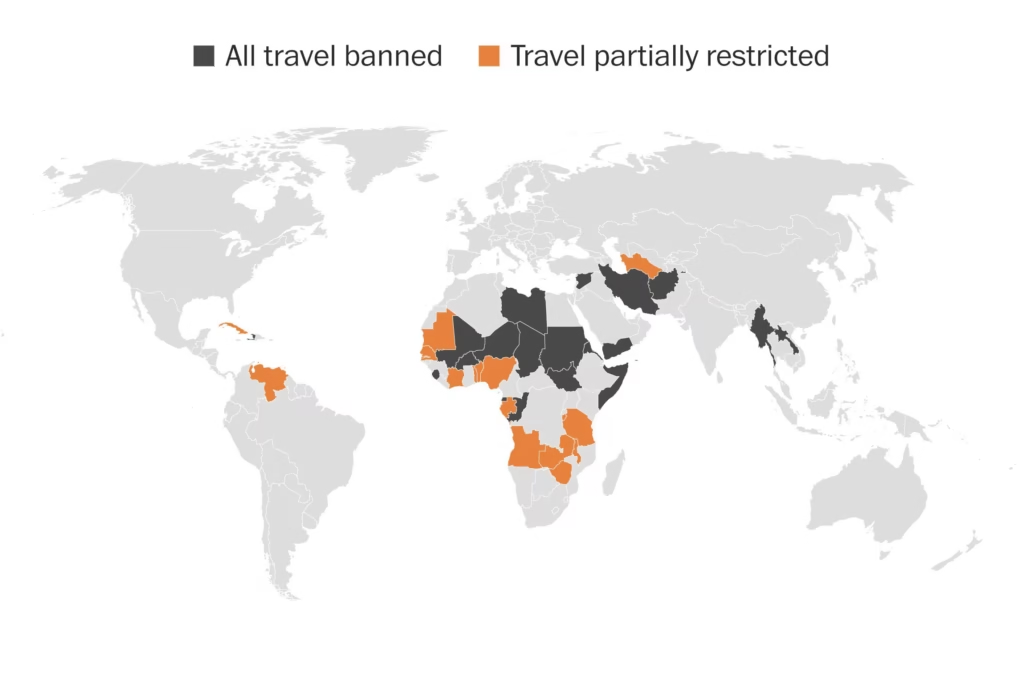
26 African Countries Under Full or Partial U.S. Travel Ban (Post-December Update)
26 African Countries Under Full or Partial U.S. Travel Ban (Post-December Update) Following the December update to U.S.…
Read article →
Travel Guide
Boma National Park is part of South Sudan's vast and relatively little-visited wilderness. For travelers interested in remote African landscapes, wildlife migrations and expedition-style travel, the park represents a very different experience from the highly developed…
Boma National Park is part of South Sudan’s vast and relatively little-visited wilderness. For travelers interested in remote African landscapes, wildlife migrations and expedition-style travel, the park represents a very different experience from the highly developed safari circuits found elsewhere in East Africa.
A journey to Boma requires careful preparation. Infrastructure is limited compared with established safari destinations, and transport, accommodation and guiding need to be arranged realistically. Travelers should also check current access and travel conditions before committing to the journey.
The attraction lies precisely in this remote character. Boma is not primarily about luxury lodges or a predictable checklist of wildlife sightings. It is about experiencing an immense natural landscape where wildlife, seasonal movement and traditional communities form part of a broader ecosystem.
Boma National Park lies in South Sudan and protects a large area of wilderness.
Its scale is one of the features that makes it significant. Large landscapes provide room for wildlife movement and help preserve ecological processes that cannot survive inside small isolated reserves.
The park is particularly associated with major movements of antelope and other herbivores across the wider landscape.
These movements connect Boma with a broader conservation story involving seasonal resources, migration routes and neighboring ecosystems.
Visitors should understand that wildlife in such an enormous area may not always be concentrated around predictable roads in the way it can be in smaller safari parks.
One of the major reasons Boma attracts international attention is the scale of wildlife movement across the region.
Large numbers of herbivores move through the wider ecosystem according to seasonal conditions and the availability of water and grazing.
This creates an important conservation phenomenon.
Migration should not be understood as a fixed event that occurs at exactly the same location on the same date every year. Wildlife responds to environmental conditions.
Travelers hoping to observe major concentrations therefore need current local information and realistic expectations.
A specialist guide or operator familiar with the region is particularly important.
Although migration is a major theme, Boma’s wildlife interest extends beyond one spectacle.
The broader landscape supports a range of animals adapted to the region’s grasslands, wetlands and other habitats.
Birdlife can also add significantly to the experience.
Safari travelers should avoid approaching Boma with a rigid list of species that must be seen. Remote wilderness travel is often more rewarding when visitors appreciate the complete ecosystem.
Tracks, landscapes, animal movement and changing environmental conditions can be as important as individual sightings.
The unpredictability is part of the park’s character.
Access requires more planning than a conventional safari destination.
Travelers should work with experienced operators that understand current logistics.
Road conditions, aviation options and seasonal accessibility can all influence the route.
A map alone is not enough to determine how long the journey will take.
Current local advice is particularly important because remote travel conditions can change.
Visitors should avoid arranging independent connections based entirely on outdated travel reports.
Transport should be confirmed as part of the complete safari plan, including how travelers will reach accommodation or camp arrangements.
The best travel period depends on what the visitor hopes to experience.
Seasonal rainfall influences road conditions, vegetation and wildlife movement.
Travelers interested in migration need current information about where significant concentrations are occurring.
Those interested more broadly in landscapes and wilderness may have different priorities.
Weather should also be considered from a logistical perspective. Heavy rain can make remote roads difficult.
The timing of a Boma safari should therefore be based on both wildlife objectives and practical access.
A specialist operator can explain what conditions are normally expected while acknowledging that nature remains unpredictable.
Visitors should not approach Boma expecting the same lodge network available in famous safari areas such as the Serengeti or Maasai Mara.
Remote expeditions may depend on camp-based arrangements.
This can become one of the most memorable parts of the experience for adventurous travelers.
Camping in a remote wilderness creates a strong sense of connection with the landscape, but it also requires realistic expectations.
Facilities may be simpler than those at permanent luxury lodges.
Travelers should ask exactly what is provided, including sleeping arrangements, meals, bathroom facilities and charging options.
Clear expectations make remote travel far more enjoyable.
Packing should reflect the expedition-style nature of the destination.
Lightweight, practical clothing is useful for daytime conditions, while layers may be required depending on temperatures.
Strong closed footwear is advisable for outdoor activities.
Sun protection, insect protection and personal medication should be included.
Travelers should also carry sufficient camera batteries and storage.
If charging opportunities are limited, additional power solutions may be necessary.
Luggage restrictions should be checked carefully if smaller aircraft form part of the journey.
The objective is to travel efficiently without omitting essential equipment.
The park can appeal strongly to wildlife and landscape photographers.
Open landscapes can provide opportunities to photograph large groups of animals when wildlife concentrations are present.
Longer lenses are useful for wildlife, while a wider lens can capture the scale of the environment.
Dust and weather protection should be considered.
Photographers should also think about equipment weight if aviation services have strict luggage limits.
Wildlife photography must remain responsible. Animals should not be chased or pressured merely to create a dramatic photograph.
Patience generally produces better images and a better wildlife experience.
The wider Boma landscape is not an empty wilderness.
Communities have long-standing relationships with the land and its resources.
Travelers should approach cultural interactions with respect and curiosity rather than treating communities as attractions.
A knowledgeable local guide can provide important context.
Permission should be requested before photographing people.
Visitors should also listen to guidance concerning local customs and appropriate behavior.
Responsible cultural tourism can add depth to the journey by helping travelers understand that conservation landscapes are also connected with human histories and livelihoods.
Boma may particularly appeal to travelers who have already visited more established African safari destinations.
Someone who has experienced highly developed safari circuits may be looking for a journey that feels more exploratory.
The park can provide that sense of remoteness.
However, travelers need to accept that remoteness also means fewer facilities and less predictable logistics.
A visitor who requires extensive luxury infrastructure may prefer another destination.
Someone comfortable with expedition-style travel may find Boma especially rewarding.
South Sudan travel should be planned according to current logistical realities rather than attempting to create an overly complicated route.
If Boma is combined with other destinations, enough time should be allowed for connections and potential changes.
International travelers may also combine a South Sudan expedition with other East African countries as part of a longer trip.
Such combinations require careful attention to visas, flights and entry requirements.
Travelers should verify all documentation using current official information.
The more complex the route becomes, the more important it is to include buffer time.
Large wilderness areas such as Boma are important because they protect ecological processes at a landscape scale.
Migratory wildlife depends on the ability to move between seasonal habitats.
Fragmentation of those routes can create serious conservation challenges.
Responsible tourism can contribute to the economic value attached to conserving wildlife and natural landscapes.
However, tourism must be managed carefully so that increased visitation does not damage the environment or disrupt communities.
Visitors can contribute by following guide instructions and choosing responsible operators.
Travel to remote parts of South Sudan requires up-to-date preparation.
Conditions can change, and information from an old safari report should not be treated as confirmation that the same route is currently practical.
Travelers should review current official travel guidance, entry requirements and local operating conditions before departure.
Insurance coverage also deserves careful attention.
A policy should be appropriate for the destination and the nature of the trip.
Emergency and evacuation arrangements should be understood before entering remote areas.
Boma National Park appeals to travelers interested in scale, migration and genuine wilderness.
It offers a safari experience very different from parks where paved access, extensive lodge networks and dense tourist infrastructure make travel relatively straightforward.
That difference requires more preparation but is also part of the park’s appeal.
Visitors can experience broad landscapes, seasonal wildlife movement and a conservation environment that remains unfamiliar to many international travelers.
The key is realistic planning.
Current access, transport, accommodation and travel conditions should be confirmed before departure. Travelers should arrive prepared for an expedition rather than expecting a conventional lodge safari.
With suitable organization and respect for the landscape and communities, Boma can provide an extraordinary perspective on South Sudan’s wildlife and the immense natural systems that continue to shape this part of Africa.

26 African Countries Under Full or Partial U.S. Travel Ban (Post-December Update) Following the December update to U.S.…
Read article →
3 Days Congo Gorilla Safari – Encounter the Gentle Giants of Virunga A 3 Days Congo Gorilla Safari…
Read article →
Children and Kids on Safari – Family-Friendly Adventures in Africa Taking children on an African safari is one…
Read article →
How to Plan a Safari in Uganda—Your Complete Travel Guide Planning a safari in Uganda is the start…
Read article →