
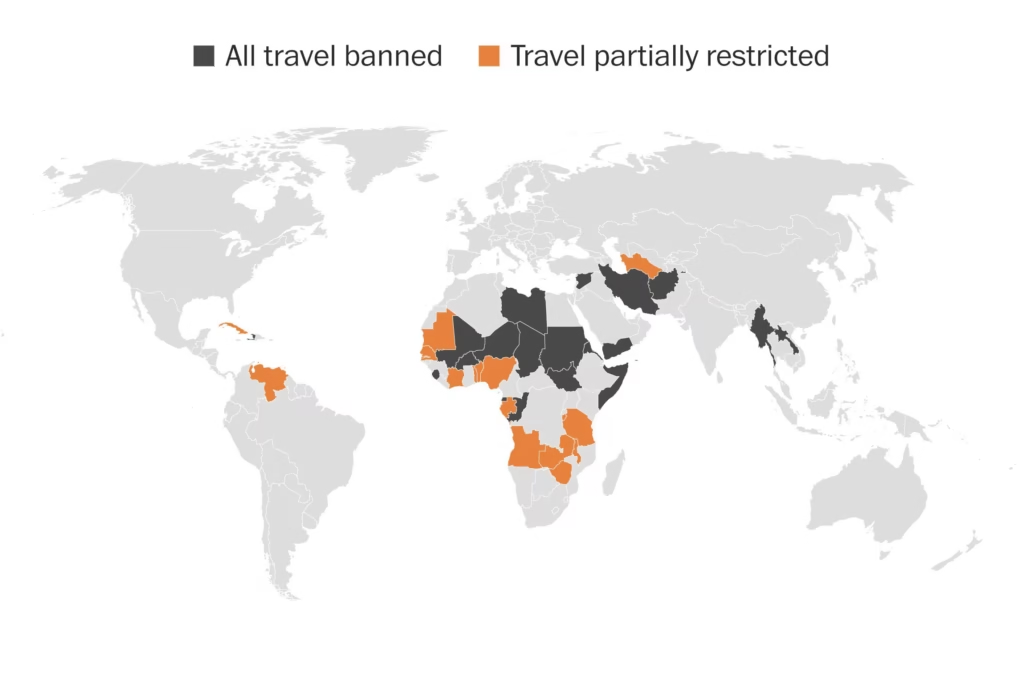
26 African Countries Under Full or Partial U.S. Travel Ban (Post-December Update)
26 African Countries Under Full or Partial U.S. Travel Ban (Post-December Update) Following the December update to U.S.…
Read article →
Travel Guide
Explore game reserves near Cape Town for wildlife safaris, Big Five viewing, scenic landscapes and convenient additions to a South Africa holiday.
Cape Town is internationally known for Table Mountain, beaches, vineyards, coastal scenery, and cultural attractions, but travelers can also incorporate wildlife experiences into a visit to the Western Cape. Several game reserves near Cape Town provide guided drives, comfortable accommodation, and opportunities to observe African wildlife without traveling to the country’s northeastern safari regions.
These reserves should be understood differently from enormous wilderness areas such as Kruger National Park. Many Western Cape reserves are privately managed and enclosed, with wildlife populations actively managed within defined conservation areas. Their accessibility, however, makes them useful for travelers who have limited time or want to combine Cape Town with a short safari.
Aquila Private Game Reserve is one of the most widely known safari destinations accessible from Cape Town. It lies in the Western Cape’s Karoo landscape and is reachable by road from the city.
The environment contrasts sharply with coastal Cape Town. Open plains, rocky hills, semi-arid vegetation, and broad skies create a distinctly different setting.
Aquila is promoted as a Big Five destination and supports a variety of African wildlife. Guided game drives are the primary activity, while accommodation makes overnight visits possible.
A day trip can work for visitors with tight schedules, but staying overnight allows more time in the reserve and avoids having the entire experience dominated by the road journey.
Inverdoorn is another established private reserve within reach of Cape Town. Located in the Karoo region, it offers safari experiences against a landscape of open plains and rugged mountains.
Wildlife viewing is conducted through organized game drives. Depending on current wildlife populations and reserve management, visitors can potentially encounter several iconic African mammals.
The reserve is especially appropriate for travelers who want a short wildlife extension after exploring Cape Town or the Cape Winelands.
Staying overnight provides opportunities for game viewing at different times of day, when temperatures are cooler and many animals become more active.
Sanbona Wildlife Reserve provides a substantially larger conservation setting in the Western Cape. Situated along Route 62, it protects an extensive area characterized by mountains, plains, rock formations, and distinctive semi-arid vegetation.
The size and landscape help create a different experience from smaller safari properties. Guided wildlife drives explore broad sections of the reserve while interpreting animals, plants, geology, and conservation initiatives.
Sanbona is generally better suited to an overnight safari than a rushed excursion from Cape Town. The driving distance means travelers benefit from allocating at least one or two nights.
The reserve also appeals to visitors interested in scenery as much as individual wildlife sightings. Sunrises and sunsets across the Little Karoo can become memorable components of the stay.
Gondwana Game Reserve is located along South Africa’s Garden Route rather than immediately outside Cape Town. Nevertheless, it can fit naturally into an itinerary combining Cape Town with Mossel Bay, Knysna, George, or other Garden Route destinations.
The reserve features rolling terrain and indigenous vegetation within a private conservation area. Guided game drives provide opportunities for wildlife observation while accommodation allows visitors to experience mornings and evenings in the reserve.
Gondwana is particularly relevant to travelers already planning a Garden Route road trip. Instead of driving back toward Cape Town after a safari, visitors can continue along the coast.
Travelers heading north from Cape Town toward the West Coast can consider Buffelsfontein Game and Nature Reserve. Its location provides another option for incorporating wildlife into a Western Cape itinerary.
The landscape differs from the classic savannah imagery associated with East Africa. This is part of the attraction of Western Cape wildlife travel: visitors experience animals within ecosystems shaped by the region’s particular climate and vegetation.
Guided activities help travelers understand the wildlife and environment rather than simply searching for individual species.
A safari near Cape Town and a safari in the Greater Kruger region should not automatically be treated as equivalent experiences.
Kruger National Park and surrounding private reserves cover immense wildlife landscapes and support complex predator-prey systems across extensive areas. Travelers can spend several days exploring without repeating the same routes.
Private reserves in the Western Cape are generally smaller and often more intensively managed. Their principal advantage is accessibility for travelers whose itineraries are centered on Cape Town.
Someone visiting South Africa primarily for safari may therefore choose destinations such as Kruger, Madikwe, or other major wildlife regions. Someone primarily visiting Cape Town who wants to add one or two nights of wildlife viewing may find a Western Cape reserve highly convenient.
One night provides a basic introduction, often including an afternoon drive followed by another activity the following morning.
Two nights create a more relaxed experience. Travelers have additional opportunities to observe wildlife under changing conditions and can enjoy the lodge without immediately preparing for departure.
Three nights may be worthwhile at larger reserves or when the safari is intended to be a major part of the holiday.
Day trips are possible at some properties but involve substantial driving. Visitors should compare the amount of time spent traveling with the amount of time actually spent viewing wildlife.
Wildlife reserves can generally be visited throughout the year, although seasons influence temperatures, vegetation, and the wider Cape Town experience.
Cape Town’s summer months typically bring warmer and drier conditions, making them popular for combining beaches, vineyards, sightseeing, and safari.
Winter can bring cooler temperatures and rainfall around Cape Town, while inland Karoo conditions differ. Early morning game drives can become particularly cold, so warm clothing is important.
Wildlife remains present regardless of season. The best period therefore depends on the broader South African itinerary rather than safari considerations alone.
Layered clothing is important because temperatures can change significantly between midday and early morning.
A warm jacket is valuable for open safari vehicles, particularly outside summer. Comfortable neutral-colored clothing, sunscreen, sunglasses, and a hat are useful during daytime activities.
Binoculars considerably improve wildlife viewing, especially when animals remain far from the vehicle. A camera with a zoom lens is helpful for photography.
Visitors should also carry personal medication and any necessary travel documentation when staying overnight.
One of the strongest advantages of these reserves is the ease with which they can be incorporated into a broader Western Cape itinerary.
Travelers might spend several days exploring Cape Town before traveling into the Karoo for a two-night safari. Afterward, they can return to the city or continue toward the Cape Winelands.
Another itinerary can combine Cape Town with Stellenbosch or Franschhoek before continuing along Route 62 toward a wildlife reserve.
Visitors planning the Garden Route can travel from Cape Town through coastal and wine-producing regions before adding a safari near Mossel Bay and continuing toward Knysna or Plettenberg Bay.
Selection should be based on more than the list of animals advertised. Consider driving distance, reserve size, accommodation quality, included activities, landscape, conservation approach, and the number of nights available.
Families should confirm age restrictions for game drives and other activities. Couples may prioritize smaller lodges and private experiences, while photographers may value longer drives and flexible wildlife-viewing opportunities.
The best game reserves near Cape Town are ultimately those that fit naturally into the traveler’s wider South African itinerary. With realistic expectations and sufficient time, a Western Cape safari can add wildlife, open landscapes, and a completely different environment to a journey otherwise focused on Cape Town’s mountains, coastline, culture, and vineyards.

26 African Countries Under Full or Partial U.S. Travel Ban (Post-December Update) Following the December update to U.S.…
Read article →
3 Days Congo Gorilla Safari – Encounter the Gentle Giants of Virunga A 3 Days Congo Gorilla Safari…
Read article →
Children and Kids on Safari – Family-Friendly Adventures in Africa Taking children on an African safari is one…
Read article →
How to Plan a Safari in Uganda—Your Complete Travel Guide Planning a safari in Uganda is the start…
Read article →