
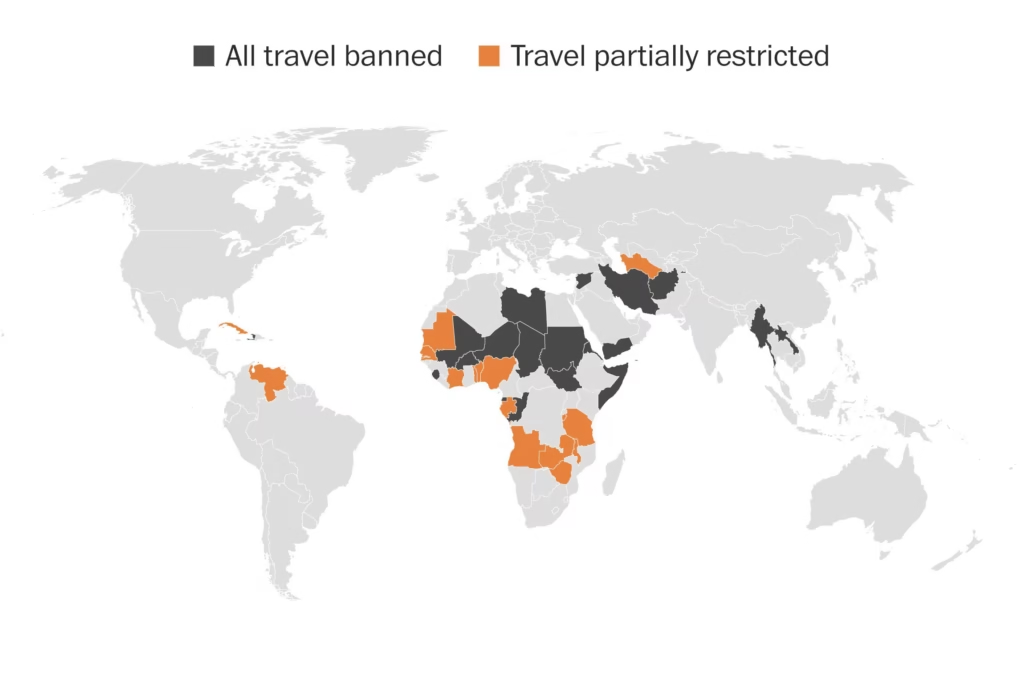
26 African Countries Under Full or Partial U.S. Travel Ban (Post-December Update)
26 African Countries Under Full or Partial U.S. Travel Ban (Post-December Update) Following the December update to U.S.…
Read article →
Travel Guide
Discover the best five national parks in East Africa for thrilling wildlife safaris, gorilla trekking, and breathtaking landscapes.
The Best Five National Parks in East Africa presented by the supplied source illustrate the remarkable range of safari experiences available across Tanzania, Kenya, Uganda, and Rwanda. The selected destinations are Serengeti National Park, Maasai Mara National Reserve, Bwindi Impenetrable National Park, Volcanoes National Park, and Amboseli National Park.
Although they are grouped together as major safari destinations, they provide very different experiences.
Serengeti and Maasai Mara are strongly associated with open grasslands, predators, and the Great Migration. Bwindi and Volcanoes focus attention on mountain gorillas and forest environments. Amboseli is distinguished by large elephant herds and celebrated views toward Mount Kilimanjaro.
Travelers therefore do not need to choose between five versions of the same safari. Each destination adds something different to an East African journey.
The supplied source describes Serengeti National Park as the heart of the African safari experience.
Its landscape is characterized by extensive grasslands, scattered acacia trees, and rocky outcrops.
The scale of the plains creates a strong sense of openness.
Wildlife may appear against enormous skies, making the landscape itself an important part of every sighting.
The Serengeti is particularly famous for the Great Wildebeest Migration, but its appeal extends beyond the movement of migratory herds.
The source describes millions of wildebeest, zebras, and gazelles moving through the ecosystem in search of fresh grazing.
This movement is one of the Serengeti’s defining wildlife phenomena.
Travelers should understand that the migration is a natural process rather than a single event taking place on one fixed date.
The animals move in response to environmental conditions.
Planning can improve the chance of experiencing particular phases, but nature remains unpredictable.
This uncertainty is part of what makes migration safaris authentic.
The supplied source highlights lions, cheetahs, and leopards among Serengeti predators.
The presence of large prey populations creates opportunities for carnivores.
However, predator sightings require patience.
A lion may spend hours resting, a leopard can disappear into vegetation, and a cheetah may be visible at considerable distance.
Good guiding becomes particularly valuable because understanding behavior is more useful than simply driving quickly across the plains searching for famous species.
Serengeti also supports large herbivores such as elephants and buffaloes.
These animals provide important safari encounters even when visitors are primarily interested in predators or migration herds.
An elephant group can reveal complex social behavior, while buffalo herds create impressive scenes across open country.
The best Serengeti safari therefore looks beyond one headline attraction and appreciates the wider ecosystem.
The supplied source highlights hot-air balloon safaris as another way to experience the Serengeti.
Aerial views reveal the scale of the landscape in a way ground-level game drives cannot.
Rivers, tracks, plains, vegetation, and wildlife become part of a broader pattern.
A balloon experience complements a vehicle safari rather than replacing it.
From the ground, visitors see behavioral detail. From above, they understand scale.
The second destination in the source is the Maasai Mara National Reserve in Kenya.
The Mara forms part of the wider ecosystem associated with the Great Migration and is one of Kenya’s best-known safari destinations.
Its open savannahs support abundant wildlife and predators.
The source particularly highlights migration activity between July and October.
Travelers should still remember that wildlife movement depends on natural conditions rather than calendar dates alone.
The supplied source emphasizes lions, leopards, and cheetahs.
These predators contribute strongly to the Mara’s reputation.
Open habitats can sometimes provide good visibility, allowing guides to observe hunting behavior and interactions between predators and prey.
However, responsible safari practice remains important.
Vehicles should not crowd wildlife simply because a predator has been located.
The quality of a sighting depends on allowing animals space to behave naturally.
The source adds cultural encounters with the Maasai people as another dimension of a Mara safari.
This helps distinguish the destination from an experience focused only on animals.
Community visits can introduce travelers to local heritage and contemporary life.
Such encounters should be arranged respectfully and allow community members to present their own culture.
A thoughtful cultural experience can provide important context about the people living within the wider safari landscape.
Like the Serengeti, the source identifies hot-air ballooning as an activity in the Mara.
The aerial perspective reveals the openness of the landscape and can provide striking views of wildlife and savannah.
For photographers, the experience produces compositions very different from those taken through a safari vehicle.
The balloon also emphasizes the enormous scale of the ecosystem shared across the Kenya-Tanzania border.
The third destination changes the character of the list completely.
Bwindi Impenetrable National Park is a forest destination in southwestern Uganda associated with mountain gorilla trekking.
Instead of scanning open grasslands from a vehicle, visitors walk through dense vegetation with professional guides and trackers.
The experience is slower, more physical, and much more intimate.
The supplied source describes Bwindi as protecting a significant portion of the world’s mountain gorilla population.
A gorilla trek begins with entering the forest and searching for an assigned habituated family.
The walk can vary because the gorillas move naturally.
Terrain may be steep and vegetation dense.
This effort forms an important part of the experience.
Reaching the gorillas after walking through their habitat creates a very different emotional response from seeing an animal beside a safari road.
Once a family is located, visitors can watch interactions between gorillas.
A silverback may dominate attention because of his size, but other family members are equally interesting.
Mothers, infants, juveniles, and adults create a complex social environment.
Watching grooming, feeding, movement, play, or resting can reveal the family structure.
The encounter becomes meaningful because visitors observe the gorillas as a functioning social group.
The supplied source also notes that Bwindi protects birds, butterflies, and monkeys.
This is important because the forest should not be viewed solely as a backdrop for one famous species.
Gorilla conservation depends on maintaining the wider ecosystem.
Travelers who pay attention during the trek can therefore appreciate vegetation, sounds, smaller wildlife, and the forest environment itself.
The fourth destination is Volcanoes National Park in northern Rwanda.
Like Bwindi, it is strongly associated with mountain gorilla trekking, but the landscape is different.
The supplied source describes rainforest and volcanic slopes and also highlights Mount Bisoke and Mount Karisimbi.
This combination of primates and volcanoes creates opportunities for visitors to build a varied multi-day stay.
Gorilla trekking remains the major wildlife experience.
Visitors enter the forest with guides to locate a habituated family.
The volcanic setting gives the trek a distinctive atmosphere.
As in Bwindi, the exact duration depends on where the gorillas are found.
Visitors should therefore prepare for a genuine forest trek rather than expecting a short walk to a fixed viewing location.
The source highlights golden monkey tracking as another activity in Volcanoes National Park.
Golden monkeys behave very differently from mountain gorillas.
They are smaller and more active, often moving rapidly through vegetation.
Adding a golden monkey experience can therefore provide a second primate activity without simply repeating the gorilla trek.
Mount Bisoke and Mount Karisimbi provide physically demanding alternatives to wildlife tracking.
Hiking introduces travelers to the volcanic landscape and changing highland environments.
The source also mentions cultural visits to nearby villages.
Together, these activities allow Volcanoes National Park to function as a multi-day destination combining primates, mountains, and community experiences.
The fifth destination in the supplied source is Amboseli National Park.
Amboseli is particularly famous for its views toward Mount Kilimanjaro and its elephant populations.
The combination creates one of East Africa’s most recognizable safari scenes.
Photographers often seek compositions showing elephants against the mountain landscape.
The destination’s appeal, however, extends beyond this single image.
The source highlights large elephant herds, including animals with impressive tusks.
Observing elephants over time can reveal social relationships, feeding patterns, and movement.
Their size makes them visually dramatic, but their behavior provides the deeper safari experience.
Visitors should allow herds space and avoid treating photography as a reason to pressure wildlife.
A patient encounter can produce both better observations and stronger images.
Kilimanjaro forms an extraordinary backdrop to Amboseli.
The mountain can dominate the skyline when conditions allow clear views.
Its presence connects the Kenyan safari landscape visually with neighboring Tanzania.
Weather and cloud affect visibility, so travelers should not assume the summit will remain visible throughout every visit.
When it does appear clearly, however, the combination of mountain and wildlife can be remarkable.
The supplied source notes that swamps fed by underground springs attract wildlife.
Water availability creates important habitat within the wider landscape.
Animals gather around productive areas, providing opportunities for observation.
The source also identifies lions, cheetahs, giraffes, zebras, and buffaloes among the wildlife found in the park.
This variety ensures that Amboseli offers more than elephants alone.
The five destinations in the supplied source represent different safari styles rather than direct substitutes for one another.
Serengeti emphasizes enormous plains, migration, predators, and classic game drives.
Maasai Mara combines migration wildlife, predators, cultural encounters, and balloon safaris.
Bwindi provides dense forest and mountain gorilla trekking.
Volcanoes National Park combines gorillas with golden monkeys, volcano hiking, and cultural experiences.
Amboseli is associated with elephants, open landscapes, wetlands, and Kilimanjaro views.
A traveler can therefore combine several parks without creating an overly repetitive journey.
These destinations also demonstrate the possibilities of a wider East African itinerary.
A traveler may combine Kenya and Tanzania for savannah wildlife, then continue to Uganda or Rwanda for gorilla trekking.
Another itinerary might focus on one country and one park more deeply.
The appropriate approach depends on available time.
Trying to visit all five within an overly short holiday would create excessive travel.
A stronger itinerary allows enough time in each selected destination to experience more than one rushed game drive or trek.
The Best Five National Parks in East Africa presented by the source showcase the region’s extraordinary variety.
Serengeti National Park provides migration landscapes and classic Tanzania wildlife. Maasai Mara offers Kenya’s famous savannahs, predators, and Maasai cultural experiences. Bwindi introduces travelers to Uganda’s mountain gorillas in dense forest. Volcanoes National Park combines Rwanda’s gorillas with golden monkeys and volcanic hiking, while Amboseli creates memorable elephant encounters beneath the presence of Mount Kilimanjaro.
Together, these destinations demonstrate why East Africa can support very different safari experiences within one region.
Whether the priority is migration, predators, primates, elephants, photography, hiking, or cultural encounters, the parks in the supplied source provide contrasting ways to experience the landscapes and wildlife of East Africa.

26 African Countries Under Full or Partial U.S. Travel Ban (Post-December Update) Following the December update to U.S.…
Read article →
3 Days Congo Gorilla Safari – Encounter the Gentle Giants of Virunga A 3 Days Congo Gorilla Safari…
Read article →
Children and Kids on Safari – Family-Friendly Adventures in Africa Taking children on an African safari is one…
Read article →
How to Plan a Safari in Uganda—Your Complete Travel Guide Planning a safari in Uganda is the start…
Read article →