
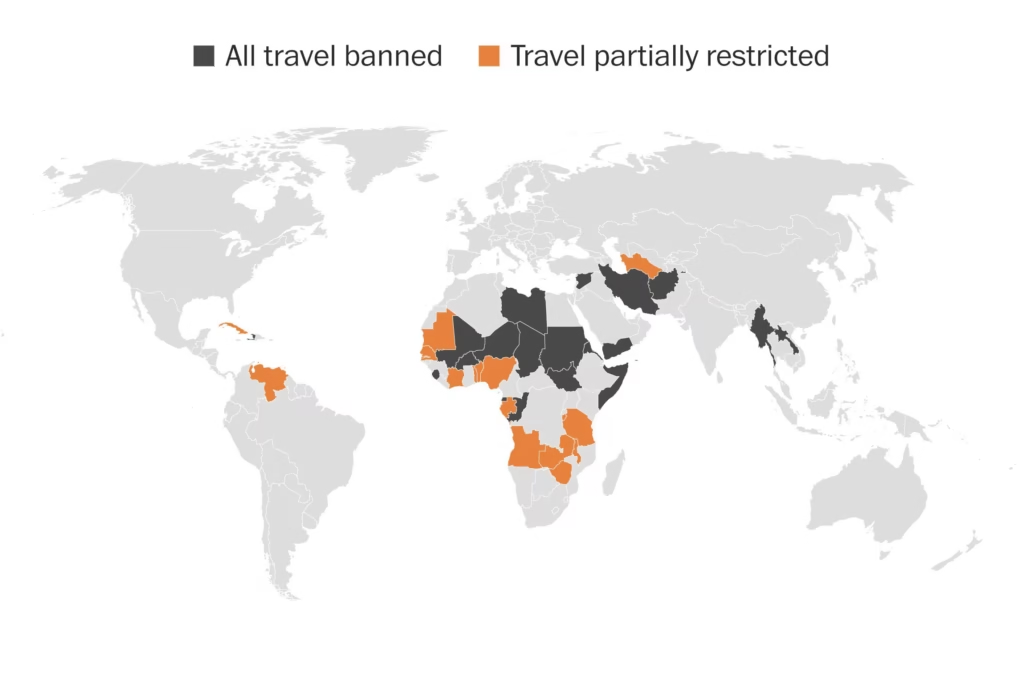
26 African Countries Under Full or Partial U.S. Travel Ban (Post-December Update)
26 African Countries Under Full or Partial U.S. Travel Ban (Post-December Update) Following the December update to U.S.…
Read article →
Travel Guide
Visit the Belgian Peacekeepers Memorial Center in Kigali to honor the ten UN soldiers killed during the 1994 genocide and reflect on Rwanda’s journey to peace.
The Belgian Peacekeepers Memorial Rwanda is an important historical site in Kigali connected with the events surrounding the 1994 Genocide against the Tutsi. The memorial commemorates ten Belgian United Nations peacekeepers who were killed on 7 April 1994 while serving with the United Nations Assistance Mission for Rwanda.
For visitors exploring Rwanda’s modern history, the memorial provides a focused perspective on the dangers faced by peacekeepers during the opening stages of the genocide and the wider international response to the crisis.
The site is commonly incorporated into historical tours of Kigali alongside other locations associated with remembrance and reconciliation. It is not a conventional tourist attraction designed primarily for entertainment. Visitors should approach it quietly and respectfully, allowing time to understand the people and events being remembered.
The Belgian peacekeepers were serving in Rwanda as part of a United Nations mission established during a period of intense political instability.
Rwanda had experienced years of political tension and armed conflict before 1994.
The situation deteriorated dramatically following the shooting down of the aircraft carrying President Juvénal Habyarimana on 6 April 1994.
Within hours, organized violence escalated.
The ten Belgian peacekeepers became victims during this early period of the genocide.
Understanding this sequence helps visitors recognize why the memorial occupies an important place within Rwanda’s historical landscape.
The memorial specifically honors ten Belgian soldiers serving under the United Nations mission.
They had been assigned to protect Prime Minister Agathe Uwilingiyimana.
On 7 April, the peacekeepers were captured, disarmed and taken to Camp Kigali.
They were subsequently killed.
The events surrounding their deaths had consequences extending beyond the loss of the soldiers themselves because they affected international decision-making during the crisis.
The memorial is located at the former Camp Kigali.
The location gives the site particular historical significance because visitors are standing in the environment where the peacekeepers were killed rather than at a memorial constructed far away from the event.
Physical locations can make history feel more immediate.
Buildings, memorial structures and interpretive information help visitors connect written historical accounts with an actual place.
The memorial includes pillars dedicated to the peacekeepers.
These structures provide a visible representation of the individuals being remembered.
Visitors should take time to read available information rather than simply photographing the memorial and leaving.
The purpose of the site becomes clearer when the individual lives behind the historical event are recognized.
The Belgian Peacekeepers Memorial Rwanda functions primarily as a place of remembrance.
Behavior appropriate at an ordinary sightseeing attraction may not be appropriate here.
Visitors should keep voices moderate, avoid disruptive behavior and follow instructions regarding photography.
A respectful visit recognizes that the memorial relates to real people who died during a period of extraordinary violence.
The United Nations Assistance Mission for Rwanda had been deployed before the genocide in connection with efforts to support a peace process.
The mission operated under limitations imposed by its mandate and international political decisions.
The subsequent international response to the genocide has been examined extensively by historians, governments and international institutions.
Visitors should approach this history carefully because responsibility and decision-making involved multiple institutions and actors.
Prime Minister Agathe Uwilingiyimana was also killed on 7 April 1994.
The peacekeepers had been assigned to protect her.
Her assassination was part of the rapidly escalating violence directed against political figures and civilians.
Understanding her role provides additional context for why the Belgian soldiers were in the situation that led to their capture.
The deaths of the Belgian peacekeepers had major political consequences.
Belgium subsequently withdrew its contingent from the United Nations mission.
The broader reduction and limitations affecting the international presence in Rwanda during the genocide remain subjects of historical analysis and criticism.
Visitors interested in this aspect of the story can benefit from reading multiple credible historical sources before or after visiting the memorial.
The Belgian Peacekeepers Memorial and Kigali Genocide Memorial address related history from different perspectives.
The Kigali Genocide Memorial provides a much broader examination of the genocide and commemorates victims.
The Belgian Peacekeepers Memorial focuses on the ten UN soldiers and the events at Camp Kigali.
Visiting both can therefore provide complementary historical context.
Travelers should allow enough time for each rather than rushing through several memorials as a checklist.
Memorial tourism can be emotionally demanding.
Accounts of violence and death may be difficult to process.
Travelers should allow themselves time to reflect.
Families traveling with younger people should consider whether the historical material is suitable for them and provide appropriate context.
The objective is understanding and remembrance rather than shock.
Visitors should follow current rules concerning photography.
Even where photography is permitted, discretion matters.
Avoid using memorial structures as backgrounds for celebratory poses or social-media content that trivializes the history.
A photograph should document the visit respectfully.
When uncertain, ask a guide or member of staff.
A knowledgeable guide can add substantial value to the experience.
Historical events involving the genocide, peacekeeping operations and international politics are complex.
A guide can explain chronology and identify how different Kigali sites relate to one another.
Travelers should still distinguish documented historical facts from personal interpretation.
Asking questions can help develop a more complete understanding.
The memorial can be incorporated into a broader Kigali historical itinerary.
Other parts of the day may focus on modern city life, markets, museums or cultural attractions.
This contrast can demonstrate how significantly Rwanda has changed since 1994.
However, memorial visits deserve sufficient time and should not be squeezed casually between entertainment activities.
International visitors sometimes arrive knowing Rwanda almost exclusively through the history of the genocide.
That history is essential, but modern Rwanda should not be understood only through the events of 1994.
A wider journey can include contemporary Kigali, cultural experiences, national parks and community tourism.
Historical understanding and present-day travel complement one another.
The Belgian Peacekeepers Memorial Rwanda can encourage discussion about peacekeeping, international responsibility and the protection of civilians.
It also illustrates the dangers encountered by individuals serving in unstable political environments.
For students and historically interested travelers, the site can become a starting point for deeper study.
A short visit cannot explain every dimension of the genocide or international response, but it can make those questions more immediate.
Discussions about genocide require careful language.
Visitors should avoid reducing victims to statistics or treating traumatic history as entertainment.
The same respect should extend to survivors and their families.
Listening to established historical interpretation and survivor testimony can provide greater understanding than approaching the subject through sensational accounts.
Travelers should confirm current visiting arrangements before arriving because opening hours and access procedures can change.
Modest, respectful clothing is appropriate.
A guided vehicle can make it easy to combine the memorial with other Kigali sites.
Visitors should also consider the emotional intensity of visiting several genocide-related memorials in a single day.
The Belgian Peacekeepers Memorial Rwanda preserves the memory of ten United Nations soldiers killed during one of the darkest periods in Rwanda’s history.
Its location at Camp Kigali connects visitors directly with the events of 7 April 1994 and encourages reflection on peacekeeping, international decision-making and the human consequences of political violence.
A visit is most meaningful when approached with patience and historical curiosity.
Rather than treating the memorial as another stop to photograph, travelers can use it to deepen their understanding of Rwanda’s past and of the difficult questions surrounding international responses to mass violence.

26 African Countries Under Full or Partial U.S. Travel Ban (Post-December Update) Following the December update to U.S.…
Read article →
3 Days Congo Gorilla Safari – Encounter the Gentle Giants of Virunga A 3 Days Congo Gorilla Safari…
Read article →
Children and Kids on Safari – Family-Friendly Adventures in Africa Taking children on an African safari is one…
Read article →
How to Plan a Safari in Uganda—Your Complete Travel Guide Planning a safari in Uganda is the start…
Read article →