

26 African Countries Under Full or Partial U.S. Travel Ban (Post-December Update)
26 African Countries Under Full or Partial U.S. Travel Ban (Post-December Update) Following the December update to U.S.…
Read article →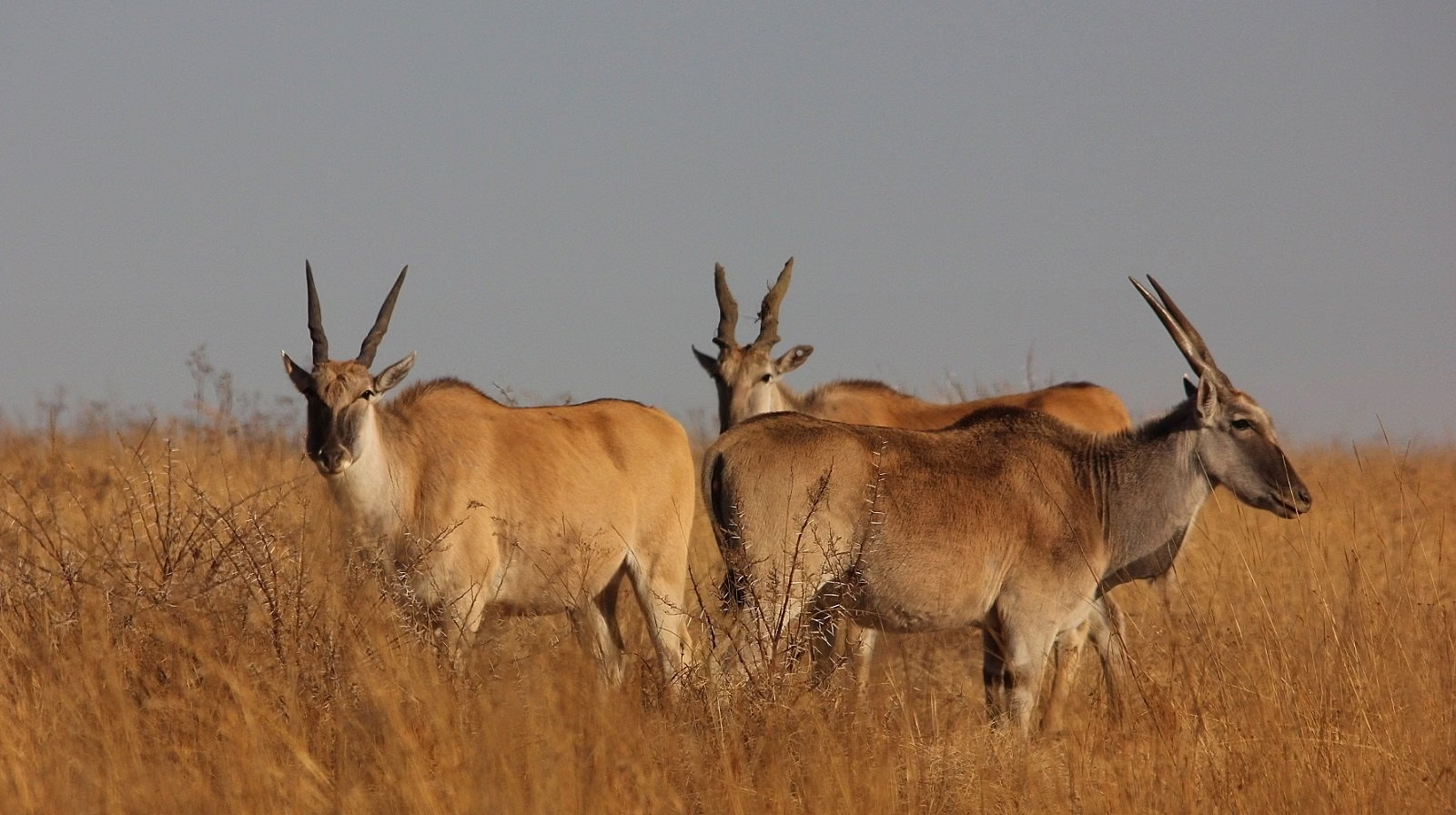
Travel Guide
Discover 5 fascinating facts about the eland, including its impressive size, jumping abilities, social behavior, and adaptability to different environments.
The eland is one of Africa’s most impressive antelopes. Its enormous body can initially make it look more like cattle than the graceful antelopes travelers often picture on the continent’s open plains. Yet elands combine remarkable size with agility, adaptability, social behavior, and a surprisingly graceful way of moving.
Scientifically known as Taurotragus oryx, the eland occurs across parts of sub-Saharan Africa and can occupy a variety of environments.
The supplied source highlights five characteristics that make this animal particularly interesting: its status as the largest antelope, its ability to survive in different habitats, distinctive vocal behavior, surprising jumping ability, and strong social relationships.
Understanding these Fascinating Facts About the Eland gives safari travelers a deeper appreciation of an animal that can easily be overshadowed by Africa’s predators and other famous mammals.
The most immediately impressive feature of an eland is its size.
The supplied source describes elands as the largest of all antelope species.
Adult males can weigh up to approximately 2,000 pounds or 900 kilograms and stand more than 5 feet or 1.5 meters at the shoulder.
Females are generally smaller, but they are still substantial animals.
This size gives the eland an unmistakable presence.
An adult male can appear enormous when standing beside smaller antelopes.
Its muscular build and long, twisted horns further strengthen that impression.
The horns are one of the eland’s most recognizable features.
Their twisted form gives the animal a distinctive profile.
Combined with the heavy body and long legs, they make identification easier even at some distance.
Despite the animal’s bulk, its movement can appear surprisingly smooth.
This contrast between size and grace is one of the most memorable aspects of watching elands.
Safari visitors seeing them for the first time may be surprised that such a large herbivore belongs to the antelope family.
Large size can provide several advantages.
A fully grown eland is a much more challenging target for predators than a small antelope.
Body size can also help an animal cope with environmental conditions and store energy.
However, being large also means requiring sufficient food.
This makes the eland’s adaptability particularly important.
The animal needs to survive in landscapes where vegetation and rainfall can change.
Its success depends not simply on size but on the ability to function across varied environments.
The supplied source describes elands as highly adaptable.
They can occupy savannahs, grasslands, mountain slopes, and forests.
Their distribution extends across parts of sub-Saharan Africa, including eastern and southern regions.
This broad habitat tolerance separates them from species that depend on one narrowly defined ecosystem.
Environmental conditions across Africa vary dramatically.
Rainfall, vegetation, altitude, and seasonal food availability can all change from one region to another.
An adaptable herbivore can respond to these differences more successfully than a highly specialized one.
The source specifically notes the eland’s ability to survive in both arid and fertile regions.
This does not mean every habitat is equally suitable at every time.
Instead, it reflects the species’ capacity to use varied landscapes and cope with changes in available food.
Seasonal movement can become important where vegetation quality changes.
Elands need access to sufficient plant material to support their large bodies.
Their ability to use different types of vegetation and habitat gives them flexibility.
This adaptability helps explain their wide distribution.
African ecosystems are dynamic.
Dry seasons reduce vegetation and water in some areas, while rains can transform the same landscapes months later.
Animals must respond to these cycles.
A species capable of using several habitats has more options when local conditions become difficult.
This does not make elands immune to habitat loss or human pressure.
It does, however, provide them with behavioral and ecological flexibility.
For safari travelers, the result is that elands can be encountered in landscapes that look very different from one another.
Elands may appear quiet when observed from a safari vehicle, but the source emphasizes that they can produce a variety of vocalizations.
These include low-frequency grunts and bellows.
Sound is an important communication tool for many herd animals.
Visual signals work well when individuals can see one another, but sound can carry information across greater distances or through vegetation.
The supplied material connects vocalizations with social interactions.
Calls may become particularly relevant during moments of excitement, distress, competition, or mating behavior.
A social animal needs ways to maintain relationships with other members of its group.
Elands use body posture, movement, scent, and sound as part of this communication system.
Low calls may help individuals remain aware of one another even when the herd is spread out.
The source also associates vocal behavior with males communicating around potential mates or competitors.
This adds another dimension to safari observation.
An eland sighting becomes more interesting when visitors listen as well as look.
Safari travelers often concentrate so heavily on photography that they overlook animal sounds.
Yet sound can reveal activity that is not immediately visible.
A call may indicate tension, communication between herd members, or changing behavior.
Learning to notice these details creates a more complete wildlife experience.
The same principle applies across many African species.
Lions roar, jackals howl, elephants use a range of calls, and antelopes also communicate acoustically.
The eland’s vocal behavior reminds visitors that even apparently quiet herbivores have complex social lives.
Perhaps the most surprising of the Fascinating Facts About the Eland is its jumping ability.
Looking at a male weighing hundreds of kilograms, few people would expect exceptional agility.
Yet the supplied source states that elands can jump as high as approximately 8 feet or 2.5 meters.
This is extraordinary for such a large animal.
The source also notes that they can clear obstacles while moving at speed.
The ability illustrates how misleading body size can be when judging athletic performance.
Agility helps animals respond to danger.
The source specifically connects jumping ability with escaping predators such as lions.
In a dangerous situation, an eland may need to accelerate, change direction, or clear obstacles quickly.
Its powerful legs make this possible.
The same body that appears heavy while standing can become remarkably athletic when necessary.
This ability is another reason travelers should avoid assuming that large herbivores are slow.
Wild animals are adapted to survival, and movement can change dramatically when they perceive danger.
A high jump requires substantial muscular power.
For an animal as large as an eland, lifting the body off the ground demonstrates exceptional strength.
This physical capacity complements the species’ endurance and adaptability.
The animal does not need to jump constantly.
Instead, the ability is available when circumstances require it.
On safari, visitors are more likely to see elands walking, feeding, or moving steadily with a herd than performing dramatic leaps.
The fact that the ability exists nevertheless reveals much about their anatomy.
The source describes elands as social animals that generally live in herds.
Groups commonly include females and young, while adult males may join under particular social or reproductive circumstances.
Living in a group provides several advantages.
More animals mean more opportunities to detect predators.
If several individuals are scanning the surroundings while others feed, danger may be noticed earlier.
Young animals can also remain within the relative security of the herd.
The supplied source emphasizes strong social bonds.
A herd is not simply a random collection of animals standing in the same place.
Individuals respond to one another and coordinate movement.
When danger appears, the reactions of one animal can alert others.
The group can then move together or adjust its behavior.
This social structure contributes to protection.
It also provides the setting in which young elands learn how to behave as members of the species.
The source explains that herds commonly consist of females and their young, with adult males joining at certain times.
This creates social structures that can change according to season and reproductive behavior.
A safari group may therefore encounter different types of eland gatherings.
Some sightings may involve relatively small groups.
Others can contain more animals spread across a landscape.
Watching how individuals position themselves can provide clues about the composition and behavior of the herd.
Large adult elands are formidable animals, but predators remain part of their environment.
The source specifically identifies lions as a threat.
Herd behavior, vigilance, size, speed, and jumping ability all contribute to predator avoidance.
Young animals are naturally more vulnerable than large adults.
This makes the protective advantages of group living particularly important.
Predator-prey relationships also help shape the behavior travelers observe.
A herd that suddenly becomes alert may have detected something that people in the safari vehicle have not yet seen.
Elands are herbivores and therefore interact closely with vegetation.
Their feeding contributes to the broader ecological processes occurring within savannahs, grasslands, and other habitats.
They also form part of predator-prey relationships.
Understanding these connections helps visitors move beyond viewing each safari species in isolation.
An ecosystem functions through relationships.
Plants support herbivores. Herbivores influence vegetation and support predators. Scavengers use remains, and nutrients eventually return to the environment.
The eland occupies an important place within this network.
Elands may not always receive the same attention as elephants, giraffes, lions, or rhinos.
That can make patient observation especially rewarding.
Visitors can watch how the herd feeds, how individuals remain alert, and how the animals move across the landscape.
Their size becomes particularly obvious when they stand near smaller antelope species.
Photographers can also focus on the twisted horns, body proportions, and interactions within the herd.
The strongest wildlife experiences often come from spending time with an animal rather than immediately leaving to search for a more famous species.
The eland’s size and shape make it an excellent subject for both portrait and environmental photography.
A longer lens can capture the details of the face and horns.
A wider composition can show the animal within grassland, woodland, or mountain scenery.
Herds create opportunities to photograph social behavior.
Travelers should remain patient and allow the animals to move naturally.
A relaxed herd provides more authentic photographs than animals disturbed by unnecessary vehicle movement.
Elands combine characteristics that initially appear contradictory.
They are extremely large but capable of impressive jumps.
They are powerful yet can appear graceful.
They occupy different environments rather than depending on one narrow habitat.
They may seem quiet but use vocal communication.
They are capable individuals while also depending on strong social relationships.
These contrasts make the species particularly fascinating.
The more visitors understand them, the less likely they are to see an eland as simply another antelope.
The five central Fascinating Facts About the Eland reveal an animal remarkably well equipped for life across Africa.
Its enormous size makes it the largest antelope. Its adaptability allows it to survive in environments ranging from grasslands to mountain slopes and forests. Vocalizations support communication, while powerful legs give the animal an unexpected jumping ability. Strong herd bonds provide social and defensive advantages.
Together, these traits explain why the eland deserves more attention during an African safari.
It represents one of the clearest examples of how size, agility, flexibility, and social behavior can combine within a single species.

26 African Countries Under Full or Partial U.S. Travel Ban (Post-December Update) Following the December update to U.S.…
Read article →
3 Days Congo Gorilla Safari – Encounter the Gentle Giants of Virunga A 3 Days Congo Gorilla Safari…
Read article →
Children and Kids on Safari – Family-Friendly Adventures in Africa Taking children on an African safari is one…
Read article →
How to Plan a Safari in Uganda—Your Complete Travel Guide Planning a safari in Uganda is the start…
Read article →