

26 African Countries Under Full or Partial U.S. Travel Ban (Post-December Update)
26 African Countries Under Full or Partial U.S. Travel Ban (Post-December Update) Following the December update to U.S.…
Read article →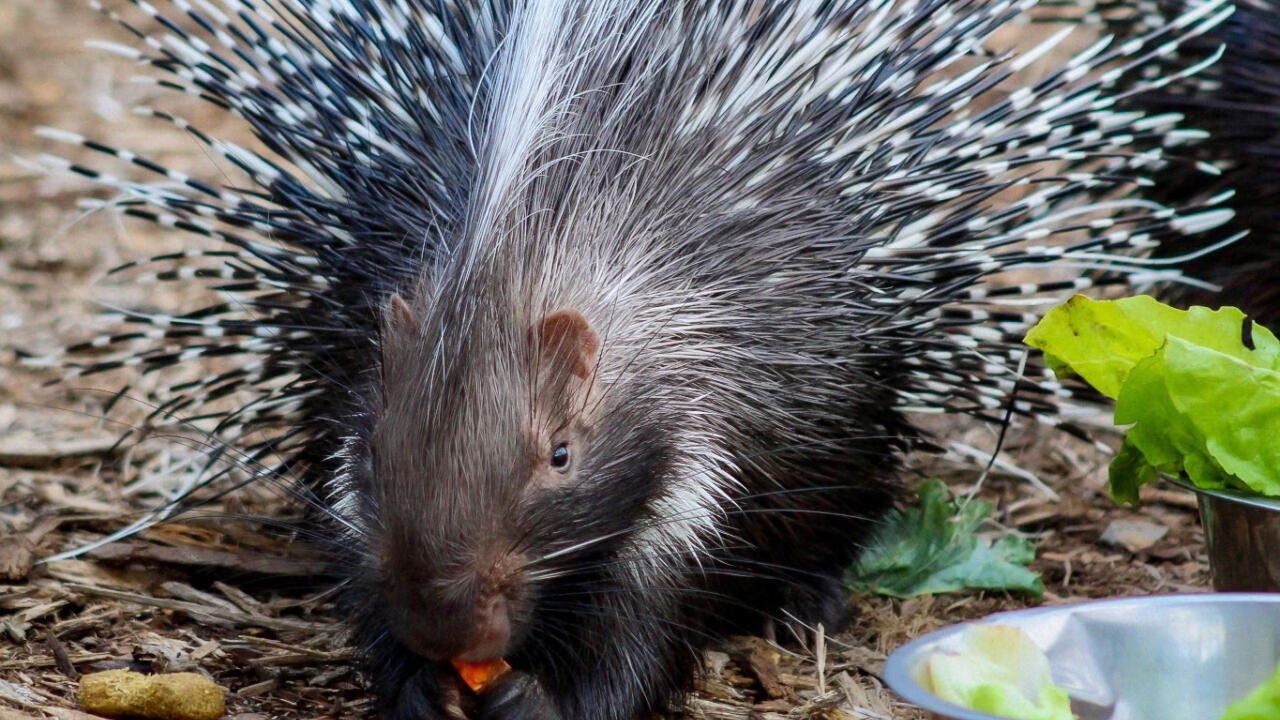
Travel Guide
Discover 5 fascinating facts about the Cape porcupine, including its impressive quills, nocturnal lifestyle, and unique social structure.
The Cape porcupine is one of Africa’s most distinctive mammals. Its covering of long, sharp quills creates an appearance unlike almost any other animal encountered on the continent.
Scientifically known as Hystrix africaeaustralis, the Cape porcupine is particularly well adapted to a largely nocturnal lifestyle. It spends much of the day resting in shelter and becomes active after dark when it searches for food.
Its quills are certainly the most famous feature, but the source’s Cape Porcupine Facts also highlight feeding behavior, digging ability, nighttime activity, and family relationships.
These characteristics reveal an animal that is much more complex than its defensive appearance suggests.
The first and most recognizable of the Cape Porcupine Facts is the animal’s extraordinary collection of quills.
The source describes these quills as modified hairs.
They form an effective defense against predators.
When threatened, a Cape porcupine can raise its quills, making itself appear larger and more dangerous.
The visual warning gives a potential attacker an opportunity to retreat.
If the threat continues, the porcupine can present the heavily protected rear of its body toward the attacker.
The source explains that the quills are loosely attached.
This means they can become embedded in an animal that makes forceful contact with them.
Contrary to a common image sometimes associated with porcupines, the defensive strategy described in the source does not depend on firing quills through the air.
Instead, physical contact creates the danger.
The quills can be difficult for a predator to remove once embedded.
This gives the porcupine a highly effective defensive system without requiring it to actively hunt or fight other animals.
Despite its formidable defenses, the source describes the porcupine as generally peaceful.
Quills function primarily as protection.
This distinction is important.
Wildlife with strong defensive adaptations is not necessarily aggressive.
An animal may respond only when it feels threatened or cornered.
For safari visitors, the appropriate response is therefore to provide space.
There is no reason to provoke a porcupine into raising its quills simply to create a dramatic photograph.
Natural behavior is always more valuable than a forced defensive display.
A Cape porcupine’s body contains quills of different lengths and forms.
Together they create the striking spiny appearance for which the animal is known.
When the porcupine becomes alarmed, the raised quills make its body look larger.
The animal may also create sounds associated with its defensive display.
Predators quickly learn that attempting to bite a porcupine can result in painful injuries.
This adaptation allows a relatively slow-moving herbivore to survive in landscapes containing powerful carnivores.
The source’s second point discusses the Cape porcupine’s ability to move through difficult environments and describes climbing behavior.
Strong claws and a muscular body help the animal negotiate rough ground, vegetation, and rocky areas.
Cape porcupines spend substantial time on the ground, where their digging and foraging abilities are particularly important.
Their physical strength becomes useful when searching for underground foods or moving through demanding terrain.
This is an animal built for practical nighttime foraging rather than speed.
Cape porcupines spend daylight hours resting in sheltered locations.
The source refers to burrows and dens.
These spaces provide security and protection while the animal is inactive.
A suitable den may be used repeatedly.
Shelter is particularly important for a nocturnal animal because it needs a safe place to remain during daylight.
Visitors are therefore less likely to see active porcupines during conventional daytime game drives.
Night activities, where legally and responsibly conducted, can provide better opportunities.
Even in areas containing healthy populations, porcupines can remain surprisingly elusive.
Their nocturnal activity means they emerge when many safari visitors have already returned to their lodges.
They may also remain close to vegetation and cover.
Evidence of porcupine activity can sometimes be easier to find than the animal itself.
Tracks, digging signs, feeding evidence, and quills can indicate that porcupines use an area.
This hidden lifestyle makes an actual sighting particularly rewarding.
The third fact emphasized by the source is the porcupine’s nocturnal lifestyle.
Cape porcupines are most active at night.
During the day, they generally rest in burrows, dens, or other protected spaces.
As darkness arrives, they emerge to search for food.
Night activity helps them avoid some daytime heat and allows them to move under the protection of darkness.
For wildlife observers, this means porcupines belong to an entirely different side of the African landscape from many familiar daytime safari animals.
The source describes a diet including roots, bulbs, bark, and fruits.
These foods require different feeding techniques.
Underground roots and bulbs need to be excavated.
Bark requires gnawing.
Fruit may be found on or near the ground.
This varied plant-based diet explains why strong claws and teeth are so useful.
A Cape porcupine may spend significant periods searching, digging, and feeding during the night before returning to shelter.
Porcupines remind safari travelers that wildlife activity does not stop after sunset.
Many mammals become active precisely when daylight species are settling down.
Where night drives are permitted, travelers may encounter nocturnal animals that are rarely seen during the day.
However, night viewing must follow local regulations.
Bright lights should be used responsibly, and animals should not be chased or surrounded.
The objective remains observing natural behavior with minimal disturbance.
The fourth of the source’s Cape Porcupine Facts focuses on digging.
Strong claws and powerful limbs allow the animal to excavate roots, tubers, and bulbs.
This ability gives porcupines access to food hidden beneath the ground.
Their teeth allow them to gnaw tougher plant material, including bark.
These feeding adaptations make Cape porcupines effective foragers capable of exploiting food resources that may not be available to animals relying only on surface vegetation.
The source notes that porcupine digging can contribute to soil aeration.
When animals disturb soil while searching for underground foods, they alter small patches of the landscape.
The source also associates porcupines with seed dispersal.
These activities demonstrate how an animal can influence an ecosystem through everyday feeding behavior.
A porcupine may appear to be simply searching for dinner, yet its movements and digging can have wider ecological effects.
The same foraging abilities can create conflict when porcupines enter agricultural areas.
The source notes that digging and feeding can damage crops.
For a farmer, repeated crop loss can become a serious economic concern.
This illustrates a broader challenge in wildlife conservation.
An animal valued by tourists or conservationists may create direct costs for people living alongside it.
Effective coexistence therefore requires practical methods of reducing crop damage without unnecessarily harming wildlife.
Like other rodents, porcupines possess teeth adapted for gnawing.
This allows them to process tough plant materials.
Bark and other hard foods would be difficult to exploit without suitable dental adaptations.
The combination of strong claws and teeth gives the animal access to a wide range of plant resources.
These adaptations are less visually dramatic than the famous quills, but they are just as important for survival.
Defense keeps the animal alive when threatened, while feeding adaptations allow it to obtain the energy required for daily life.
The fifth fact in the source concerns social structure.
The supplied material describes Cape porcupines as animals that may form family groups, particularly around young offspring.
This adds another dimension to an animal often imagined as a completely solitary nighttime wanderer.
Family relationships can center around a shared den or burrow.
Shelter provides a secure location where animals can rest during daylight and where young animals receive protection.
The source identifies scent marking, vocalizations, and body language among ways porcupines communicate.
These methods are particularly useful for animals active at night.
Scent can remain in an area after the individual has moved away.
Sounds can communicate without requiring clear visual contact.
Body posture, including the position of defensive quills, can communicate warning and agitation.
Together these methods help porcupines interact with other individuals and respond to threats.
Young porcupines need protection while developing.
A secure den helps provide shelter.
Family relationships around young animals show that porcupine social behavior can be more complex than the image of a permanently solitary animal suggests.
As with many wild mammals, behavior can vary according to age, reproductive status, environment, and individual circumstances.
Observing these animals over long periods is therefore necessary to understand their social lives fully.
A Cape porcupine may encounter large carnivores capable of overpowering many other mammals.
Its quills dramatically change that relationship.
A predator needs to approach carefully because attacking the wrong part of the animal can result in injury.
The porcupine’s strategy is defensive rather than based on outrunning predators.
When threatened, it uses posture and its heavily protected body to make an attack costly.
This demonstrates the variety of survival strategies found among African mammals.
Because the species is primarily nocturnal, a Cape porcupine sighting can be unpredictable.
Travelers should ask guides about local wildlife rather than assuming porcupines can be found on demand.
A guide may recognize tracks or other evidence of activity.
Where night drives are allowed, patience can sometimes produce a sighting.
Visitors staying at wilderness lodges should also follow instructions when walking after dark.
Nocturnal wildlife can move through camp areas, and guests may need escorts depending on the location.
Low-light conditions make porcupines challenging photographic subjects.
Photographers should avoid pressuring guides to chase an animal or repeatedly illuminate it.
If a porcupine raises its quills because a vehicle or person has approached, that defensive behavior may indicate discomfort.
Providing additional space is the responsible response.
Wildlife photography should document behavior rather than manufacture it.
A relaxed porcupine quietly feeding can reveal far more about the species than an animal forced into a defensive posture.
The source connects porcupines with soil disturbance and seed dispersal.
Their feeding activities also place them within wider food and vegetation relationships.
They consume plant material, excavate underground foods, and move through different habitats.
These interactions contribute to ecological processes occurring every night largely unseen by people.
Porcupines therefore demonstrate why less famous safari animals deserve attention.
Africa’s ecosystems depend on numerous species whose activities may be subtle compared with those of elephants, lions, or large migrating herds.
These Cape Porcupine Facts reveal an animal defined by much more than its impressive quills.
Cape porcupines possess a formidable defensive system, spend much of their active lives exploring at night, use powerful claws and teeth to obtain food, and display interesting family and communication behaviors.
Their nocturnal habits mean many travelers never see them even when visiting areas where porcupines are present.
That relative secrecy makes them especially fascinating.
The next time a safari guide finds porcupine tracks, digging marks, or a discarded quill, it is worth remembering that somewhere nearby may be one of Africa’s most distinctive nocturnal mammals, waiting for darkness before beginning another night of feeding and exploration.

26 African Countries Under Full or Partial U.S. Travel Ban (Post-December Update) Following the December update to U.S.…
Read article →
3 Days Congo Gorilla Safari – Encounter the Gentle Giants of Virunga A 3 Days Congo Gorilla Safari…
Read article →
Children and Kids on Safari – Family-Friendly Adventures in Africa Taking children on an African safari is one…
Read article →
How to Plan a Safari in Uganda—Your Complete Travel Guide Planning a safari in Uganda is the start…
Read article →