

26 African Countries Under Full or Partial U.S. Travel Ban (Post-December Update)
26 African Countries Under Full or Partial U.S. Travel Ban (Post-December Update) Following the December update to U.S.…
Read article →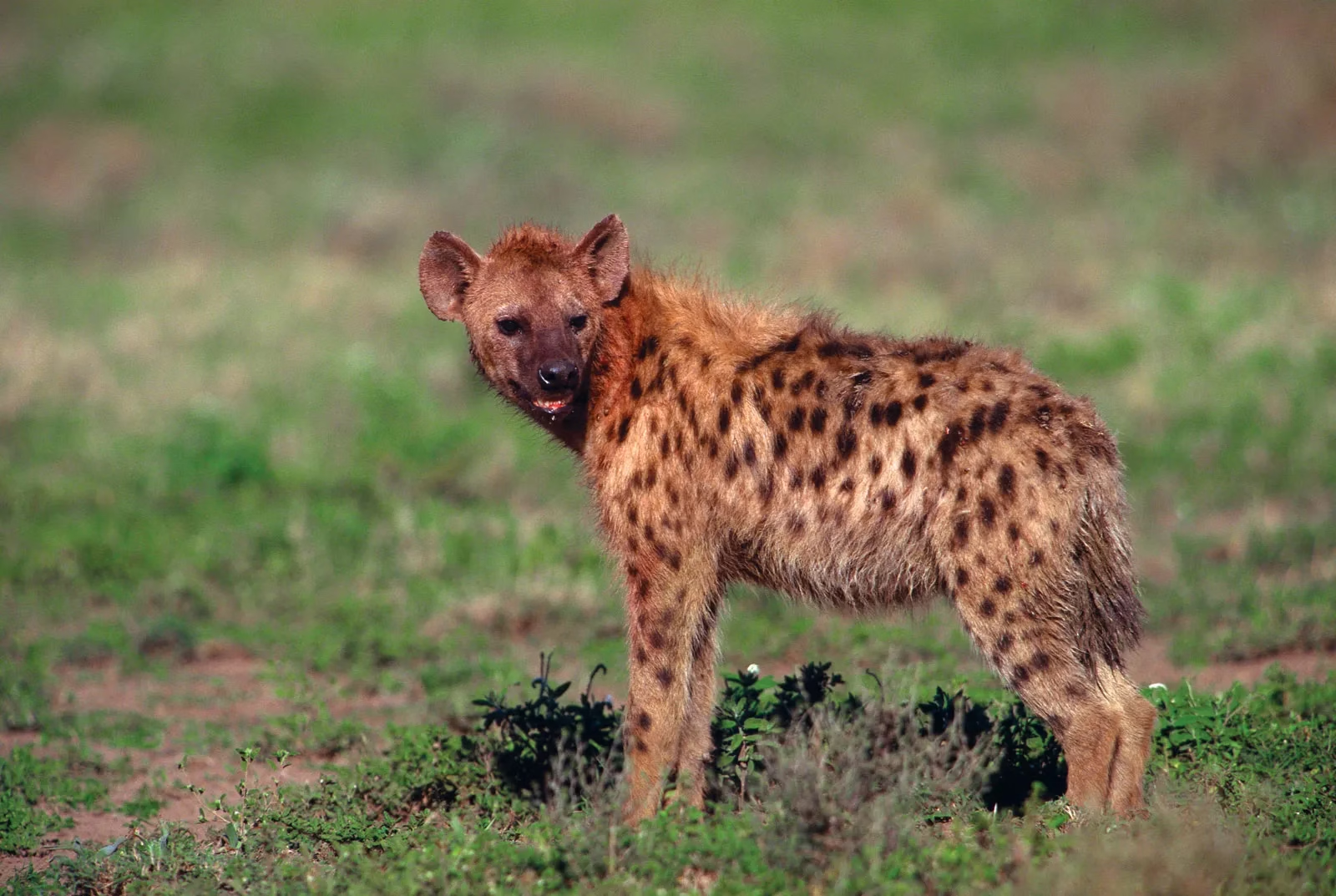
Travel Guide
Discover 5 fascinating facts about the brown hyena, including its shy nature, nocturnal behavior, and important role as a scavenger in the African ecosystem.
The brown hyena, scientifically known as Parahyaena brunnea, receives considerably less attention than Africa’s more familiar spotted hyena. Yet its shaggy appearance, nocturnal habits, scavenging ability, and secretive behavior make it one of southern Africa’s most interesting carnivores.
The supplied Brown Hyena Facts describe an animal adapted to environments where food and water can be difficult to find.
Brown hyenas are primarily associated with southern Africa and can survive in dry landscapes that would challenge many other large carnivores.
Their secretive lifestyle means visitors may travel through brown hyena habitat without ever seeing one. Much of their activity occurs after dark, and they generally avoid unnecessary encounters with people and stronger predators.
The first of the source’s Brown Hyena Facts concerns their shy nature.
Compared with the highly visible social activity associated with spotted hyenas, brown hyenas are often much more difficult to observe.
They may live in family groups, but individual animals can spend significant periods foraging alone.
Their tendency to use remote areas and remain active at night contributes to their elusive reputation.
This does not mean brown hyenas are absent simply because safari visitors do not see them.
Tracks and other signs may reveal their presence in areas where direct sightings are uncommon.
The source associates brown hyenas with deserts and arid areas of southern Africa.
Survival in these environments requires flexibility.
Food may be scattered across large distances, and animals need to move efficiently while searching for opportunities.
A brown hyena cannot rely on finding a fresh kill every night.
Its ability to consume a broad range of available foods therefore becomes essential.
This adaptability helps explain how the species survives in landscapes that may appear relatively empty to human observers.
A cautious lifestyle can be an advantage.
Brown hyenas share landscapes with larger predators that may be dangerous competitors.
Avoiding confrontation reduces the risk of injury.
For a scavenger, survival depends not only on finding food but also on judging when approaching a carcass is safe.
An animal that becomes injured in a fight may struggle to travel or feed.
The brown hyena’s secretive behavior can therefore be understood as a practical survival strategy rather than simply shyness.
The supplied source notes that brown hyenas may occur in small family groups.
This means the species should not be viewed as completely solitary.
Individuals can maintain social relationships even when they forage alone.
A den can become an important focal point, particularly where young animals are being raised.
The difference between social structure and daily foraging behavior is important.
Animals belonging to a group do not necessarily need to remain physically together throughout every night.
The second major fact is their role as scavengers.
Brown hyenas consume carcasses and remains left by other predators.
The source mentions large herbivores such as wildebeest, zebra, and antelope among potential food sources.
A carcass that appears nearly finished to another animal may still contain valuable nutrition for a hyena equipped with strong jaws and an efficient digestive system.
Scavenging makes brown hyenas part of nature’s cleanup system.
By consuming animal remains, they participate in the recycling of nutrients through the ecosystem.
A scavenger cannot simply wait beside one location and expect food to appear.
Brown hyenas may need to cover substantial distances while searching.
A strong sense of smell is particularly useful.
Scent can help an animal locate food that is not visible from a distance.
Nighttime travel also allows brown hyenas to explore landscapes with less daytime heat and reduced human activity.
The combination of mobility, smell, and opportunistic feeding helps them survive where meals are unpredictable.
The source explains that brown hyenas may feed on remains left by predators such as lions or cheetahs.
Approaching another predator’s kill requires caution.
If the original hunter is still present, a brown hyena may need to wait or leave.
Once the larger predator has moved away, however, bones, skin, and other remains can still provide food.
Powerful jaws allow hyenas to exploit resources that many animals cannot process.
This gives them access to nutrition after softer tissues have already been consumed.
Although scavenging is central to their ecology, the source notes that brown hyenas can take smaller prey such as birds and rodents.
This demonstrates their flexibility.
An opportunistic carnivore benefits from using whatever suitable food is available.
Hunting smaller animals does not transform the brown hyena into the same type of predator as a lion or cheetah.
Instead, it supplements a diet strongly associated with scavenging.
Scavengers are sometimes misunderstood because they feed on dead animals.
Ecologically, this role is extremely important.
Carcasses contain large quantities of organic material.
Animals that consume them accelerate the breakdown and redistribution of nutrients.
Brown hyenas therefore contribute to healthy ecosystems even when they are not the species responsible for making a kill.
Their work is less visually dramatic than a predator chase, but it remains an essential ecological process.
The third of the source’s Brown Hyena Facts concerns appearance.
Brown hyenas have shaggy, dark coats that distinguish them from spotted hyenas.
Long hair around the neck and shoulders contributes to a rough, almost untidy appearance.
This thick coat is one of the species’ most immediately recognizable characteristics.
Their overall shape remains unmistakably hyena-like, but the coloration and long hair make identification relatively straightforward when visitors obtain a clear view.
The source also highlights strong jaws.
These are important for a scavenging lifestyle.
Animal remains can include bones and tough tissues that require considerable force to process.
The ability to exploit these resources reduces waste and gives brown hyenas access to food unavailable to many other carnivores.
The jaw structure therefore represents more than an intimidating physical feature.
It is an adaptation closely connected to the animal’s ecological role.
Travelers familiar only with spotted hyenas may be surprised when they first see a brown hyena.
The long coat produces a different silhouette.
Coloration is darker, and the overall appearance can seem more heavily furred.
These differences reflect the diversity within the hyena family.
Calling every hyena the same overlooks the distinct ecology, behavior, and distribution of individual species.
Learning these differences makes safari observations more meaningful.
The fourth fact highlighted in the source is nocturnal behavior.
Brown hyenas conduct much of their foraging after dark.
This helps explain why they can be present in an area yet remain unseen by most visitors.
Nighttime activity can reduce exposure to daytime heat.
It can also allow brown hyenas to move through landscapes when some competitors and human activities are reduced.
Their senses are well adapted to locating food under low-light conditions.
Most traditional safari schedules concentrate on early morning and late afternoon.
These are productive periods for many species, but a strongly nocturnal animal may still remain hidden.
Travelers particularly interested in brown hyenas should therefore consider destinations where legal guided night activities are available.
Even then, sightings cannot be guaranteed.
An elusive wild carnivore does not follow tourism schedules.
The uncertainty makes a genuine sighting especially memorable.
The source emphasizes the brown hyena’s strong sense of smell.
For an animal searching for carcasses in darkness, scent provides critical information.
Food may be hidden behind vegetation or located beyond direct visual range.
Smell can guide the animal toward opportunities.
Scent also plays roles in communication and territorial behavior among many carnivores.
A nocturnal animal therefore experiences its environment through sensory information that human visitors may barely notice.
Night viewing requires careful behavior.
Artificial lights should not be used in ways that repeatedly stress or pursue an animal.
Drivers should avoid blocking the direction in which a brown hyena is moving.
If the animal changes direction repeatedly because of a vehicle, more space may be necessary.
A brief natural observation is more valuable than a longer sighting created through harassment.
Responsible tourism is especially important with species whose cautious behavior already reflects sensitivity to disturbance.
The final point in the supplied source concerns conservation.
It describes the brown hyena as Near Threatened and identifies habitat loss, human-wildlife conflict, and persecution among pressures affecting the species.
Because brown hyenas are elusive and widely dispersed, their conservation needs may receive less public attention than those of more famous predators.
Yet their ecological role makes their protection important.
Healthy carnivore communities depend on preserving a variety of species, including scavengers.
Conflict can occur when carnivores live near farming communities.
Even when a particular animal is not responsible for livestock losses, fear or misunderstanding can lead to persecution.
Scavengers may be blamed simply because they are found feeding on an animal that has died.
Reducing conflict therefore requires accurate information.
Understanding what brown hyenas actually eat and how they behave can help communities and conservation managers develop more appropriate responses.
The source also highlights habitat loss.
Wildlife populations need connected landscapes through which animals can move and find food.
When habitat becomes fragmented, individuals may be forced into closer contact with people or may struggle to move between suitable areas.
This can be particularly challenging for animals that naturally travel considerable distances while foraging.
Conservation therefore requires more than protecting individual dens.
It involves maintaining landscapes large enough to support normal movement and feeding behavior.
Protecting brown hyenas helps preserve ecological processes.
Scavengers remove carcass material and recycle nutrients.
They occupy a specific position within food webs.
Losing them would alter relationships among predators, scavengers, prey, and decomposers.
Conservation is therefore not simply about keeping an unusual species alive for tourists to photograph.
It is about maintaining functioning ecosystems.
A brown hyena sighting should be treated as a fortunate wildlife encounter.
Visitors should resist comparing every experience with sightings of more famous predators.
The animal’s rarity in ordinary daytime observations is part of what makes it fascinating.
Tracks, scent-marking locations, or distant nighttime movement can all provide insight into its presence.
A knowledgeable guide can interpret these signs and explain how brown hyenas use the landscape.
Photography can be difficult because sightings often occur in poor light.
A camera capable of working at higher sensitivity can help, but photographers should avoid excessive artificial illumination.
Natural behavior should remain the priority.
A brown hyena walking across an open area, investigating a scent, or feeding naturally provides a more meaningful photograph than an animal repeatedly pursued by vehicles.
Patience and respect remain essential.
The supplied Brown Hyena Facts reveal an animal adapted to a demanding ecological niche.
Its cautious behavior helps it avoid unnecessary conflict.
Its scavenging ability allows it to survive on unpredictable food resources.
Strong jaws enable it to process tough remains, while nighttime activity helps it navigate harsh environments.
Its shaggy coat gives it an unmistakable appearance.
At the same time, habitat pressures and human conflict create conservation challenges.
The brown hyena deserves recognition as more than the lesser-known relative of the spotted hyena.
It is a specialized scavenger, a nocturnal traveler, a powerful feeder, and an important part of southern African ecosystems.
Its secretive behavior means visitors may need patience and luck to see one.
That difficulty makes understanding the species even more valuable.
These Brown Hyena Facts show how an animal that spends much of its life outside human view can still play an important role in maintaining ecological balance.
Protecting brown hyenas ultimately means protecting the landscapes, food webs, and natural processes on which many other African species also depend.

26 African Countries Under Full or Partial U.S. Travel Ban (Post-December Update) Following the December update to U.S.…
Read article →
3 Days Congo Gorilla Safari – Encounter the Gentle Giants of Virunga A 3 Days Congo Gorilla Safari…
Read article →
Children and Kids on Safari – Family-Friendly Adventures in Africa Taking children on an African safari is one…
Read article →
How to Plan a Safari in Uganda—Your Complete Travel Guide Planning a safari in Uganda is the start…
Read article →