

26 African Countries Under Full or Partial U.S. Travel Ban (Post-December Update)
26 African Countries Under Full or Partial U.S. Travel Ban (Post-December Update) Following the December update to U.S.…
Read article →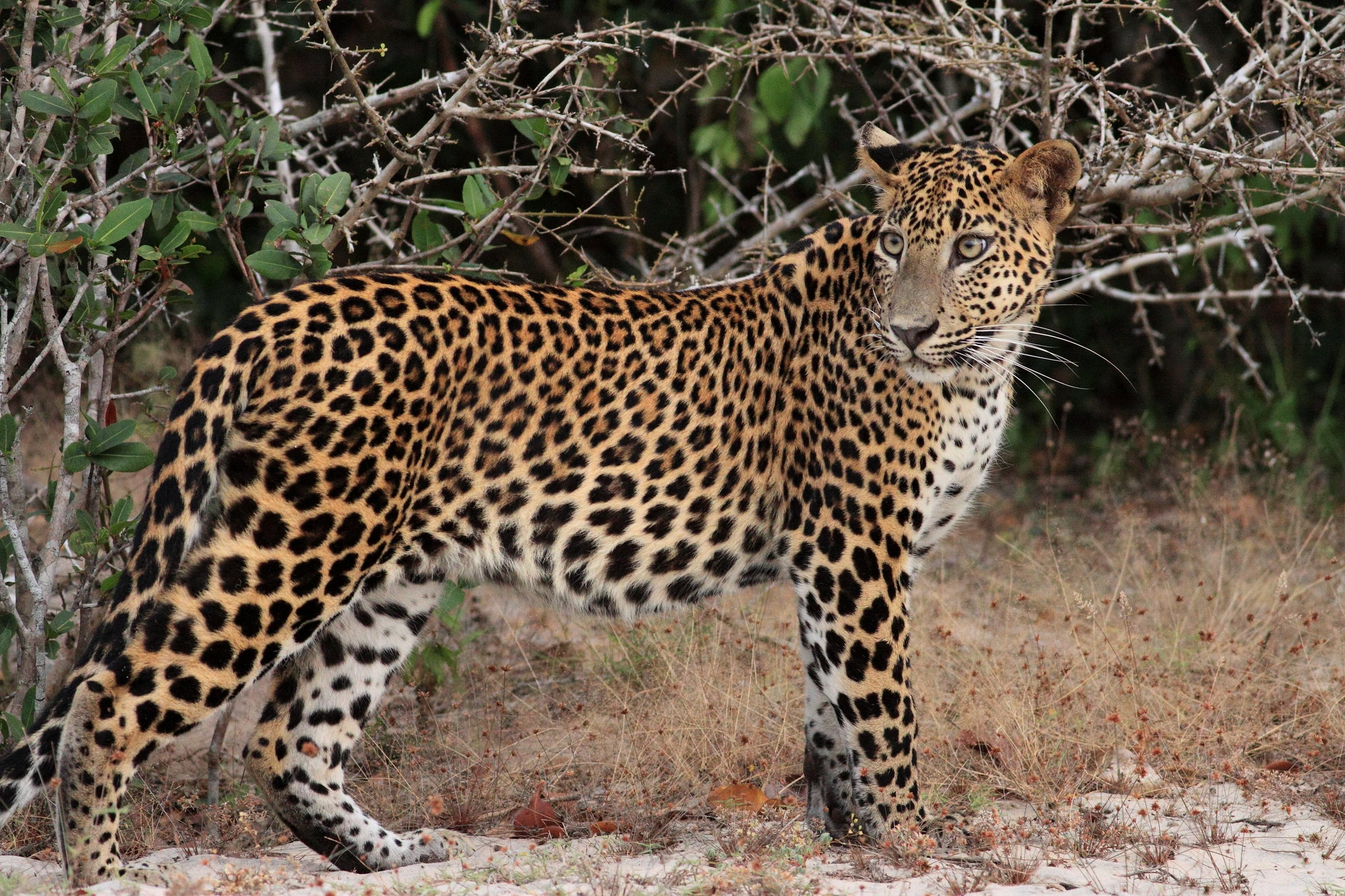
Travel Guide
Discover 5 fascinating facts about the leopard, from its unique camouflage and night hunting skills to its strength, adaptability, and solitary lifestyle.
The Fascinating Facts About the Leopard highlighted in the source focus on five characteristics: camouflage, night hunting skills, strength, adaptability, and a solitary lifestyle. Together, these qualities help explain why leopards can be among the most compelling animals to encounter on an African safari.
A leopard sighting often feels different from observing animals that spend more time in large groups or open landscapes. Travelers may need patience, careful observation, and an experienced guide to locate one.
The source’s five themes provide a useful way to understand why.
The first characteristic is camouflage.
A leopard’s patterned coat can make the animal remarkably difficult to notice in natural surroundings. Travelers sometimes imagine that a large predator will be obvious, but vegetation, shadows, and distance can make a leopard disappear visually even when it is relatively close.
This creates one of the great pleasures of safari observation.
A guide may point toward an area that initially appears empty. After several moments, the traveler begins to distinguish the outline of an animal that had blended into the scene.
Camouflage also creates interesting photography challenges. Autofocus may struggle when vegetation sits between the camera and the animal.
Visitors should resist asking guides to reposition aggressively simply because branches interrupt a photograph. The leopard’s natural setting is part of the encounter.
The second characteristic highlighted in the source is night hunting skill.
This reminds travelers that the behavior observed during daytime represents only part of a leopard’s life.
Safari visitors should follow the activity schedules and regulations applicable to the destination they are visiting. They should not assume that nighttime wildlife viewing is permitted everywhere.
Where appropriate experiences are legitimately available, professional guidance remains essential.
The important point is that a leopard’s hunting behavior is adapted to conditions that can differ from those under which tourists most commonly see the animal.
A leopard resting during the day should not be interpreted as inactive by nature. Wildlife follows its own rhythms.
The third characteristic is strength.
Leopards have a reputation for impressive physical ability relative to their size. Travelers should therefore remember that a calm-looking leopard remains a powerful wild predator.
Safari rules and guide instructions must always be respected.
Visitors should never leave an appropriate viewing position simply to get closer.
Strength is also part of what makes leopard behavior interesting. Rather than judging the animal only by size compared with other predators, travelers can watch how it moves and interacts with its environment.
The fourth quality is adaptability.
The source identifies this as one of the five defining facts.
Adaptability helps explain why leopards can be associated with varied environments. For travelers, it is a reminder not to imagine wildlife as existing only within one perfect photographic landscape.
Animals use habitat according to food, cover, disturbance, and many other factors.
A leopard may be encountered in a setting that looks completely different from a famous safari photograph.
This adaptability also means guides need to understand local habitat rather than simply search one type of landscape.
The fifth characteristic is the leopard’s solitary lifestyle.
This contrasts with wildlife that visitors may commonly observe in larger social groups.
Seeing a leopard alone is therefore not necessarily an indication that something is wrong. Solitary behavior is part of the animal’s general lifestyle highlighted by the source.
For photographers, this can produce striking images because one animal becomes the clear focus of the scene.
For observers, it encourages attention to individual behavior.
These Fascinating Facts About the Leopard become particularly useful during a real wildlife encounter.
Camouflage explains why patience matters.
Night hunting helps travelers understand why an animal may behave differently at different times.
Strength reinforces the need for appropriate distance.
Adaptability reminds visitors to search varied habitats.
The solitary lifestyle explains why sightings may involve a single individual.
Together, the facts turn a leopard encounter into something more educational than simply checking a predator off a safari list.
A knowledgeable guide can add context by explaining what the animal is doing.
Visitors should remain quiet and avoid pressuring the guide to move excessively close.
If several safari vehicles are present, responsible viewing becomes particularly important.
Crowding can reduce the quality of the experience and place unnecessary pressure on wildlife.
Photography should be patient.
A long lens can help when the leopard is distant. Wider images can be equally valuable because they show how camouflage works within the landscape.
Sometimes the most interesting photograph is not a perfect close-up but an image in which the viewer has to search for the animal.
Travelers should also accept that a leopard may remain partly hidden.
Wildlife tourism does not guarantee studio-quality visibility.
The unpredictability is part of what makes a genuine encounter exciting.
Families can use leopard sightings as educational opportunities. Children can be encouraged to look carefully for patterns and consider why camouflage is useful.
This can turn waiting into part of the experience rather than a source of frustration.
Although leopards attract considerable attention, travelers should avoid allowing the search for one species to dominate an entire safari.
The landscape contains many other animals and birds worth observing.
A drive spent searching unsuccessfully for a leopard can still produce memorable encounters.
This broader perspective reduces pressure on guides and makes wildlife travel more rewarding.
The five qualities supplied by the source—camouflage, night hunting, strength, adaptability, and solitary living—also demonstrate how animals fit into ecological systems in different ways.
Not every predator uses the same strategy.
This diversity is one reason safari ecosystems are so interesting.
The Fascinating Facts About the Leopard ultimately show why Panthera pardus can be such a captivating safari species.
A leopard combines visual concealment with hunting ability, physical strength, adaptability, and an independent lifestyle.
For visitors, the best way to appreciate these characteristics is through responsible observation.
Remain patient, listen to professional guides, keep an appropriate distance, and allow the animal to behave naturally.
A leopard that stays partly hidden or chooses to move away has not ruined the safari. It has simply reminded visitors that the encounter takes place on the animal’s terms.
That unpredictability is central to authentic wildlife travel and one of the reasons a leopard sighting can remain memorable long after the safari ends.

26 African Countries Under Full or Partial U.S. Travel Ban (Post-December Update) Following the December update to U.S.…
Read article →
3 Days Congo Gorilla Safari – Encounter the Gentle Giants of Virunga A 3 Days Congo Gorilla Safari…
Read article →
Children and Kids on Safari – Family-Friendly Adventures in Africa Taking children on an African safari is one…
Read article →
How to Plan a Safari in Uganda—Your Complete Travel Guide Planning a safari in Uganda is the start…
Read article →