
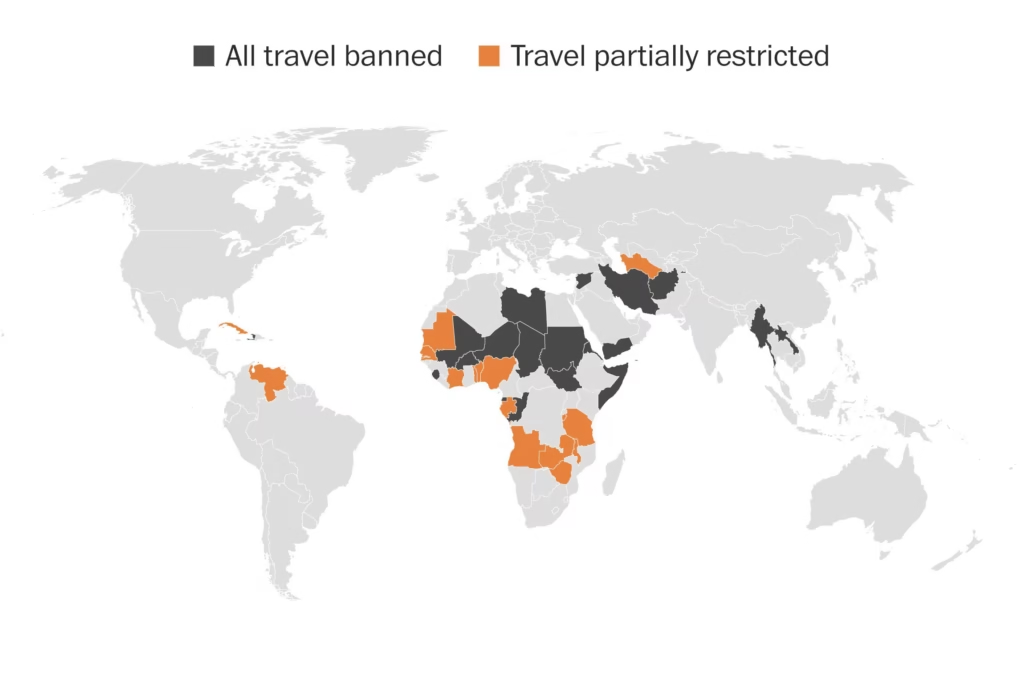
26 African Countries Under Full or Partial U.S. Travel Ban (Post-December Update)
26 African Countries Under Full or Partial U.S. Travel Ban (Post-December Update) Following the December update to U.S.…
Read article →
Travel Guide
Batwa people's enduring culture offers profound insights into human adaptability and spiritual connection with nature in the modern world.
The facts about the Batwa people presented in the supplied source focus on their long relationship with Central African forest environments, traditional ecological knowledge, spiritual connections with the forest, challenges following displacement, and the growing role of cultural tourism.
The source particularly connects Batwa communities with the Bwindi Forest region and presents their history as an important human dimension of traveling through southwestern Uganda.
Understanding the Batwa requires more than treating them as an attraction added to a gorilla safari. Their experiences include cultural continuity, adaptation, displacement, marginalization, and attempts to build new livelihoods.
A responsible cultural encounter should therefore allow Batwa participants to explain their own experiences rather than reducing a complex community to a collection of stereotypes.
The supplied source describes the Batwa people as native inhabitants of forest environments, including the Bwindi region.
Historically, forest knowledge played a central role in everyday survival.
Food, medicinal plants, shelter materials, wildlife tracking, and spiritual practices were closely connected with the surrounding ecosystem.
The forest was therefore much more than a physical location.
One of the central facts about the Batwa people in the source is their extensive knowledge of plants and animals.
Living closely with forest environments required an understanding of seasonal changes, edible plants, animal movements, medicinal resources, and suitable materials.
Such knowledge developed through generations of observation and experience.
The supplied source refers to genetic research suggesting very ancient origins for Batwa and related Central African forest communities.
It provides an estimate extending back tens of thousands of years.
Because the source presents this as an interpretation of genetic studies rather than a simple historical date, it is best understood as emphasizing the deep ancestry of these communities rather than as a precise timeline for one modern Batwa population.
The source uses the term “Pygmy” in discussing Batwa communities and physical stature.
This term has historically been applied broadly to several Central African forest peoples.
Travelers should recognize that communities are diverse and that respectful contemporary usage should prioritize the names people use for themselves.
In this article, Batwa remains the primary term.
The supplied source describes Batwa knowledge of flora and fauna as particularly extensive.
Traditional survival depended on recognizing useful and dangerous plants, following animal signs, finding food, and understanding the forest landscape.
This knowledge represents a form of ecological expertise developed through lived experience.
Forest plants were also connected with traditional medicine.
Knowing which plants could be used, how they were prepared, and when they were collected required detailed local understanding.
Visitors participating in a cultural experience may be introduced to examples, but such knowledge should be treated respectfully rather than as entertainment.
Tracking animals was another important traditional skill.
Tracks, broken vegetation, sounds, feeding signs, and other evidence can reveal where animals have moved.
These skills illustrate the depth of observation required to live within a forest environment.
The source also refers to forest resources being used for shelter and clothing.
Materials available within the environment could be adapted to practical needs.
Demonstrations during cultural tourism experiences can help visitors understand these historical techniques when they are presented by community members themselves.
Another major theme in the supplied source is the spiritual relationship between Batwa communities and the forest.
The source describes traditional beliefs in which the forest and its inhabitants were understood as interconnected within a spiritual environment.
This relationship influenced ceremonies and the meaning attached to particular places.
The supplied material refers to offerings and rituals connected with forest spirits.
Such practices demonstrate that the forest was not viewed solely as a source of physical resources.
It also carried spiritual meaning.
Visitors should approach discussions of these beliefs with the same respect they would give any religious or spiritual tradition.
The source states that displacement from ancestral forest areas disrupted this relationship.
Some Batwa continue seeking opportunities to maintain cultural or spiritual connections with forests.
This demonstrates how conservation decisions can have complicated human consequences even when they are intended to protect important ecosystems.
One of the most serious facts about the Batwa people in the supplied source concerns forced removal from traditional forest environments.
The material links displacement with poverty, homelessness, social exclusion, and difficulties adapting to new economic systems.
These issues should not be minimized within tourism narratives.
The source describes lack of land rights as a significant challenge.
Without secure access to land, communities can struggle to build stable housing, grow food, or develop sustainable livelihoods.
Land insecurity can therefore influence many other aspects of social and economic life.
The supplied material also refers to discrimination.
Marginalization can restrict access to employment, education, healthcare, and other opportunities.
Visitors should avoid reinforcing stereotypes that present Batwa people as belonging only to the past.
They are contemporary communities navigating modern social and economic realities.
Limited access to education is identified within the source as another challenge.
Education can create opportunities, but access may be affected by poverty, distance, discrimination, and other structural factors.
Community-led initiatives can play an important role in improving opportunities for younger generations.
The source notes that some Batwa have adopted agriculture and other economic activities.
This transition demonstrates cultural adaptation rather than cultural disappearance.
Communities can preserve important aspects of heritage while participating in new forms of livelihood.
Culture is not static.
The supplied source presents cultural tourism as one potential path toward economic empowerment.
Experiences designed and operated with meaningful community participation can create income while giving visitors an opportunity to learn.
The quality of such tourism depends heavily on who controls the experience and how benefits are distributed.
Projects referred to by the source allow visitors to learn about traditional forest knowledge and cultural practices.
Activities may involve storytelling, demonstrations, music, or explanations of historical forest life.
Travelers should remember that these presentations represent elements selected for tourism and do not define every aspect of contemporary Batwa identity.
Responsible cultural tourism requires more than paying an entrance fee.
Visitors should ask permission before taking photographs, listen carefully to guides, avoid intrusive questions, and purchase locally produced goods where appropriate.
Most importantly, they should engage with participants as people rather than as exhibits.
Many visitors encounter Batwa cultural activities while traveling for gorilla trekking in Bwindi.
The combination can provide useful context.
The forest is internationally celebrated for mountain gorillas, but its conservation history also intersects with communities that had longstanding relationships with the same landscape.
Understanding both dimensions creates a more complete picture.
A cultural visit can help travelers appreciate that southwestern Uganda is not simply a wildlife destination.
Communities, farms, villages, languages, traditions, and changing livelihoods are all part of the landscape.
The road to Bwindi passes through inhabited areas long before visitors enter the protected forest.
The source emphasizes the importance of preserving indigenous heritage.
Songs, stories, ecological knowledge, spiritual traditions, and practical forest skills can all form part of cultural memory.
Preservation is strongest when communities themselves determine what should be maintained, taught, adapted, or shared.
It is possible to admire traditional forest knowledge while still acknowledging the difficulties described in the source.
Batwa culture should not be romanticized as though communities exist outside modern life.
Contemporary aspirations for education, land, healthcare, employment, and social inclusion deserve equal attention.
Travelers interested in Batwa experiences should seek programs with clear local participation.
The aim should be to support community livelihoods and respectful cultural exchange.
A good experience gives local hosts agency over the stories, demonstrations, and activities presented to visitors.
The Fascinating Facts about the Batwa people. presented in the supplied source reveal a story of deep forest knowledge, spiritual connection, cultural resilience, displacement, and adaptation.
Batwa communities have historically developed detailed understanding of forest plants, wildlife, medicine, tracking, and survival. At the same time, removal from ancestral environments has contributed to serious social and economic challenges.
Cultural tourism can create opportunities when communities participate meaningfully and benefit directly.
For visitors to Bwindi, learning about Batwa history adds an essential human dimension to a landscape most famous internationally for mountain gorillas.
The strongest cultural experiences are those that encourage travelers to listen rather than merely observe, recognizing Batwa people not as figures from a vanished past but as living communities whose heritage, challenges, and aspirations continue to evolve.

26 African Countries Under Full or Partial U.S. Travel Ban (Post-December Update) Following the December update to U.S.…
Read article →
3 Days Congo Gorilla Safari – Encounter the Gentle Giants of Virunga A 3 Days Congo Gorilla Safari…
Read article →
Children and Kids on Safari – Family-Friendly Adventures in Africa Taking children on an African safari is one…
Read article →
How to Plan a Safari in Uganda—Your Complete Travel Guide Planning a safari in Uganda is the start…
Read article →