

26 African Countries Under Full or Partial U.S. Travel Ban (Post-December Update)
26 African Countries Under Full or Partial U.S. Travel Ban (Post-December Update) Following the December update to U.S.…
Read article →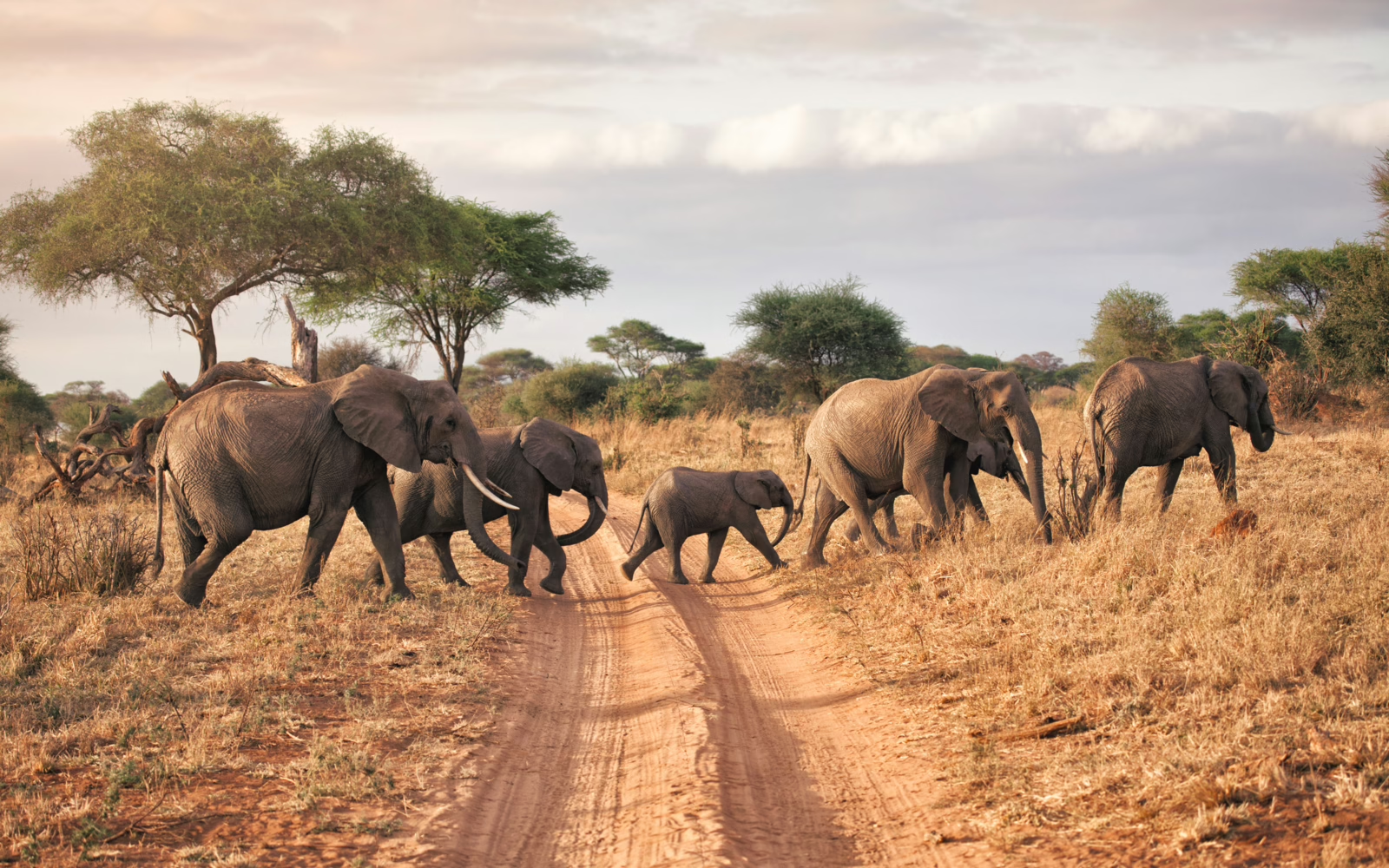
Travel Guide
Discover the wonders of Tarangire National Park in Tanzania. From massive elephant herds to iconic baobab trees and thrilling game drives, plan your safari today!
The 10 Top attractions in Tarangire national park reveal why this northern Tanzania destination deserves to be treated as more than a brief stop between better-known safari areas. Tarangire combines wildlife, open landscapes, river habitats and striking baobab trees, creating a safari environment with a visual identity of its own.
Wildlife concentrations vary according to season and environmental conditions. During drier periods, permanent water sources can become increasingly important, while wetter periods transform vegetation and distribute animals more widely.
A successful Tarangire safari therefore depends on understanding the landscape rather than arriving with a rigid checklist of animals that must be seen.
Elephants are among Tarangire’s most recognizable wildlife attractions. Visitors may encounter individuals or larger family groups moving between feeding areas and water.
The most rewarding observations often come from waiting rather than continually driving.
Elephants use body posture, touch and vocal communication within their social groups. Watching them interact provides much more insight than simply taking a close photograph and leaving.
Guides should maintain enough distance to allow elephants to decide where they move.
The Tarangire River is central to understanding the park’s ecology.
Water availability influences wildlife distribution, particularly as surrounding landscapes become drier.
Game drives near the river can therefore provide opportunities to observe animals coming to drink or feeding in adjacent habitats.
The river should be viewed as an ecological system rather than simply a location where tourists expect animals to gather.
Baobabs give Tarangire some of its most recognizable scenery.
Their enormous trunks and distinctive shapes create dramatic compositions against open skies.
These trees also have ecological importance.
They interact with wildlife and form part of a landscape shaped by long-term environmental processes.
Photographers should include them in wider compositions rather than concentrating entirely on close wildlife portraits.
Game drives provide the principal way to explore the 10 Top attractions in Tarangire national park.
Morning and afternoon drives can reveal different patterns of animal activity.
A private safari vehicle provides flexibility to spend longer at interesting sightings.
Travelers should resist the urge to cover the entire park in one day.
Driving slowly through productive habitats often reveals more than racing between distant locations.
Predators may be encountered in Tarangire, although sightings can never be guaranteed.
Lions use the landscape according to prey availability, temperature and other factors.
A skilled guide looks for behavioral clues and tracks rather than simply following other safari vehicles.
When a predator is located, visitors should remain patient and avoid creating congestion around the animal.
Giraffes add elegance to Tarangire’s open woodland scenery.
Their feeding behavior can be particularly interesting when observed for several minutes.
Rather than photographing only the head and neck, visitors can watch how giraffes select vegetation and move between trees.
The wider landscape often creates excellent opportunities for environmental portraits showing the animal within its habitat.
Zebras and wildebeest contribute to the park’s herbivore communities.
Their distribution changes according to water and grazing conditions.
Visitors may encounter mixed groups using open areas.
Watching interactions between different herbivore species can reveal how animals respond collectively to potential predators and environmental changes.
Tarangire is rewarding for bird enthusiasts because its habitats support a wide variety of species.
Birding adds value even when large mammals are temporarily difficult to locate.
A specialist guide can identify calls and distinguish species that casual observers might consider similar.
Travelers should carry binoculars rather than relying exclusively on camera lenses.
A safari becomes much richer when attention extends beyond large mammals.
Mongooses, smaller antelopes, reptiles and insects all contribute to Tarangire’s ecosystem.
Guides can explain tracks and behavior that visitors might otherwise ignore.
This approach is especially valuable during quieter periods of a game drive when no large predators are visible.
Tarangire’s wildlife experience changes through the year.
During dry conditions, animals may become increasingly associated with dependable water sources.
In wetter periods, vegetation becomes greener and wildlife can disperse across a larger landscape.
Neither season should be described as universally superior.
Travelers should choose according to interests in wildlife concentration, scenery, birding and visitor numbers.
Tarangire is particularly rewarding for photographers who enjoy placing wildlife within dramatic landscapes.
Baobabs, open skies and changing vegetation provide context.
Wide-angle or medium-range compositions can communicate the scale of the park better than tightly framed animal portraits alone.
Early and later light can add warmth and texture to the scenery.
The transition between daylight and darkness changes the atmosphere of a safari landscape.
Travelers staying close enough to park activities can make good use of early mornings.
Departure times should follow park regulations and lodge logistics.
The objective is not simply to photograph sunrise but to observe how wildlife behavior changes as temperatures rise.
Responsible behavior protects both animals and visitor experience.
Drivers should remain on authorized routes according to park regulations.
Wildlife should not be surrounded or blocked.
Visitors should avoid shouting to attract an animal’s attention.
A natural sighting is more valuable than a photograph created through disturbance.
Observing elephants near water can become a highlight of a Tarangire safari.
Family groups may drink, interact or use mud.
Visitors should remain patient because elephants can spend considerable time in one location.
A guide can interpret behavior and recognize when the animals require additional space.
Few scenes communicate Tarangire’s character more effectively than elephants moving through a landscape containing mature baobabs.
The combination links two of the park’s defining features.
Photographers should consider composition carefully and allow the animals to move naturally into the scene rather than asking the driver to reposition repeatedly.
A day trip can provide an introduction, but staying longer allows travelers to experience the park at a slower pace.
Wildlife sightings change daily.
An animal absent on the first afternoon may appear the following morning.
Additional time also reduces pressure to race from one area to another.
A safari benefits from patience.
Tarangire fits naturally within Tanzania’s northern safari circuit.
Travelers may combine it with Ngorongoro and Serengeti according to available time.
The parks should not be treated as interchangeable.
Tarangire’s baobab landscapes and elephant experiences differ from the crater environment of Ngorongoro and the vast plains associated with Serengeti.
Families can enjoy Tarangire because most wildlife viewing occurs from a vehicle.
However, very long game drives can become tiring for younger children.
Parents should discuss schedules with their guide.
A shorter drive with strong interpretation can be more successful than keeping children in a vehicle from sunrise until late afternoon.
Accommodation choice affects how efficiently travelers can explore the park.
Properties located conveniently for planned activities can reduce unnecessary transfer time.
Travelers should compare location as carefully as room quality.
A beautiful lodge far from the intended game-drive area may require more time on the road each day.
The 10 Top attractions in Tarangire national park are not simply individual animals or viewpoints to check off a list.
Elephants, baobabs, the Tarangire River, predators, birds and changing seasonal landscapes interact to create one ecosystem.
The park becomes most rewarding when visitors slow down enough to understand those connections.
Instead of treating Tarangire as a short stop on the way to Serengeti, travelers can give it enough time to reveal its own character. The result is a safari defined by enormous trees, powerful elephant encounters and a landscape whose appearance changes continually with water, weather and wildlife movement.

26 African Countries Under Full or Partial U.S. Travel Ban (Post-December Update) Following the December update to U.S.…
Read article →
3 Days Congo Gorilla Safari – Encounter the Gentle Giants of Virunga A 3 Days Congo Gorilla Safari…
Read article →
Children and Kids on Safari – Family-Friendly Adventures in Africa Taking children on an African safari is one…
Read article →
How to Plan a Safari in Uganda—Your Complete Travel Guide Planning a safari in Uganda is the start…
Read article →