

26 African Countries Under Full or Partial U.S. Travel Ban (Post-December Update)
26 African Countries Under Full or Partial U.S. Travel Ban (Post-December Update) Following the December update to U.S.…
Read article →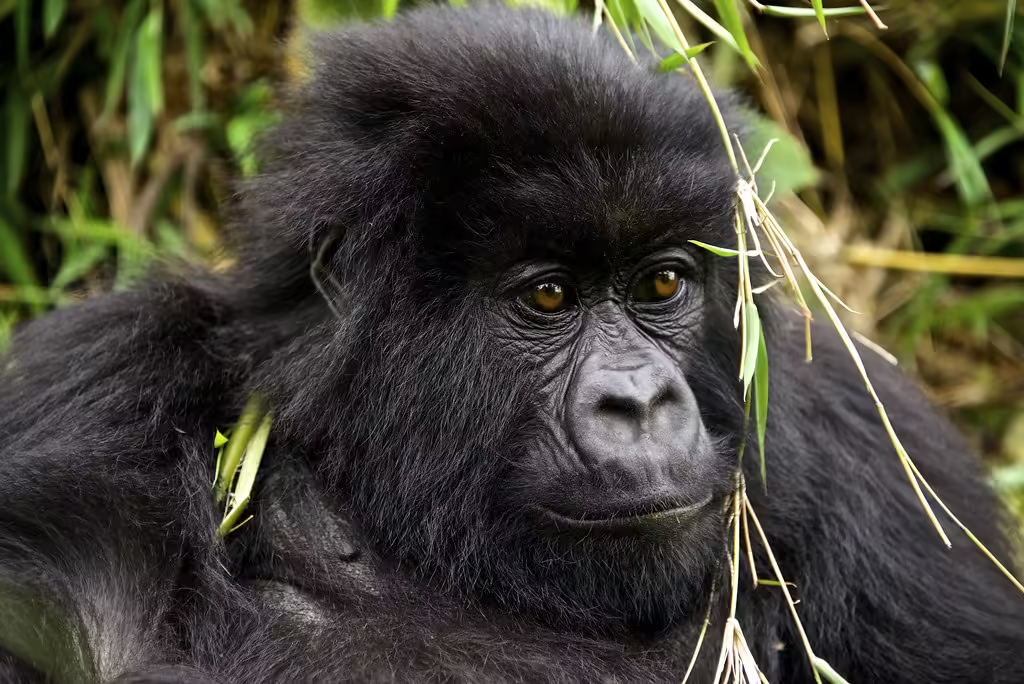
Travel Guide
These just serve to highlight the main advantages and distinctive experiences that come with gorilla trekking in Rwanda, which combines exploration, learning, and environmental preservation.
The reasons-visit Rwanda-gorilla experience extend beyond the moment visitors first see mountain gorillas. A Rwanda gorilla safari combines forest exploration, wildlife observation, learning and conservation within a journey that can also include Kigali and other landscapes around the country.
Gorilla trekking is a carefully managed activity. Visitors travel to the gorilla region, receive an official briefing and enter the forest under professional guidance. The gorillas remain wild animals, and the encounter is governed by rules intended to reduce disturbance and support responsible tourism.
For travelers considering whether to make Rwanda part of an African journey, the following ten themes help explain why gorilla trekking has become such a distinctive experience.
The central reason for traveling is the opportunity to observe mountain gorillas within their forest environment.
This is fundamentally different from seeing an animal in captivity.
Visitors walk through natural habitat and observe gorillas behaving according to their own routines.
The animals may feed, rest, move or interact with other members of their group.
Nothing is staged for the visitor.
That unpredictability gives the experience much of its emotional impact.
Travelers should follow all instructions and avoid trying to influence gorilla behavior.
A gorilla journey introduces visitors to the landscapes of northwestern Rwanda.
The region’s mountains and vegetation create a dramatic setting for the experience.
Even before the trek begins, the journey away from Kigali allows travelers to see a different side of the country.
Landscape photography can become an important part of the trip.
Visitors should allow enough time to appreciate the region rather than treating it simply as the location of a permit-based activity.
Gorilla trekking involves physical participation.
Travelers do not simply arrive by vehicle and view the animals from a roadside.
They walk into the forest with guides.
Terrain and trekking duration vary according to natural conditions and gorilla movements.
This effort contributes to the sense of adventure.
Visitors should prepare physically, wear suitable footwear and carry rain protection.
The journey through the forest becomes part of the experience rather than an inconvenience before the main attraction.
Time spent with professional guides can provide valuable information about gorillas.
Visitors may learn about group structure, feeding and behavior.
This educational component can change how travelers understand the animals.
Instead of seeing only an impressive large primate, visitors begin to recognize individuals and social interactions.
Travelers should listen carefully and ask appropriate questions.
A safari becomes more meaningful when observation is combined with understanding.
The source description emphasizes environmental preservation as one of the important elements of Rwanda gorilla trekking.
Visitors experience a tourism activity that depends directly on protecting wildlife habitat.
Strict regulations demonstrate that access to gorillas cannot be completely unrestricted.
Travelers contribute by following the rules.
Maintaining distance, controlling noise, following health requirements and leaving no waste in the forest are all part of responsible participation.
The trek therefore becomes an opportunity to think about the relationship between tourism and conservation.
Gorilla trekking is not an uncontrolled walk into the forest.
The activity is organized around permits, guides and established procedures.
This structure helps manage visitor numbers and behavior.
Travelers should respect the system rather than searching for shortcuts.
A cheaper or unofficial alternative is not equivalent to a properly managed conservation experience.
Visitors should confirm arrangements through legitimate channels and ensure the permit matches their planned date and activity.
Rwanda’s relatively compact travel structure makes it possible to combine a gorilla journey with time in Kigali.
The capital can serve as the international arrival and departure point.
Visitors may spend a night there before continuing toward the gorilla region.
Additional time allows travelers to experience aspects of the city rather than seeing it only through an airport transfer.
A balanced itinerary can therefore combine urban experiences with mountain landscapes and forest wildlife.
Gorilla trekking can be one part of a wider Rwanda journey.
Travelers with additional days can consider other landscapes and wildlife experiences according to their interests.
The country can provide contrasts between forest, savannah, lakes and urban areas.
Visitors should avoid trying to include everything in an unrealistically short itinerary.
The gorilla permit is usually one of the key fixed points.
Other destinations can then be arranged around it.
Gorilla trekking can be extraordinary for photographers.
Facial expressions and interactions between gorillas create compelling subjects.
However, forest photography is challenging.
Light can be limited, vegetation can block views and the animals move naturally.
Photographers should prepare their equipment before the trek.
They must also follow all regulations even when a better image appears possible from another position.
The welfare of the gorillas takes priority over photography.
A mountain gorilla encounter has a very specific combination of elements.
Visitors travel into a protected forest, walk with professional guides and spend carefully controlled time observing wild primates.
The experience involves effort, uncertainty and education.
This makes it difficult to compare directly with a conventional game drive.
For many travelers, the combination of anticipation, physical activity and wildlife observation creates a particularly memorable day.
Travelers should begin preparation by confirming the gorilla arrangements.
Accommodation should then be selected in a location that works with the activity.
Transport from Kigali should be organized realistically.
Visitors should arrive near the trekking area early enough to rest.
The evening before the trek is a good time to prepare clothing, charge cameras and confirm breakfast and departure arrangements.
A rushed arrival can make the following morning unnecessarily stressful.
The forest can involve steep and uneven terrain.
Travelers should undertake regular walking before the trip.
Hill training can help.
Strong walking boots with good grip are important.
Long trousers and long sleeves can protect against vegetation.
A lightweight rain jacket should remain accessible.
Visitors should keep their daypacks reasonably light.
Where legitimate porter services are available, travelers can consider using them for assistance.
Visitors should listen carefully during the official briefing.
Gorillas should not be touched.
Travelers must maintain the distance and behavior required by guides and current regulations.
If a gorilla moves unexpectedly closer, visitors should remain calm and follow instructions.
Noise should remain controlled.
Waste should never be left in the forest.
Travelers who are unwell should communicate honestly and follow current health procedures.
The strongest Rwanda itinerary is not necessarily the one containing the largest number of attractions.
Travelers should allow time to appreciate each destination.
A relaxed evening near the gorilla region can be more rewarding than another rushed activity.
The same applies to Kigali.
Rather than treating every stop as a photograph opportunity, visitors can listen to guides, observe landscapes and learn about the places through which they travel.
The reasons-visit Rwanda-gorilla journey are closely connected with exploration, learning and environmental preservation.
Travelers can see mountain gorillas in their natural habitat, experience Rwanda’s forested volcanic landscape and learn from professional guides.
The activity also introduces visitors to the importance of conservation rules and responsible tourism.
Beyond gorillas, travelers can incorporate Kigali and other Rwanda experiences into a broader itinerary.
These ten justifications demonstrate why the trek is more than a single wildlife sighting. When approached responsibly, it becomes a combination of physical adventure, wildlife observation, education and appreciation for the protected environment that makes the encounter possible.

26 African Countries Under Full or Partial U.S. Travel Ban (Post-December Update) Following the December update to U.S.…
Read article →
3 Days Congo Gorilla Safari – Encounter the Gentle Giants of Virunga A 3 Days Congo Gorilla Safari…
Read article →
Children and Kids on Safari – Family-Friendly Adventures in Africa Taking children on an African safari is one…
Read article →
How to Plan a Safari in Uganda—Your Complete Travel Guide Planning a safari in Uganda is the start…
Read article →