
Nocturnal Animals Safari
Nocturnal Animals Safari: What to See on a Night Drive
A nocturnal animals safari reveals a completely different side of Africa’s wildlife. Many animals become active after sunset when temperatures drop.
Night drives allow travelers to observe species that remain hidden during daylight. Predators hunt, small mammals forage, and owls begin their nightly activities.
The experience offers a fascinating contrast to a traditional daytime game drive.
What Is a Night Safari?
A night safari takes place after sunset with an experienced guide and specialized vehicle. Guides use spotlights to locate nocturnal animals while following park regulations.
Night drives do not operate in every national park. Some protected areas allow them under specific rules.
Always check regulations before booking a night safari.
Why Are Some Animals Nocturnal?
Many animals become active at night to avoid extreme daytime temperatures. Others use darkness to hunt prey more effectively.
Nocturnal behavior can also reduce competition with daytime species.
Nighttime therefore creates an entirely different ecological environment.
African Civet
The African civet is a nocturnal mammal that often moves through grasslands and woodland at night.
Its distinctive markings make it interesting to observe under a spotlight. Civets eat a varied diet that includes fruits, insects, and small animals.
They usually remain difficult to spot during daytime game drives.
Genets
Genets are small carnivorous mammals with long bodies and patterned coats. They often move through grass and trees after dark.
They hunt insects, rodents, birds, and other small prey.
Their quick movements can make sightings brief but exciting.
Bushbabies
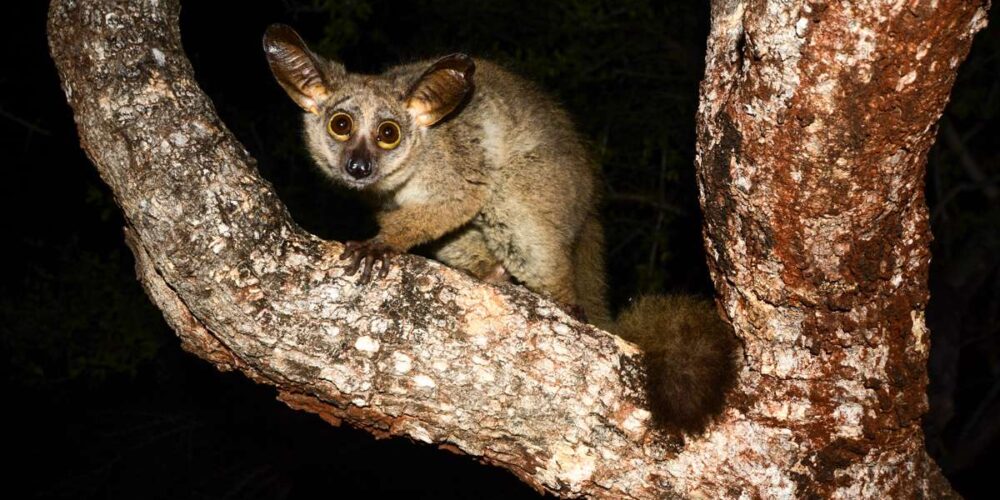
Bushbabies are among Africa’s best-known nocturnal primates. Their large eyes help them see in low light.
They move quickly between branches and communicate using distinctive calls.
Night drives can provide excellent opportunities to observe these small primates.
Leopards at Night
Leopards often become more active after sunset. They use darkness to hunt and move through their territories.
A night drive may reveal a leopard walking along a road or searching through vegetation.
However, sightings remain unpredictable.
Hyenas
Spotted hyenas remain active both day and night. However, nighttime drives can reveal more of their hunting and social behavior.
Their powerful jaws allow them to consume parts of carcasses that many predators cannot use.
Listening to their calls can also become part of the night safari experience.
Owls and Night Birds
Night drives can reveal several nocturnal bird species. Owls use their excellent hearing and vision to locate prey.
Other night birds may appear briefly when spotlight beams pass through vegetation.
Birders should travel with guides who understand local nocturnal species.
Where to Experience a Night Drive in East Africa
Some protected areas in Uganda, Kenya, and Tanzania offer night drives under regulated conditions.
Lake Mburo National Park in Uganda is particularly known for night game drives. Visitors may encounter bushbabies, civets, genets, hares, and other nocturnal species.
Private conservancies in Kenya and Tanzania can also provide excellent night safari opportunities.
Night Safari Safety
Always remain inside the safari vehicle unless your guide gives clear instructions. Never use a spotlight to approach or chase an animal.
Avoid loud noises and sudden movements. Animals can react unpredictably when disturbed.
A responsible night safari prioritizes wildlife welfare and follows park regulations.
Why Take a Nocturnal Animals Safari?
A nocturnal animals safari introduces travelers to species they may never see during a daytime game drive.
The darkness creates a sense of mystery and anticipation. Every movement in the spotlight can reveal a new species.
For wildlife enthusiasts, a night drive can become one of the most memorable experiences of an African safari.