
Black Rhino Conservation Uganda
Black Rhino Conservation Uganda: Protecting a Rare African Rhino
Uganda has an important place in the country’s wildlife recovery efforts. Black rhinos once lived across several regions of Uganda before disappearing from the country due to poaching and other pressures.
Today, Uganda’s rhino conservation story focuses on protection, breeding, education, and long-term reintroduction goals.
The country’s rhino conservation work demonstrates how determined protection can help restore lost wildlife.
Uganda’s Black Rhino History
Black rhinos historically occurred in several parts of Uganda. They disappeared from the country during periods of intense poaching and habitat pressure.
The loss represented a major decline in Uganda’s natural heritage.
Conservation organizations now work to rebuild rhino populations through protected breeding programs and habitat management.
The Role of Ziwa Rhino Sanctuary
Ziwa Rhino Sanctuary provides an important home for Uganda’s rhino conservation program. The sanctuary lies in Nakasongola District, north of Kampala.
The sanctuary protects southern white rhinos rather than black rhinos. It therefore plays a crucial role in Uganda’s broader rhino conservation story, but visitors should distinguish between the two species.
Black Rhino Versus White Rhino
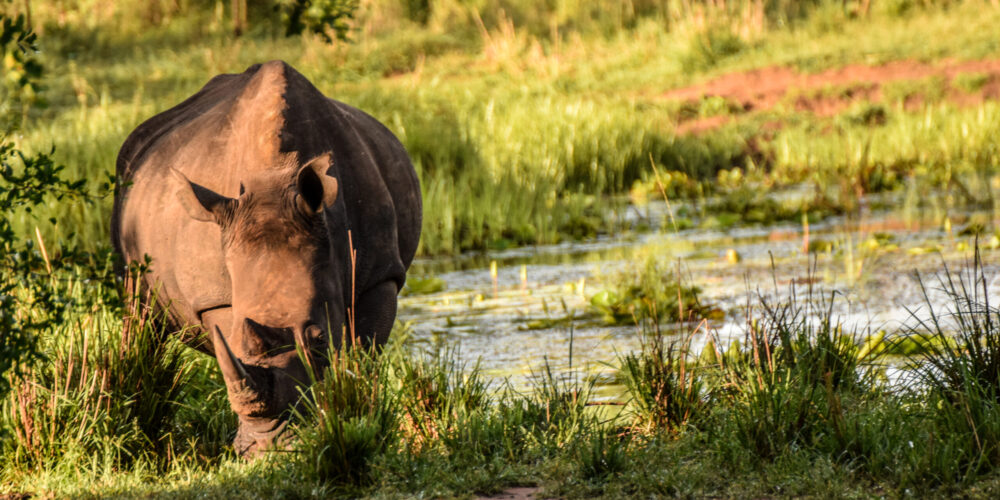
White and black rhinos differ in appearance and feeding behavior. Black rhinos have pointed upper lips that help them browse leaves and branches.
White rhinos have wide, square-shaped lips adapted for grazing grass. Despite their names, both species usually have gray skin.
Uganda’s Ziwa Rhino Sanctuary currently focuses on southern white rhinos.
Why Black Rhinos Need Protection
Black rhinos face serious threats from poaching and habitat loss. Their horns have fueled illegal wildlife trafficking.
Conservation programs use protected habitats, ranger patrols, monitoring, and community partnerships to protect remaining populations.
International cooperation also plays an important role in reducing illegal wildlife trade.
Uganda’s Rhino Conservation Future
Uganda has an opportunity to restore rhinos as part of its wider wildlife conservation strategy. Successful reintroduction requires secure habitats and strong protection.
Conservation organizations must also consider community relationships and available resources.
Long-term planning can help ensure that restored populations remain viable