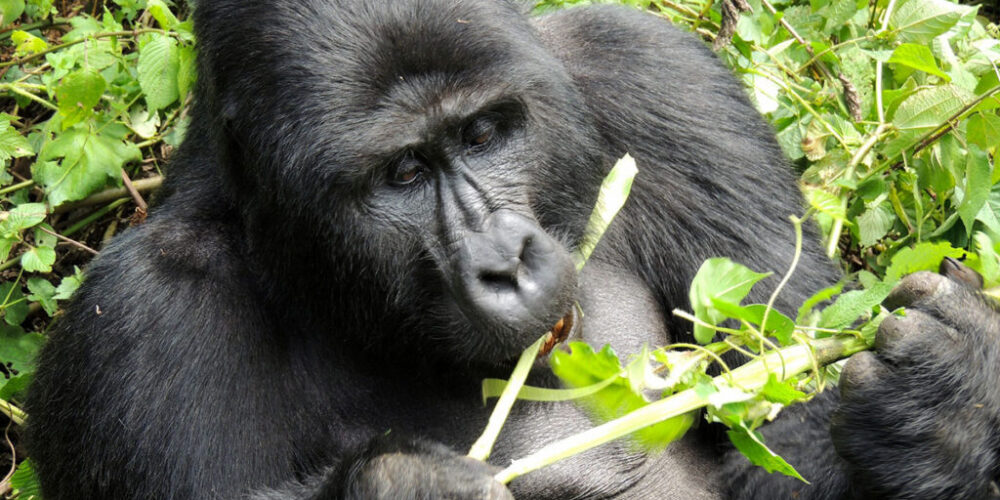

Bwindi vs Virunga National Park
Bwindi vs Virunga National Park: Which Gorilla Trekking Destination Is Better?
Gorilla trekking ranks among Africa’s most rewarding wildlife experiences. Few adventures compare to standing quietly in a tropical forest while a family of mountain gorillas goes about its daily life just a few meters away. Every encounter feels personal because the gorillas display familiar behaviors, from playful juveniles tumbling through the vegetation to protective silverbacks calmly watching over their families.
Among the three countries that protect mountain gorillas, Uganda and the Democratic Republic of Congo offer two remarkably different trekking experiences. Bwindi Impenetrable National Park has earned a global reputation for its exceptional gorilla safaris, well-developed tourism infrastructure, and remarkable biodiversity. Virunga National Park, on the other hand, attracts adventurous travellers with its dramatic volcanic landscapes, rich conservation history, and untamed wilderness.
Although both parks protect the same endangered species, they offer different experiences before, during, and after the trek. The journey, the scenery, the level of comfort, and the overall safari atmosphere all influence which destination suits you best. Understanding these differences will help you choose the park that matches your travel style and expectations.
Understanding Bwindi and Virunga National Park
Bwindi Impenetrable National Park lies in southwestern Uganda along the edge of the Albertine Rift. Covering more than 320 square kilometers, the park protects one of Africa’s oldest rainforests and shelters more than half of the world’s remaining mountain gorillas. Its dense vegetation, steep valleys, and mist-covered hills create ideal conditions for these endangered primates while offering visitors an authentic rainforest adventure.
Virunga National Park sits across the border in the eastern Democratic Republic of Congo. Established in 1925, it is Africa’s oldest national park and one of the continent’s most biologically diverse protected areas. The park stretches from the snow-capped Rwenzori Mountains to the volcanic landscapes surrounding Mount Nyiragongo. This extraordinary diversity supports mountain gorillas, chimpanzees, forest elephants, hippos, and hundreds of bird species.
Both parks play an essential role in mountain gorilla conservation. Tourism revenue supports ranger patrols, scientific research, veterinary care, habitat protection, and community development projects. Every visitor contributes directly to the long-term survival of one of the world’s most endangered great apes.
Location and Accessibility
One of the first differences travellers notice is how they reach each destination. Accessibility often shapes the entire safari experience, especially for visitors with limited time.
Most travellers begin a journey to Bwindi through Entebbe International Airport. From there, they travel southwest by road, a journey that usually takes between eight and ten hours depending on the trekking sector. Although the drive is long, it showcases Uganda’s changing landscapes. Rolling hills, tea plantations, traditional villages, and fertile farmland provide a fascinating introduction to the country.
Travellers who prefer shorter transfers can take scheduled domestic flights from Entebbe to airstrips near Bwindi. This option significantly reduces travel time and allows more time to enjoy the park.
Virunga National Park follows a different route. Most visitors fly into Kigali, Rwanda, before travelling by road to the border town of Gisenyi. After crossing into Goma in the Democratic Republic of Congo, park representatives normally escort visitors to their accommodation or directly to the park.
Although Virunga appears geographically closer to Kigali than Bwindi is to Entebbe, travel logistics depend heavily on border procedures and current park operations. Visitors should always confirm entry requirements and security updates before making travel arrangements.
For travellers seeking straightforward logistics, Bwindi generally provides a smoother planning process. Virunga rewards visitors with a more adventurous journey, but it requires greater flexibility.
Landscape and Natural Environment
The surrounding environment influences every part of a gorilla trek. While the gorillas remain the main attraction, the forests themselves create two completely different adventures.
Bwindi deserves its reputation as one of Africa’s last true rainforests. Towering trees form a thick canopy above narrow forest trails, while vines, ferns, and dense undergrowth surround hikers from every direction. The air often carries the sounds of birds, insects, and distant primates, creating an immersive wilderness experience.
Walking through Bwindi feels like exploring an untouched ecosystem that has evolved over thousands of years. Every turn reveals another layer of biodiversity, making the journey almost as memorable as the gorilla encounter itself.
Virunga National Park presents a contrasting landscape. The park combines bamboo forests, volcanic slopes, open woodland, and alpine vegetation shaped by the Virunga Mountains. Active volcanoes dominate the skyline, creating dramatic scenery that few other gorilla destinations can match.
The combination of forests and volcanic terrain gives Virunga a unique identity. Visitors often enjoy sweeping mountain views while hiking toward the gorillas, creating excellent opportunities for landscape photography.
Neither environment is objectively better. Travellers who dream of an ancient rainforest often prefer Bwindi, while those attracted to volcanic scenery may find Virunga even more rewarding.
Gorilla Trekking Experience
Although both parks protect mountain gorillas, the trekking experience develops differently because of the terrain and tourism systems.
In Bwindi, each trekking day begins with a briefing at the headquarters of the assigned sector. Experienced guides explain safety procedures before trackers head into the forest to locate the gorilla family. Once communication confirms the gorillas’ location, visitors begin their hike.
The trekking time varies considerably. Some families remain close to the starting point, while others travel deeper into the forest. This unpredictability forms part of the adventure because every trek becomes unique.
Virunga follows a similar process, with guides and trackers leading visitors through the forest after an early morning briefing. However, the volcanic landscape creates a different rhythm during the hike. Some sections involve gradual climbs through bamboo forests before entering thicker vegetation where the gorillas spend their day.
Regardless of the destination, the final reward remains the same. Spending one hour with a mountain gorilla family creates an emotional experience that photographs rarely capture. Watching mothers care for their young, juveniles play together, and silverbacks quietly observe their surroundings reminds visitors how closely humans and gorillas are connected.
Gorilla Families and Trekking Opportunities
Bwindi offers one of the greatest advantages for gorilla trekking because of its large number of habituated gorilla families. The park contains four trekking sectors—Buhoma, Ruhija, Rushaga, and Nkuringo—which together provide visitors with numerous trekking opportunities throughout the year.
This wider selection increases permit availability and allows travellers to choose accommodation close to their assigned trekking sector. It also makes itinerary planning much easier during peak travel seasons.
Uganda offers another experience unavailable in Virunga. The Gorilla Habituation Experience allows visitors to spend up to four hours with a semi-habituated gorilla family while joining researchers and park staff. Wildlife photographers and conservation enthusiasts often consider this one of Africa’s finest primate experiences.
Virunga protects fewer habituated gorilla families than Bwindi, but visitor numbers also remain lower. As a result, some travellers appreciate the quieter atmosphere and greater sense of exclusivity during their trek.
Both parks maintain strict conservation standards by limiting each gorilla family to eight visitors per day. This approach reduces stress on the animals while preserving the quality of the visitor experience.
Accommodation and Visitor Comfort
Accommodation shapes the overall safari experience just as much as the gorilla trek itself.
Bwindi offers a well-developed selection of lodges spread across its four trekking sectors. Visitors can choose intimate forest lodges, stylish boutique camps, or luxury safari properties overlooking the rainforest. Many lodges blend naturally into the surrounding environment while providing excellent service, comfortable rooms, and locally inspired cuisine.
The variety allows travellers to select accommodation that matches both their budget and preferred trekking location. Staying close to the correct sector also reduces early morning travel before the trek.
Virunga offers a smaller but distinctive collection of accommodation options. The most famous is Mikeno Lodge, located near the park headquarters. The lodge provides an elegant base surrounded by forest, allowing visitors to experience the wilderness without sacrificing comfort.
Because tourism infrastructure remains more limited, accommodation choices are fewer than in Bwindi. However, many travellers view this as part of Virunga’s appeal. The experience feels more remote, more authentic, and closer to nature.
Wildlife Beyond Gorilla Trekking
A gorilla trekking adventure becomes even more rewarding when combined with other wildlife experiences. Both Bwindi and Virunga offer much more than mountain gorillas, although their surrounding ecosystems provide different safari opportunities.
Bwindi forms part of the Albertine Rift, one of Africa’s most biologically rich regions. Beyond gorillas, the forest supports chimpanzees, monkeys, forest elephants, duikers, and an impressive variety of bird species. Birdwatchers particularly value Bwindi because the park protects several Albertine Rift endemic species.
The location of Bwindi also makes it easy to combine gorilla trekking with Uganda’s famous safari destinations. Visitors can continue to Queen Elizabeth National Park for game drives and boat cruises along the Kazinga Channel. The park offers opportunities to see elephants, buffaloes, lions, leopards, and large numbers of hippos.
Travellers can also add Kibale Forest National Park, which is considered one of Africa’s best destinations for chimpanzee trekking. This combination creates a complete primate and wildlife safari experience.
Virunga National Park offers an equally impressive but different wildlife experience. The park protects one of Africa’s most diverse ecosystems, ranging from tropical forests to volcanic landscapes and alpine environments.
Beyond mountain gorillas, Virunga is home to chimpanzees, colobus monkeys, forest elephants, hippos, and numerous bird species. The park’s famous Nyiragongo Volcano also provides one of Africa’s most dramatic hiking experiences when conditions allow.
Climbing Nyiragongo rewards visitors with views of one of the world’s largest active lava lakes. This adventure adds a unique geological experience that few destinations can match.
For travellers who want a classic East African safari combined with gorilla trekking, Bwindi offers stronger connections. For those seeking rare adventures and volcanic exploration, Virunga provides a more unusual experience.
Gorilla Permit Prices and Overall Safari Cost
The cost of gorilla trekking plays an important role when choosing between Bwindi and Virunga National Park.
Uganda’s gorilla trekking permit currently costs US$800 per person for foreign non-residents. The permit includes park entry, ranger services, trackers, and one hour with a habituated gorilla family.
The price makes Bwindi one of the best-value mountain gorilla destinations in Africa. Travellers can use the savings to add extra nights, better accommodation, chimpanzee trekking, or wildlife safaris in other Ugandan national parks.
Virunga has traditionally offered lower gorilla permit prices compared with Uganda and Rwanda. This has attracted travellers searching for a more affordable gorilla experience.
However, Virunga’s operations depend on conservation conditions, security considerations, and park management decisions. Permit availability and travel arrangements can change, so visitors should confirm current information before booking.
While price remains important, travelers should also consider the overall experience. Bwindi provides more established tourism services, while Virunga offers a more remote adventure with fewer visitors.
Safety and Travel Considerations
Safety remains an important factor when planning a gorilla trekking adventure.
Bwindi benefits from Uganda’s well-established tourism network. Thousands of visitors travel to the park every year, and experienced guides, trackers, and local operators support the trekking experience.
The park operates under strict conservation rules, and visitors receive guidance on how to interact safely with gorillas. Travellers should follow instructions from guides, maintain the required distance, and respect the animals’ environment.
Virunga National Park has faced challenges because of its location in the eastern Democratic Republic of Congo. The region has experienced periods of insecurity, and park authorities continue to monitor conditions carefully.
Despite these challenges, Virunga has a dedicated team of rangers who work tirelessly to protect the park and visitors. The park has also reopened and operated successfully during different periods, allowing travelers to experience its unique wilderness.
However, visitors planning a Virunga safari should work with a reliable operator and confirm current travel conditions before departure.
For travellers who prefer a more predictable and established tourism environment, Bwindi generally provides greater peace of mind.
Best Time to Visit Bwindi and Virunga National Park
Both Bwindi and Virunga offer gorilla trekking throughout the year. Mountain gorillas do not migrate, which means visitors can plan a trek during any season.
However, weather conditions can influence the comfort of the experience.
Uganda’s dry seasons from June to September and December to February usually provide easier trekking conditions. During these months, trails are often less muddy, making forest walks more comfortable.
The rainy seasons also have advantages. The forests become greener, waterfalls become more impressive, and fewer visitors create a quieter atmosphere. Photographers often appreciate the rich colors and soft lighting during these months.
Virunga follows a similar pattern, with drier months generally offering easier hiking conditions. However, the volcanic landscape creates different weather patterns, and conditions can change quickly.
Regardless of the season, proper preparation remains important. Waterproof clothing, good hiking shoes, and suitable outdoor gear help visitors enjoy the trek comfortably.
Bwindi vs Virunga National Park: Which One Is Better?
Choosing between Bwindi and Virunga depends on the type of adventure you want.
Bwindi is the stronger choice for travellers seeking a reliable and well-established gorilla trekking experience. The park offers more trekking sectors, more accommodation choices, easier safari combinations, and a smoother travel process.
The rainforest setting creates a genuine wilderness feeling, while Uganda’s wider tourism network allows visitors to build a longer East African adventure. Travellers can combine gorillas with chimpanzees, Big Five safaris, cultural experiences, and scenic landscapes.
Virunga appeals to travellers searching for something more adventurous and less conventional. The combination of mountain gorillas, volcanoes, and Africa’s oldest national park creates a rare experience.
The park feels more remote and offers a stronger sense of exploration. Visitors who enjoy discovering lesser-known destinations often find Virunga incredibly rewarding.
For first-time gorilla trekkers, families, or travellers who prefer easier planning, Bwindi is usually the better option. For experienced adventurers who want a unique and remote journey, Virunga offers an unforgettable alternative.
Ultimately, neither destination provides a better gorilla encounter. Both parks offer the privilege of meeting mountain gorillas while contributing to their protection.
Plan Your Safari
A gorilla trekking journey requires careful preparation because permits remain limited and demand continues throughout the year. Choosing the right destination early allows you to secure permits, select suitable accommodation, and create a comfortable itinerary.
Bwindi and Virunga National Park represent two different sides of Africa’s gorilla conservation story. One offers the depth of an ancient rainforest and a well-established safari experience. The other provides volcanic landscapes, remote wilderness, and a sense of adventure rarely found elsewhere.
Whether you choose Uganda or the Democratic Republic of Congo, the experience goes beyond wildlife viewing. Gorilla trekking creates a connection with nature while supporting conservation efforts that protect these incredible animals.
With proper planning and the guidance of an experienced safari operator, your gorilla trekking adventure can become one of the most meaningful journeys of your life.