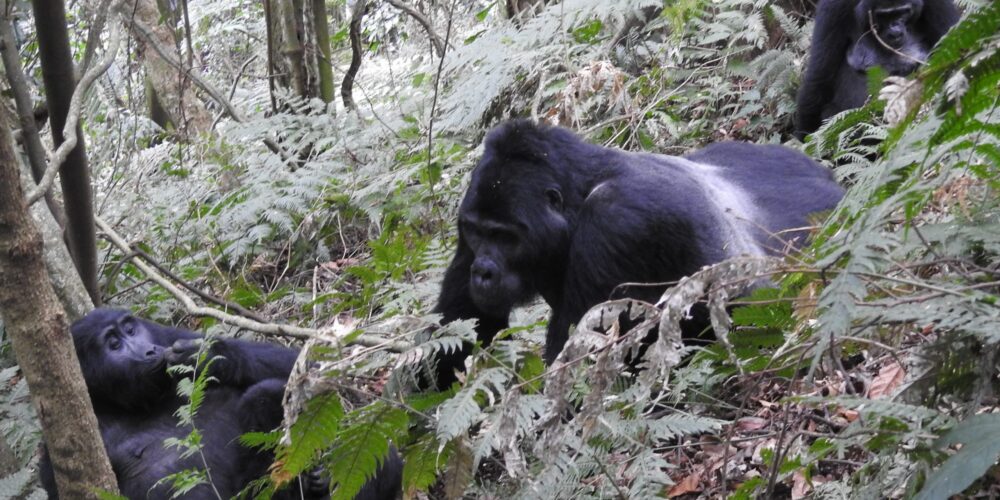

Eastern Lowland Gorilla vs Mountain Gorilla
Eastern Lowland Gorilla vs Mountain Gorilla: Key Differences, Habitat, Behavior, and Conservation
Eastern lowland gorillas and mountain gorillas belong to the same eastern gorilla species group, yet they live in very different environments and show clear differences in size, diet, behavior, and survival challenges. Both subspecies exist only in small regions of East and Central Africa, making them highly important for global conservation.
Mountain gorillas live in cool, misty high-altitude forests across Uganda, Rwanda, and the Democratic Republic of Congo. Eastern lowland gorillas, also known as Grauer’s gorillas, live in the dense lowland rainforests of eastern Congo, especially around Kahuzi-Biega National Park. These contrasting habitats shape almost every aspect of their lives.
Habitat and Environment Differences
Mountain gorillas occupy high-altitude volcanic and montane forests between 2,200 and 4,300 meters above sea level. These forests remain cool, humid, and often covered in mist. Vegetation includes bamboo zones, hagenia woodlands, and thick undergrowth that changes with elevation.
Eastern lowland gorillas live in lowland tropical rainforests below 1,500 meters. Their environment remains warmer, wetter, and far denser. The forest includes tall trees, thick canopies, swampy areas, and wide river systems that create a complex and layered ecosystem.
The biggest difference lies in forest structure. Mountain gorilla habitats feel more open in some sections due to altitude and bamboo zones, while eastern lowland gorilla forests remain extremely dense and harder to navigate.
Physical Differences
Eastern lowland gorillas grow larger and more massive than mountain gorillas. Adult males can exceed 200 kilograms, making them the largest gorilla subspecies in terms of body size. Their strong muscular build supports movement through dense lowland jungle.
Mountain gorillas appear stockier and more heavily furred. Their long, thick hair helps them survive cold mountain temperatures. This gives them a more compact and powerful appearance.
Eastern lowland gorillas have shorter hair suited to warm, humid environments. Mountain gorillas have longer and denser coats that provide insulation in cold high-altitude conditions.
Facial structure also differs slightly. Eastern lowland gorillas often show broader skulls and stronger jawlines, while mountain gorillas appear more compact around the face.
Diet and Feeding Behavior
Mountain gorillas depend heavily on vegetation such as leaves, stems, shoots, bamboo, and wild celery. Their high-altitude habitat offers limited fruit, so they spend long hours feeding on low-calorie plants to meet energy needs.
Eastern lowland gorillas enjoy a more varied diet. They consume fruits, leaves, seeds, bark, and occasional insects. Fruit plays a major role in their nutrition, especially during seasonal abundance.
This difference in diet shapes movement patterns. Mountain gorillas remain within smaller, stable home ranges because food remains relatively predictable. Eastern lowland gorillas travel longer distances in search of fruiting trees and seasonal food sources.
Social Structure and Group Behavior
Both subspecies live in family groups led by a dominant silverback male, but their group dynamics differ.
Mountain gorilla groups tend to remain stable and cohesive for long periods. Strong family bonds form between mothers, infants, and juveniles, and group composition changes slowly over time.
Eastern lowland gorillas show more flexible group behavior. Their larger territories and shifting food availability lead to group splitting and merging more frequently. This adaptability helps them survive in unpredictable environments.
Females transfer between groups in both subspecies to avoid inbreeding, while young males eventually leave to form bachelor groups or establish their own families.
Behavior and Intelligence
Both gorilla types show high intelligence and complex social behavior. They use vocalizations, gestures, facial expressions, and body posture to communicate.
Mountain gorillas are more studied due to long-term conservation and tourism programs in Uganda and Rwanda. This has provided deep insight into their social structure, emotions, and learning behavior.
Eastern lowland gorillas remain less studied because of dense forests and limited access in eastern Congo. However, available research confirms similar intelligence levels and strong social awareness.
Chest beating, grunts, and physical displays play key roles in communication and dominance behavior in both subspecies.
Conservation Status and Threats
Mountain gorillas represent one of conservation’s greatest success stories. Their population has increased due to strict protection, controlled tourism, and strong cooperation between Uganda, Rwanda, and Congo. Despite their recovery, they remain endangered and dependent on continued protection.
Eastern lowland gorillas face much greater challenges. Habitat destruction, illegal mining, armed conflict, and forest fragmentation in eastern Congo continue to reduce their numbers. Their population remains harder to monitor due to remote and insecure regions.
Disease, poaching, and habitat loss affect both subspecies, but eastern lowland gorillas face more severe and complex threats overall.
Gorilla Trekking Experience
Mountain gorilla trekking takes place in structured and well-managed parks such as Bwindi Impenetrable National Park, Mgahinga Gorilla National Park, and Volcanoes National Park. Treks involve steep forest hikes, but the experience feels organized, regulated, and relatively predictable. Visibility is often better due to slightly more open terrain in some zones.
Eastern lowland gorilla trekking, especially in Kahuzi-Biega National Park, feels more remote and adventurous. Dense rainforest, longer trekking times, and lower tourist numbers create a raw and less predictable experience. Visibility may be more limited due to thick vegetation.
Both experiences offer rare and powerful wildlife encounters, but mountain gorilla trekking feels more structured, while eastern lowland trekking feels more wild and immersive.
Ecological Role
Both subspecies play a vital role in forest ecosystems. They disperse seeds, support plant regeneration, and help maintain biodiversity balance.
Mountain gorillas influence high-altitude forest structure, while eastern lowland gorillas shape lowland rainforest dynamics. Their movement patterns support forest health across different ecological zones.
Protecting both species also protects entire ecosystems that depend on forest stability.
Conclusion
Eastern lowland gorillas and mountain gorillas share a common ancestry but adapted to very different environments. One thrives in cool mountain forests with limited fruit, while the other dominates dense tropical rainforests rich in biodiversity.
Mountain gorillas show strong conservation recovery due to intensive protection and tourism. Eastern lowland gorillas remain highly vulnerable due to conflict and habitat loss.
Together, they represent two critical pillars of Africa’s gorilla heritage, and their survival depends on continued conservation action across their fragile habitats.