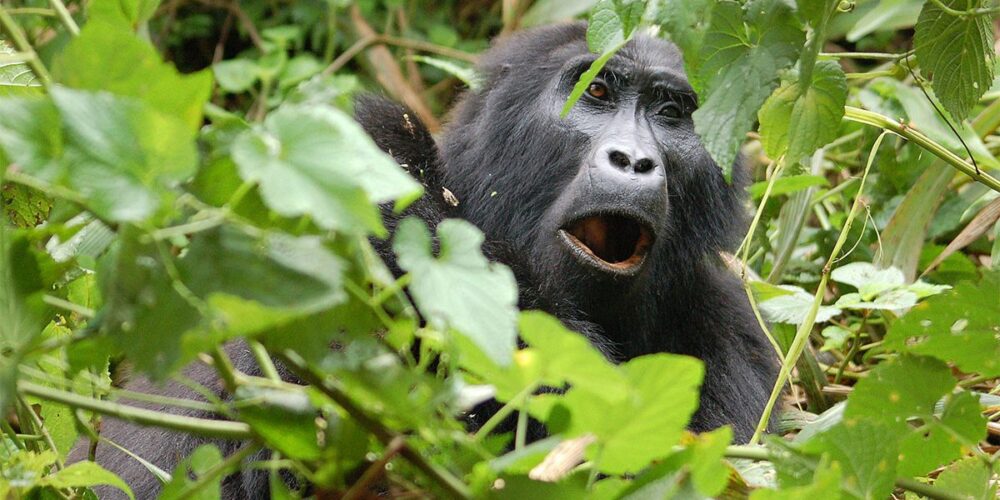

Lowland Gorilla
Lowland Gorilla: Life in the Deep Rainforests of Central Africa
The lowland gorilla lives deep inside the vast tropical rainforests of Central and Eastern Africa, where dense vegetation, high rainfall, and year-round warmth shape its daily survival. Unlike mountain gorillas that inhabit high-altitude forests, lowland gorillas thrive in low-elevation jungles that stretch across the Congo Basin, one of the largest rainforest ecosystems on Earth.
Two main subspecies fall under this group: the western lowland gorilla and the eastern lowland gorilla, also known as Grauer’s gorilla. Both share similar traits, but they occupy different regions and face different levels of conservation pressure. The eastern lowland gorilla remains the largest of all gorilla subspecies, yet it remains one of the least studied due to its remote and unstable habitat.
Habitat and Distribution
Lowland gorillas occupy dense tropical rainforests that lie below 1,500 meters above sea level. These forests feature thick canopies, swampy valleys, winding rivers, and layered vegetation that creates a complex and often impenetrable environment. The Congo Basin provides the core habitat, especially in countries like the Democratic Republic of Congo, Republic of Congo, Cameroon, Gabon, and parts of Central Africa.
The forest structure differs significantly from mountain gorilla habitat. Trees grow taller and more tightly packed, and vegetation develops multiple layers from the forest floor to the upper canopy. Light rarely reaches the ground, which creates a dim and humid environment throughout the year.
Eastern lowland gorillas, found mainly in eastern DRC, inhabit a more fragmented and remote landscape. This region includes Kahuzi-Biega National Park and surrounding forest corridors. Political instability and limited accessibility have made conservation and research efforts more challenging compared to mountain gorilla habitats.
Physical Characteristics
Lowland gorillas display powerful but slightly leaner body structures compared to mountain gorillas. Their shorter hair suits the warmer climate of low-altitude rainforests. Despite this, eastern lowland gorillas grow extremely large, with adult males reaching weights that can exceed 200 kilograms.
Their broad chests, strong arms, and large hands support a life spent climbing, foraging, and moving through dense vegetation. Facial features often appear wider, with a more pronounced skull structure, especially in mature silverbacks.
The darker, shorter coat helps regulate body temperature in hot, humid conditions. Unlike mountain gorillas, they do not require heavy insulation, so their fur remains lighter and less dense.
Diet and Feeding Behavior
Lowland gorillas enjoy a more diverse diet compared to their mountain relatives. Their forest environment offers a wide range of fruiting trees, leaves, seeds, stems, and occasional insects. Fruit plays a major role in their nutrition and influences movement patterns across large territories.
They often travel longer distances in search of seasonal fruiting trees. When fruit becomes abundant, groups may temporarily gather in areas with high food availability, then disperse again once resources decrease.
Eastern lowland gorillas rely heavily on leaves and stems during periods when fruit becomes scarce. This dietary flexibility allows them to survive in changing forest conditions but also requires constant movement to access food resources.
Their feeding behavior shapes the forest itself. As they consume fruits and move through vegetation, they contribute to seed dispersal and help maintain forest regeneration.
Social Structure and Group Dynamics
Lowland gorillas live in social groups led by a dominant silverback male. He protects the group, leads movement decisions, and maintains order within the family unit. Groups typically include several females, their offspring, and sometimes younger subordinate males.
Group sizes vary widely depending on food availability and habitat conditions. Some groups remain stable for long periods, while others split and merge more frequently, especially in areas with scattered resources.
Eastern lowland gorillas often show more flexible social behavior than mountain gorillas. Their larger home ranges and variable food supply encourage adaptability in group structure. This fluidity helps them survive in unpredictable environments.
Males may leave their natal groups to live alone or join bachelor groups before forming their own families. Females also transfer between groups, which supports genetic diversity and reduces inbreeding risks.
Behavior and Communication
Lowland gorillas communicate through vocal sounds, gestures, facial expressions, and physical movements. They use soft grunts to maintain group contact while feeding in dense vegetation. Loud vocalizations help signal danger or coordinate movement across larger distances.
Chest beating, body posture, and direct eye contact also play important roles in communication. These behaviors help establish dominance, resolve conflicts, and strengthen social bonds.
Eastern lowland gorillas remain less studied than mountain gorillas due to dense forest conditions and limited long-term observation. However, available research confirms high intelligence levels, problem-solving skills, and strong social awareness.
Their behavior often appears more elusive and cautious, especially in areas affected by human activity. This sensitivity reflects survival strategies developed in regions with greater environmental pressure.
Reproduction and Life Cycle
Female lowland gorillas reach maturity around 8 to 10 years of age. Males mature later and may take several more years to achieve silverback status. Gestation lasts about 8.5 months, resulting in a single infant.
Infants depend heavily on maternal care during early life. They travel closely with their mothers, feeding on milk and gradually learning how to interact with the group. As they grow, they begin to explore independently but remain within protective group structures.
Lowland gorillas can live up to 40 years in the wild when they remain free from major threats such as poaching or disease. Their slow reproductive rate makes population recovery difficult when numbers decline.
Conservation Status and Threats
Lowland gorillas remain endangered, with eastern lowland gorillas facing particularly severe pressure. Habitat loss, illegal mining, deforestation, and armed conflict continue to threaten their survival in parts of the Congo Basin.
In eastern Democratic Republic of Congo, insecurity limits conservation monitoring and increases risks from poaching and habitat destruction. Forest fragmentation isolates gorilla groups, reducing genetic diversity and limiting long-term population growth.
Western lowland gorillas face different challenges, including disease outbreaks such as Ebola, which has historically caused significant population declines in certain regions.
Conservation organizations work to address these threats through anti-poaching patrols, community engagement, and habitat protection programs. National parks such as Kahuzi-Biega National Park play a critical role in safeguarding eastern lowland gorillas by providing protected forest zones and regulated tourism.
Despite ongoing challenges, conservation efforts continue to support population stability in some regions. However, long-term survival depends on stronger enforcement, regional stability, and sustained community involvement.
Gorilla Trekking Experience
Lowland gorilla trekking offers one of the most remote and immersive wildlife experiences in Africa. Unlike mountain gorilla trekking, which takes place in more structured tourism environments, lowland gorilla trekking often feels wild, unpredictable, and physically demanding.
In places like Kahuzi-Biega National Park, trekkers move through dense rainforest guided by experienced trackers who follow feeding signs, nests, and vocal cues. The search may take several hours due to the wide-ranging movement of gorilla groups.
Once located, visitors spend a limited time observing the gorillas. The thick vegetation sometimes limits visibility, but the experience feels deeply authentic. The forest sounds, humidity, and dense greenery create a strong sense of immersion in one of Africa’s last true wilderness areas.
Ecological Importance
Lowland gorillas play a vital role in maintaining rainforest health. Their feeding habits support seed dispersal, which helps regenerate forest areas. As they move through large territories, they also shape vegetation patterns and influence ecological balance.
Their presence indicates a healthy and functioning rainforest ecosystem. Protecting lowland gorillas therefore protects countless other species that depend on the same habitat.
Conclusion
Lowland gorillas represent the raw wilderness of Africa’s tropical rainforests. Their strength, adaptability, and social complexity allow them to survive in some of the most challenging environments on the continent. Yet they remain vulnerable due to human pressure and environmental change.
Their survival depends on strong conservation action and continued protection of the Congo Basin forests. Every effort to protect them safeguards not only a remarkable primate species but also one of the most important ecosystems on Earth.