

Bird Checklist for Murchison Falls National Park: Uganda’s Ultimate Birding Guide
Bird Checklist for Murchison Falls National Park: Uganda’s Ultimate Birding Guide
Bird checklist for Murchison Falls National Park. If you are a birdwatcher planning a trip to Uganda, Murchison Falls National Park should be at the top of your list. This iconic park is not only Uganda’s largest protected area but also one of the richest in birdlife — with over 450 species recorded.
From the prehistoric-looking shoebill to vibrant bee-eaters, elegant herons, and ground hornbills, this park offers a thrilling mix of savannah, woodland, riverine, and forest birding habitats. Whether you’re a casual birder or a life-list chaser, the variety here will exceed your expectations.
Why Murchison Falls is a Birding Paradise
Set along the mighty River Nile and covering vast stretches of grassland and forest, Murchison Falls National Park is a haven for both resident and migratory birds. Its range of ecosystems — from papyrus swamps and acacia woodland to tropical forest and riverbanks — supports an incredible diversity of avifauna.
The park offers excellent birding year-round, with particularly good visibility during the dry seasons (December–February and June–September) and an influx of migratory species during the wet season (March–May).
Top Bird Species to Watch for
Here are just a few must-see species that regularly draw birders to Murchison Falls:
-
Shoebill (Balaeniceps rex)
Perhaps Uganda’s most iconic bird, the shoebill is best spotted in the Nile Delta region. With its massive shoe-shaped bill and statuesque pose, this prehistoric-looking species is a once-in-a-lifetime sighting.
-
Abyssinian Ground Hornbill (Bucorvus abyssinicus)
This large terrestrial bird is often seen walking across the savannah in pairs. Males are especially striking with their red and blue facial skin and deep, booming calls.
-
Goliath Heron (Ardea goliath)
The world’s largest heron, the Goliath Heron is commonly seen along riverbanks and lakeshores. Its towering height and elegant stature make it a showstopper.
-
Red-throated Bee-eater (Merops bulocki)
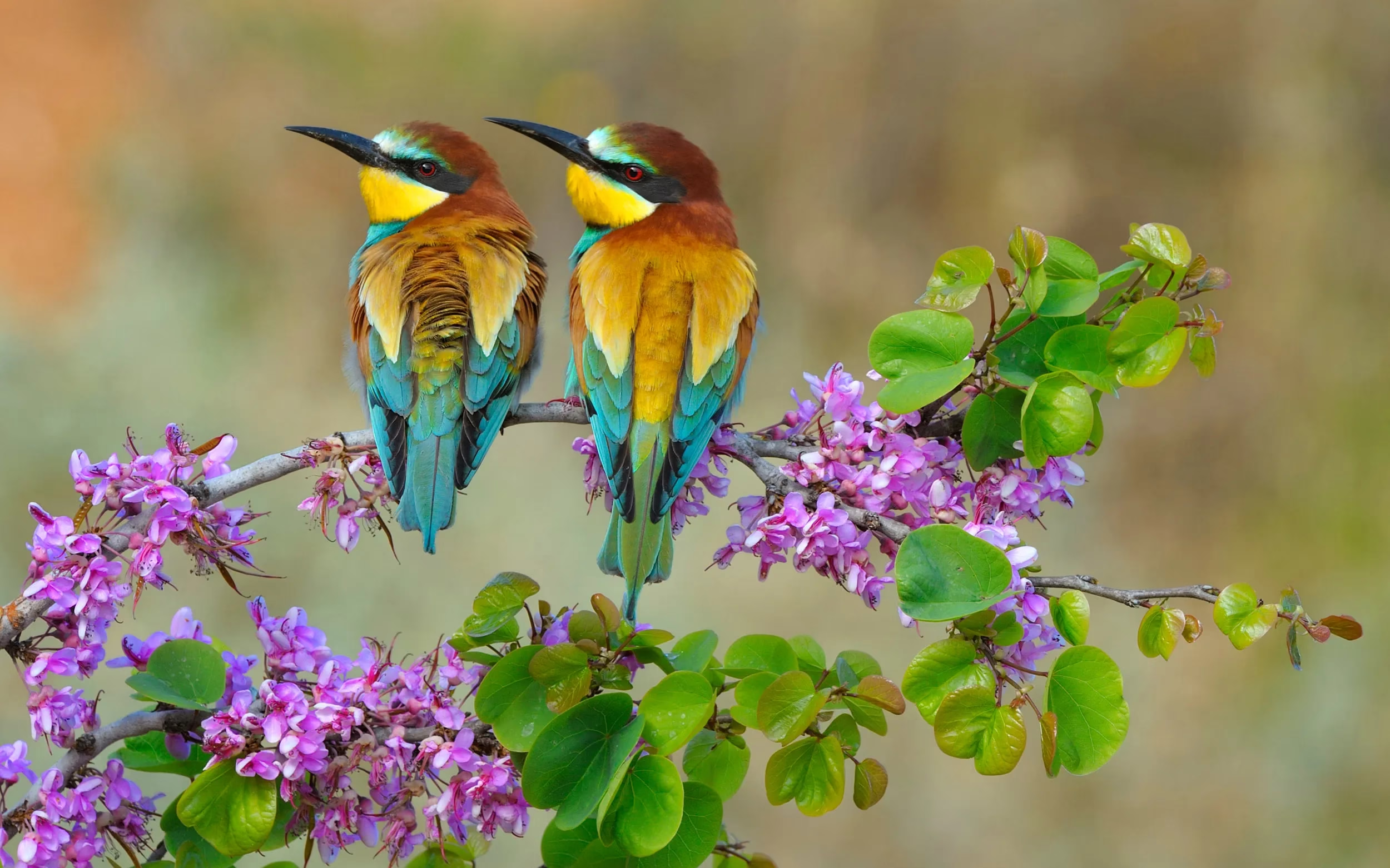
Found nesting in colonies along riverbanks, especially near Nyamusika Cliffs, these colorful birds are highly active and photogenic.
-
Grey Crowned Crane (Balearica regulorum)
Uganda’s national bird, this elegant crane is easily recognized by its golden crown of feathers. It’s often spotted in open grasslands or wetland edges.
Other noteworthy species include the Secretary Bird, Northern Carmine Bee-eater, White-crested Turaco, Senegal Thick-knee, and the elusive White-fronted Black Chat.
Best Birding Spots Within the Park
To make the most of your birding experience, be sure to explore the following areas:
Nile Delta
Best accessed by boat, the Nile Delta is prime territory for spotting shoebills, African jacanas, papyrus gonoleks, and malachite kingfishers.
Budongo Forest
This tropical forest is home to forest specialists such as the Chocolate-backed Kingfisher, White-thighed Hornbill, and Yellow-footed Flycatcher.
Buligi Peninsula
A mix of woodland and savannah makes this zone rich in species like the Secretary Bird, Black-billed Barbet, and Red-necked Falcon.
Rabongo Forest
Located in the southern part of the park, this forest patch is excellent for quiet forest walks with a chance to see rare warblers, flycatchers, and greenbuls.
Full Bird Checklist for Murchison Falls
To access a complete, up-to-date bird checklist for Murchison Falls National Park, including taxonomy and conservation status, visit:
👉 Avibase Checklist – Murchison Falls Region
This online resource is ideal for preparing your life list, printing a field guide, or planning targeted sightings based on season and habitat.
Birding Logistics & Travel Tips
- Best Time to Visit: December–February and June–September for dry weather and better trail access. March–May is ideal for migratory birds.
- How to Get There: Murchison Falls is about a 4.5–6-hour drive from Kampala. Charter flights to Pakuba Airstrip are also available.
- Guides: Hire a local birding guide for the best chance of spotting rarities. Many are trained by the Uganda Bird Guides Club.
- Gear: Bring binoculars, a spotting scope, a field guide (or birding app), and a notebook to track your sightings.
- Health Tips: Carry insect repellent and sun protection. Malaria prophylaxis is recommended.
Birding at Its Best
Whether you’re cruising along the Nile or hiking through Budongo Forest, birdwatching in Murchison Falls National Park is nothing short of magical. The diversity is impressive, the scenery breathtaking, and the chance of spotting rare and sought-after species is high.
This is not just a birding destination — it’s a full immersion into the wild heart of Uganda.
📌 Ready to Plan Your Birding Safari in Murchison Falls ?
Let us help you design a custom birding itinerary that includes expert guides, boat trips, forest walks, and stays at bird-rich lodges inside the park.
📧 info@visitrwandagorilla.com 📞 +256772446879