
The Largest Primate of the Central African Rainforests
Western Gorilla: The Largest Primate of the Central African Rainforests
The western gorilla represents one of Africa’s most widespread and ecologically important great apes. It lives deep within the tropical rainforests of Central and West Africa, where thick vegetation, constant rainfall, and seasonal fruit cycles shape its survival. Despite its relatively wide range compared to other gorilla subspecies, the western gorilla continues to face serious conservation pressure due to habitat loss, disease, and human activity.
This gorilla group includes two subspecies: the western lowland gorilla and the critically endangered Cross River gorilla. Together, they reflect both the abundance and fragility of gorilla populations across the western Congo Basin and surrounding forest regions.
Habitat and Distribution
Western gorillas occupy lowland tropical rainforests that stretch across countries such as Cameroon, Gabon, Republic of Congo, Equatorial Guinea, Central African Republic, and parts of Nigeria. These forests form one of the most continuous rainforest blocks in Africa, known as the Congo Basin.
The environment remains warm and humid throughout the year. Heavy rainfall feeds dense vegetation, swamp forests, and river systems that define the landscape. Tall trees form thick canopies that block direct sunlight, leaving the forest floor dim and moist.
Western lowland gorillas thrive in this environment because it offers abundant fruit and diverse plant life. They move across large territories in search of seasonal food sources, often following fruiting patterns that change throughout the year. The Cross River gorilla, however, lives in smaller fragmented forest pockets along the Nigeria-Cameroon border, where habitat pressure restricts movement and population growth.
Physical Characteristics
Western gorillas show a slightly lighter build compared to eastern gorillas. Their body structure supports movement through dense lowland forests where agility matters more than brute strength. Adult males still develop large muscular frames, but they often appear less bulky than their eastern counterparts.
Their hair remains shorter and thinner due to the warm, low-altitude climate. This adaptation helps regulate body temperature in humid rainforest conditions. Facial features tend to appear narrower, with a less pronounced skull structure compared to eastern gorillas.
Silverbacks develop a distinctive silver-grey saddle across their back as they mature. This marking signals dominance and maturity within gorilla groups.
Diet and Feeding Behavior
Western gorillas follow a fruit-rich diet that sets them apart from other gorilla subspecies. Fruits make up a large portion of their nutrition, especially in seasons when fruiting trees become abundant. This dietary preference influences their movement patterns and social behavior.
They also feed on leaves, stems, bark, and seeds when fruit becomes less available. In swampy or riverine areas, they may consume aquatic plants and other seasonal vegetation.
Because fruit availability changes throughout the year, western gorillas travel across wide home ranges. They often move in search of fruiting trees, which creates dynamic and flexible movement patterns compared to mountain gorillas that remain in smaller territories.
Their feeding behavior plays an important ecological role. As they consume fruits and move through the forest, they disperse seeds across large distances, helping maintain forest regeneration and biodiversity.
Social Structure and Group Life
Western gorillas live in social groups led by a dominant silverback male. He provides protection, leads movement decisions, and maintains group stability. Groups typically include several adult females, their offspring, and sometimes younger subordinate males.
Group sizes vary widely depending on habitat conditions and food availability. Some groups remain stable for long periods, while others split and merge more frequently, especially in areas with fluctuating food resources.
Western lowland gorillas often show more flexible social structures compared to mountain gorillas. This adaptability supports survival in environments where fruit availability changes rapidly.
Females transfer between groups during their lifetime to avoid inbreeding and improve reproductive success. Young males eventually leave their natal groups and may live alone or form bachelor groups before establishing their own families.
Behavior and Communication
Western gorillas communicate through vocal sounds, body movements, facial expressions, and physical gestures. They use soft grunts to maintain contact while feeding in dense vegetation. Loud calls help signal danger or maintain group coordination over longer distances.
Chest beating serves as one of their most recognizable behaviors. It can signal dominance, strength, or playfulness depending on context. Silverbacks also use posture and movement to assert authority without direct conflict.
Although less studied than mountain gorillas, western gorillas demonstrate strong intelligence and problem-solving skills. They learn through observation, especially within family groups where younger individuals imitate adults during feeding and social interactions.
Their behavior often appears more cautious and elusive due to dense forest conditions and limited human exposure in some regions.
Reproduction and Life Cycle
Female western gorillas reach sexual maturity between 8 and 10 years of age. Males mature later and require several additional years before achieving silverback status. Gestation lasts approximately 8.5 months, resulting in the birth of a single infant.
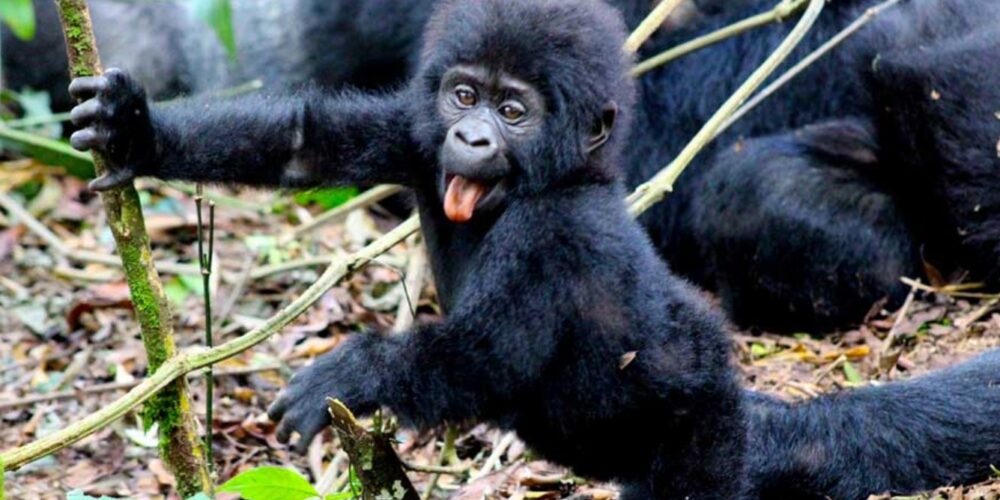
Infants depend heavily on maternal care during early development. They cling to their mothers, feed on milk, and gradually explore their environment under protection from the group. As they grow, they develop social skills through interaction with other members.
Western gorillas can live up to 35 to 40 years in the wild under favorable conditions. However, survival rates depend heavily on environmental stability and protection from human threats.
Conservation Status and Threats
Western gorillas remain endangered, with population trends varying across regions. The western lowland gorilla remains the most numerous subspecies, but it still faces ongoing decline in several areas. The Cross River gorilla remains critically endangered, with fewer than a few hundred individuals surviving in fragmented habitats.
Major threats include habitat loss from logging, agricultural expansion, and infrastructure development. Disease outbreaks such as Ebola have caused severe population declines in some regions, especially among western lowland gorillas.
Poaching and illegal wildlife trade also impact populations, particularly in areas with weak enforcement. Forest fragmentation isolates groups, reducing genetic diversity and limiting long-term survival potential.
Conservation organizations focus on habitat protection, anti-poaching patrols, disease monitoring, and community engagement. Protected areas across the Congo Basin play a key role in safeguarding remaining populations.
Ecological Importance
Western gorillas play a vital role in maintaining the health of Central Africa’s rainforests. Their feeding and movement patterns support seed dispersal, forest regeneration, and biodiversity balance.
As they travel through large forest areas, they help shape vegetation structure and contribute to ecological stability. Their presence indicates a healthy forest ecosystem capable of supporting a wide range of species.
Protecting western gorillas also protects the broader rainforest system, which plays a global role in climate regulation and carbon storage.
Human Interaction and Research
Western gorillas remain less habituated to human presence compared to mountain gorillas, especially in remote forest regions. This makes long-term observation more challenging and limits tourism opportunities in many areas.
Research continues to expand understanding of their behavior, but dense habitats and accessibility challenges restrict detailed studies. However, conservation science continues to improve through remote monitoring, field tracking, and ecological surveys.
Unlike mountain gorillas, western gorilla tourism remains limited, which reduces disturbance but also limits conservation funding generated through visitor programs.
Conclusion
The western gorilla stands as a powerful symbol of Africa’s rainforest ecosystems. Its adaptability, intelligence, and ecological importance make it a key species in maintaining forest health across Central and West Africa. Yet despite its strength and wide distribution, it remains vulnerable to human pressure and environmental change.
Long-term survival depends on stronger conservation action, habitat protection, and international support. Protecting the western gorilla means protecting one of the most important rainforest systems on the planet.