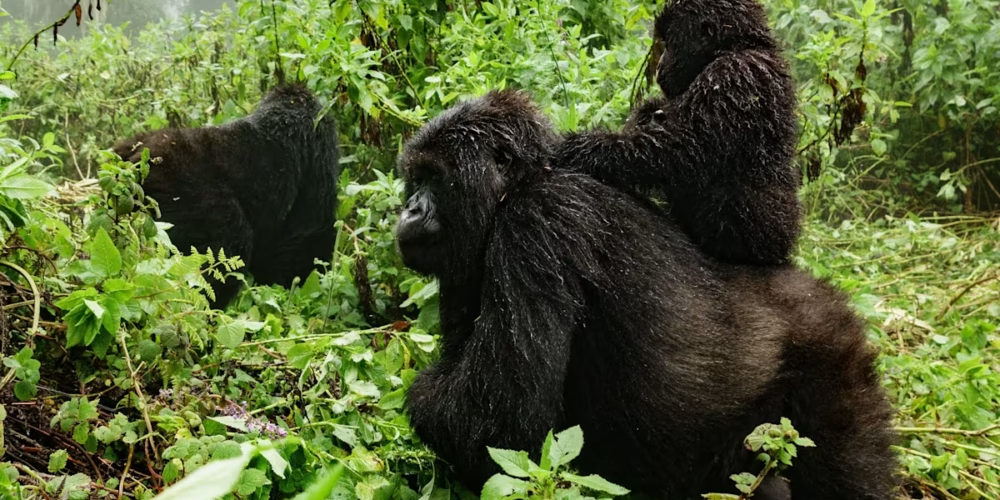

Western Gorilla vs Eastern Gorilla
Western Gorilla vs Eastern Gorilla: Differences, Habitat, Behavior, and Conservation
Western and eastern gorillas share the same genus, Gorilla, yet they live in very different parts of Africa and show clear differences in size, behavior, and ecology. Both groups split millions of years ago and adapted to distinct forest environments, which shaped how they feed, move, and interact socially.
Western gorillas dominate the forests of Central and West Africa, while eastern gorillas survive mainly in the forests of the Democratic Republic of Congo, Uganda, and Rwanda. Understanding their differences helps explain why conservation strategies must vary across regions and why each subspecies faces unique survival challenges.
Geographic Range and Habitat
Western gorillas live in lowland tropical forests stretching across countries such as Cameroon, Gabon, Republic of Congo, Equatorial Guinea, and the western parts of the Congo Basin. Their environment features dense rainforest, swamp forests, and river systems that remain warm and humid throughout the year.
Eastern gorillas occupy more fragmented and elevated habitats in Central and East Africa. They survive in mountainous forests, bamboo zones, and lowland rainforests depending on the subspecies. Mountain gorillas live in high-altitude volcanic slopes, while eastern lowland gorillas inhabit dense lowland jungles in eastern DRC.
The separation between these two groups is not just geographical but ecological. Western gorillas live in more continuous forest blocks, while eastern gorillas survive in isolated patches, often separated by human settlements, agriculture, or degraded land.
Subspecies Breakdown
Western gorillas include two subspecies: the western lowland gorilla and the Cross River gorilla. The western lowland gorilla represents the most widespread and numerous gorilla subspecies. The Cross River gorilla remains the rarest, living in small fragmented populations along the Nigeria-Cameroon border.
Eastern gorillas also include two subspecies: the mountain gorilla and the eastern lowland gorilla, also known as Grauer’s gorilla. Mountain gorillas receive the most conservation attention due to successful recovery efforts, while eastern lowland gorillas remain the least studied and most threatened.
This difference in subspecies structure highlights the ecological diversity within the gorilla family and the varying levels of conservation success across regions.
Physical Differences
Western gorillas generally appear smaller and more lightly built compared to eastern gorillas. Their shorter limbs and slightly narrower chest structure suit dense lowland rainforest environments where agility matters more than brute strength.
Eastern gorillas, especially eastern lowland gorillas, rank as the largest gorilla subspecies. They develop broader chests, stronger musculature, and larger body mass. Mountain gorillas also appear stockier due to their thick fur and adaptation to cold climates.
Facial structure varies subtly. Western gorillas often show smaller skull shapes and less pronounced brow ridges, while eastern gorillas display more robust facial features, particularly in mature silverbacks.
Diet and Feeding Patterns
Western gorillas consume a highly fruit-rich diet due to the abundance of fruiting trees in their lowland rainforest habitat. Fruits form a major part of their nutrition, especially during peak seasons. They also feed on leaves, stems, and seeds when fruit becomes scarce.
Eastern gorillas follow a more variable diet depending on subspecies and habitat. Mountain gorillas rely heavily on leaves, shoots, and bamboo due to limited fruit availability in high-altitude forests. Eastern lowland gorillas consume a mix of fruits and vegetation, but their diet shifts based on seasonal availability.
This dietary difference shapes movement patterns. Western gorillas often travel widely to follow fruiting cycles, while mountain gorillas maintain smaller, more stable ranges. Eastern lowland gorillas fall somewhere in between, depending on forest conditions.
Social Structure and Group Behavior
Both western and eastern gorillas live in family groups led by a dominant silverback. The silverback controls movement, protects the group, and mediates social interactions.
Western gorilla groups tend to be more fluid. Members may split and rejoin depending on food availability. This flexibility suits their fruit-driven diet and wide-ranging movement patterns.
Eastern gorilla groups, especially mountain gorillas, show more stability and cohesion. They maintain tighter social bonds and more consistent group structures over time. Eastern lowland gorillas show intermediate behavior, with some flexibility due to their larger home ranges.
In both cases, females transfer between groups to avoid inbreeding, while young males eventually leave to form their own groups or live temporarily in bachelor units.
Behavior and Intelligence
Western gorillas often appear more elusive and less habituated to human presence, especially in remote forest regions. Their behavior remains less studied due to dense habitats and limited long-term observation.
Eastern gorillas, particularly mountain gorillas, have been studied extensively through tourism and conservation programs. This has led to deeper understanding of their social behavior, communication, and intelligence.
Both groups use vocalizations, gestures, and facial expressions to communicate. Chest beating, grunts, and body posture help maintain group harmony and establish dominance when necessary.
Their intelligence shows in problem-solving abilities, tool use (rare but observed), and strong social memory within family groups.
Conservation Status and Threats
All gorilla subspecies remain endangered, but the level of threat varies significantly.
Western gorillas face severe pressure from habitat loss, logging, and disease outbreaks such as Ebola, which has caused dramatic population declines in some regions. Although western lowland gorillas remain the most numerous, their numbers still decline in several areas due to ongoing forest degradation.
The Cross River gorilla faces extreme risk due to its very small and fragmented population. Conservation efforts focus heavily on habitat protection and anti-poaching measures.
Eastern gorillas face different but equally serious challenges. Mountain gorillas show population recovery thanks to strong conservation programs and regulated tourism in Uganda, Rwanda, and Congo. However, eastern lowland gorillas remain highly threatened due to conflict, illegal mining, and limited access to protected areas.
Human Interaction and Tourism
Eastern gorillas, especially mountain gorillas, experience the highest level of structured tourism. Gorilla trekking in Uganda, Rwanda, and Congo provides controlled access that supports conservation funding and community development.
Western gorillas receive less tourism exposure due to dense forest conditions and limited infrastructure. This reduces disturbance but also limits funding opportunities for conservation through tourism revenue.
Eastern lowland gorilla trekking, especially in Kahuzi-Biega National Park, offers a rare and adventurous experience but remains less developed compared to mountain gorilla tourism circuits.
Ecological Role
Both western and eastern gorillas play a critical role in forest ecosystems. They disperse seeds, shape vegetation growth, and maintain forest regeneration cycles. Their movement through large territories helps maintain biodiversity balance across tropical rainforests.
Their presence also indicates ecosystem health. A stable gorilla population reflects a functioning forest system that supports a wide range of other species.
Conclusion
Western and eastern gorillas share a common ancestry but evolved into distinct forms shaped by geography, diet, and environmental pressure. Western gorillas thrive in fruit-rich lowland rainforests, while eastern gorillas adapt to a mix of mountainous and lowland habitats with more variable food availability.
Both groups remain endangered, yet they represent different conservation stories. Western gorillas struggle with disease and habitat loss, while eastern gorillas face habitat fragmentation and conflict. Protecting both requires region-specific strategies and sustained global commitment.
Their survival ensures the protection of some of Africa’s most important rainforest ecosystems.