
Boyoma Falls
Boyoma Falls: Power of the Congo River
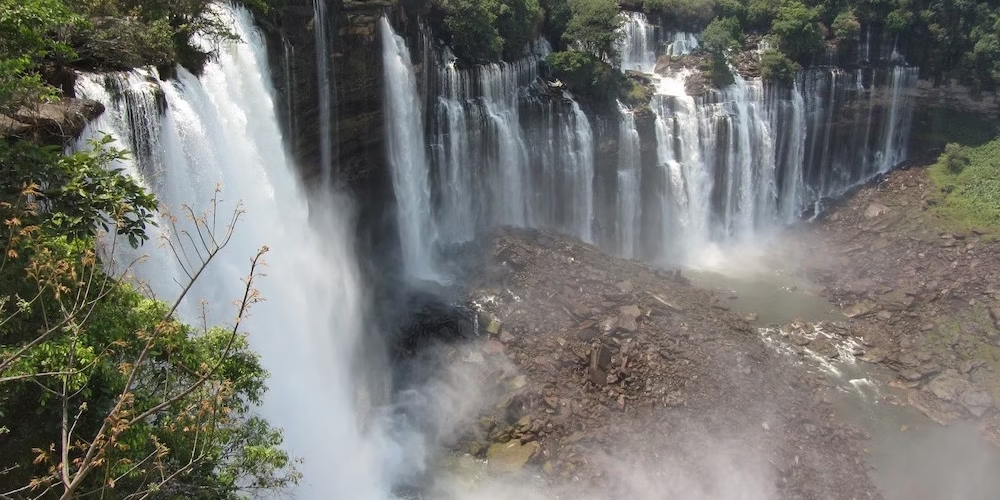
Tucked away in the northeastern Democratic Republic of Congo (DRC), Boyoma Falls is one of Africa’s most underrated natural wonders. Stretching over 100 kilometers along the mighty Lualaba River, this chain of seven cataracts is a force of nature—and a living cultural site for the people who depend on it.
Formerly known as Stanley Falls, Boyoma is far more than just a waterfall. It’s a stunning combination of hydrological power, cultural heritage, and scenic wilderness. For those who venture to Kisangani, a visit here is unforgettable.
Where is Boyoma Falls?
Boyoma Falls is located between the towns of Ubundu and Kisangani, in the Tshopo Province of northeastern DRC. It marks the point where the Lualaba River becomes the Congo River, the second-longest river in Africa and one of the most powerful on Earth.
The seven cataracts extend over a total distance of around 100 kilometers, dropping roughly 61 meters (200 feet) in elevation.
What Makes It Unique?
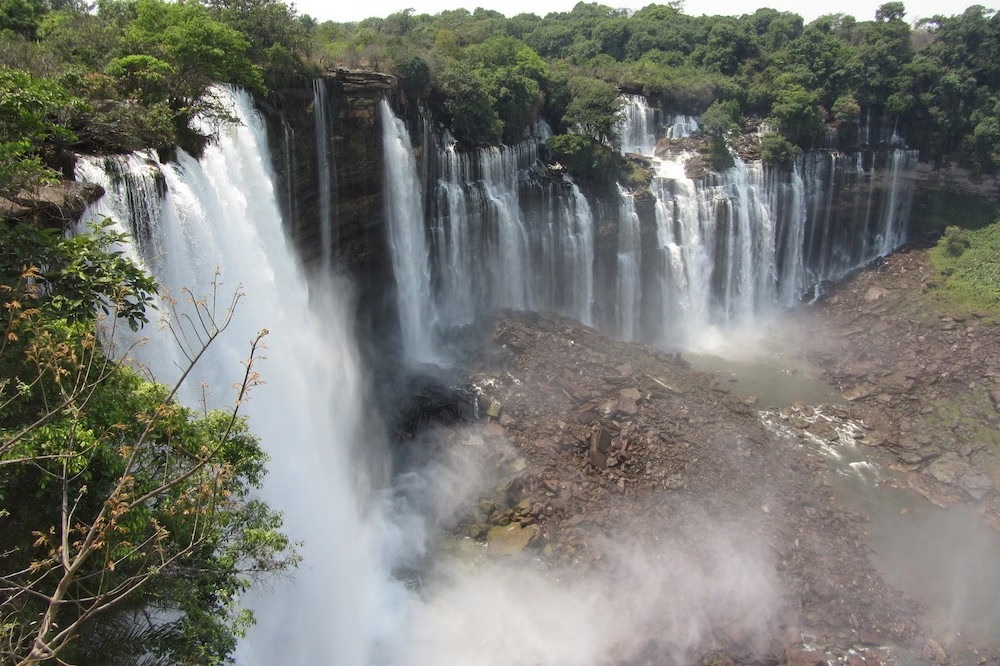
Unlike most waterfalls, Boyoma Falls is not a single drop. It’s a series of seven powerful rapids and cascades that roar through narrow gorges, rocky riverbeds, and lush forest. Each cataract contributes to the spectacle of water in motion.
What makes Boyoma even more special is the volume of water that flows through it. The combined flow of the seven falls gives it one of the highest water volumes of any waterfall system in the world—surpassing even Niagara and Iguazu Falls in total annual discharge.
Wagenia Fishing: Cultural Innovation
One of the most fascinating aspects of Boyoma Falls is the unique fishing technique practiced by the Wagenia people, also known as the Wagenya. They have developed a centuries-old method that is both sustainable and ingenious.
They build wooden tripods in the river, anchoring them into naturally formed holes in the riverbed rocks. From these platforms, they suspend large conical baskets into the rapids. The baskets catch large fish swept along by the river’s force.
This method:
- Catches only mature fish, allowing young ones to escape
- Uses no bait or nets
- Requires deep knowledge of water flow and fish behavior
It’s a prime example of human adaptation to nature, and a cultural tradition that continues today.
A Place of Historical Importance
Boyoma Falls also holds a place in African exploration history. In the late 19th century, the falls became a critical obstacle for Henry Morton Stanley during his expedition across the continent. The cataracts were named Stanley Falls in his honor during the colonial era.
Today, the original name Boyoma—used by the local people—has been restored, reflecting a deeper recognition of the region’s indigenous identity and heritage.
Visiting Boyoma Falls Today
Though remote and under-visited, Boyoma Falls is accessible via Kisangani, a city on the Congo River that serves as a gateway to the eastern DRC.
Travelers can:
- Take guided excursions to view the seventh cataract, the most accessible and dramatic of the seven
- Observe the Wagenia fishing structures and meet local fishermen
- Explore the surrounding riverbanks and forest trails
- Visit local markets in Kisangani for crafts and regional food
Visits are best organized through local tour operators or cultural heritage groups, which provide both logistics and local insight.
Travel Considerations
- Best time to visit: Dry season, from June to September, when river levels are stable and travel is easier
- Safety: The DRC has security challenges. Always check travel advisories and use local guides
- Transport: Kisangani is reachable by air from Kinshasa or Goma. Road access is possible but difficult
- Language: French and Swahili are widely spoken
- Respect local customs: Always ask before taking photos, especially of people or fishing operations
Why It’s Worth the Journey
Boyoma Falls offers something few other destinations can: a blend of raw nature, local ingenuity, and untold history. It’s not a tourist trap. There are no gift shops or luxury lodges. But there is power, beauty, and a deep connection between people and water.
This is travel in its purest form—off the beaten path, guided by curiosity and respect.