
Mount Moroto Tours Uganda
Mount Moroto Tours Uganda: A Journey into Karamoja’s Wilderness
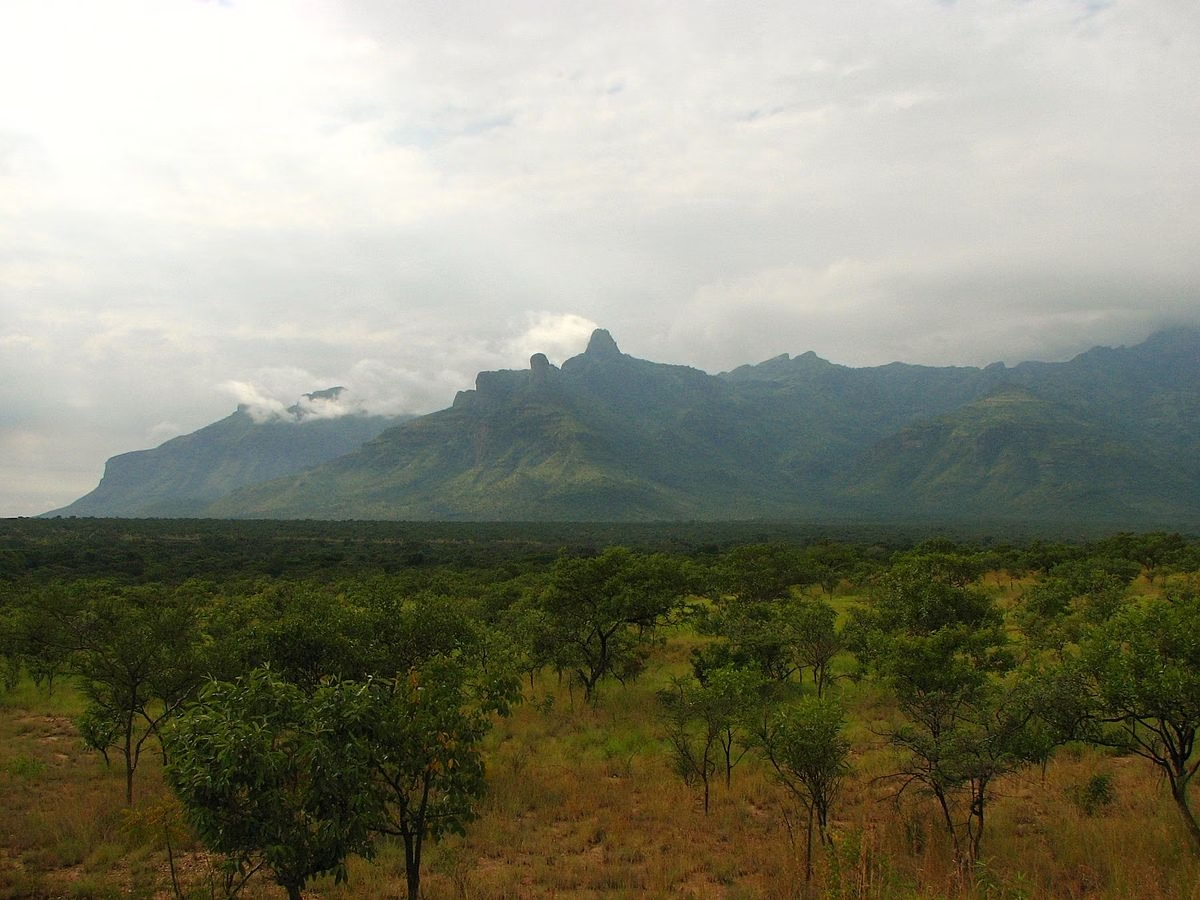
Mount Moroto Tours Uganda. Rising 3,083 meters above sea level, Mount Moroto is one of the most prominent peaks in Uganda’s northeastern highlands. Located just outside Moroto Town in the Karamoja region, this extinct volcanic mountain offers a rare combination of challenging hiking trails, rich biodiversity, and deeply rooted cultural encounters.
Far removed from the traditional tourist circuits, Mount Moroto is an ideal destination for adventurous travelers who want to discover Uganda’s remote landscapes and indigenous communities on foot.
Location and Geographic Overview
Mount Moroto lies approximately 3 kilometers east of Moroto Town, in northeastern Uganda, close to the border with Kenya. It forms part of the Eastern Rift Valley escarpment, with rugged ridges, forested slopes, and open savanna plains.
The mountain is a key feature of the Karamoja region, a semi-arid plateau historically isolated from Uganda’s mainstream tourism. Thanks to its elevation and isolated position, Mount Moroto supports a unique combination of habitats, from dry thorn-bush savannas at the base to montane forests at higher altitudes.
Hiking and Trekking on Mount Moroto
St. Lawrence Waterfall Trail
One of the most popular hiking routes on Mount Moroto is the St. Lawrence Waterfall Trail, which begins in Kangole Village, near Moroto Town. This moderate hike takes around 5 to 6 hours round-trip, ascending roughly 600 meters to a natural spring and waterfall. Along the trail, hikers pass through local homesteads, small gardens, and forested areas.
Imagit Peak
Imagit Peak is the mountain’s highest accessible summit and can be reached via multi-day treks with overnight camping. The trail offers sweeping views over Karamoja and even into Kenya on clear days. Treks to the summit generally require two to four days, depending on the pace and route chosen.
Multi-Day Expeditions
Tour companies like Kara-Tunga Tours and Rwenzori Expeditions offer 4-day to 7-day trekking itineraries, including
- Full ascents of Mount Moroto
- Cultural visits to the Tepeth communities
- Guided nature walks and camping at high-altitude sites
These expeditions are physically demanding but extremely rewarding for fit and experienced hikers.
Cultural Encounters with the Tepeth People
Mount Moroto is the ancestral homeland of the Tepeth (or So) people, one of Uganda’s smallest and least-known ethnic groups. Many Tepeth communities still live on or near the mountain slopes in traditional homesteads, where they practice subsistence farming, herbal medicine, and oral storytelling.
Guided cultural visits allow travelers to:
- Learn about the history of the Tepeth people and their resistance to displacement
- Visit sacred sites used for spiritual rituals and seasonal ceremonies
- Participate in traditional dance, music, and craft-making
Many of these experiences are facilitated by community-based tourism groups in partnership with local elders.
Biodiversity of Mount Moroto
The mountain’s varied elevations create microclimates that support distinct ecosystems, making Mount Moroto a biodiversity hotspot in an otherwise dry region.
Flora
Vegetation varies significantly from the base to the summit:
- Lowland savannas with acacia and combretum species
- Mid-altitude woodlands
- High-altitude dry montane forests, some of the few remaining in Uganda
Fauna
Mount Moroto is home to several important species, including:
- Vervet monkeys, baboons, and other primates
- Rock hyrax, forest genets, and the elusive African golden cat
- A wide variety of reptiles and amphibians
Birdlife
Over 220 bird species have been recorded in the area, making it a top destination for birdwatchers. Notable species include:
- Doherty’s Bushshrike
- White-chinned Prinia
- African Goshawk
- Green-backed camaroptera
Birding is especially rewarding during early morning hikes along forested trails.
Accommodation in Moroto
While there are no lodges on Mount Moroto itself, nearby Moroto Town offers comfortable options:
- Kara-Tunga Safari Camp – A popular choice for cultural immersion and guided treks
- Mount Moroto Hotel – Mid-range hotel with scenic views and easy access to trailheads
- City Friends Hotel Moroto – A budget-friendly guesthouse for backpackers
Camping is available for multi-day treks. Equipment is usually arranged through tour operators.
Getting to Mount Moroto
By Road
Mount Moroto is about 11 hours by car from Kampala, via Mbale and Soroti. The route includes the Soroti–Katakwi–Moroto–Lokitanyala Road, which is fully paved and offers beautiful scenery across eastern Uganda.
By Air
Chartered flights are available to Moroto Airstrip, located just outside the town. Air travel is ideal for those with tight schedules or looking for comfort.
Best Time to Visit
The best time to hike Mount Moroto is during the dry seasons, which run from:
- June to August
- December to February
During these months, the trails are more accessible and the views are clearer. The wet seasons (March–May and September–November) bring lush vegetation but can make hiking more difficult due to muddy paths and reduced visibility.
Practical Tips for Trekkers
- Hire a local guide for safety, navigation, and cultural insight
- Pack light but include essentials like sunscreen, insect repellent, water purification tablets, and a first-aid kit
- Bring enough drinking water or a filtration system
- Prepare for cool temperatures at night, especially at higher elevations
- Support community-owned tourism businesses where possible
Plan Your Mount Moroto Tour
Mount Moroto is one of Uganda’s most underrated outdoor destinations. It offers a mix of adventure, cultural richness, and scenic beauty that you won’t find anywhere else in the country. Whether you’re trekking to the summit or spending time with the Tepeth people, the experience is sure to be as educational as it is inspiring.
This destination is perfect for eco-conscious travelers, hiking enthusiasts, and cultural explorers seeking new terrain beyond Uganda’s traditional safari circuits.