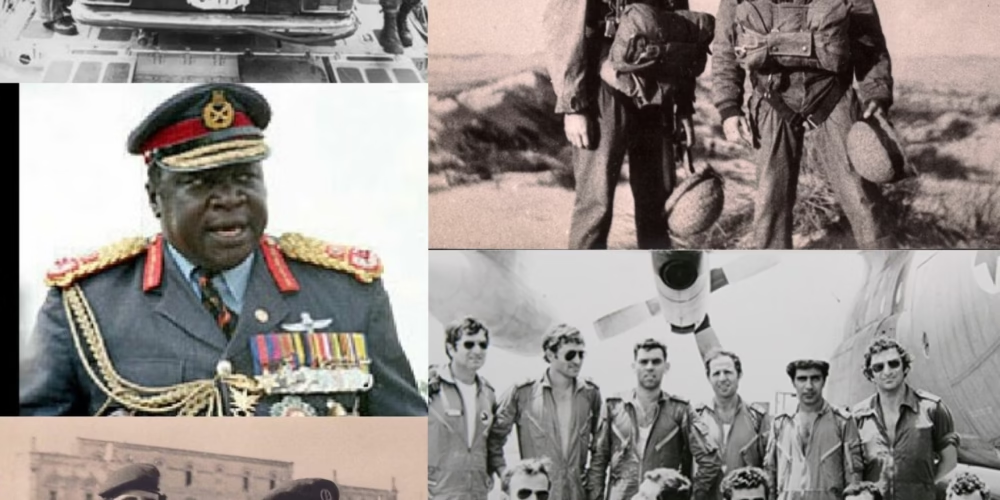

Entebbe Operation 1976
Entebbe Operation 1976 – The Daring Hostage Rescue in Uganda
Entebbe Operation 1976. Operation Entebbe, also known as Operation Thunderbolt, was one of the most daring hostage rescue missions in modern history. It took place on July 4, 1976, at Entebbe Airport in Uganda, and remains a defining moment in international counter-terrorism.
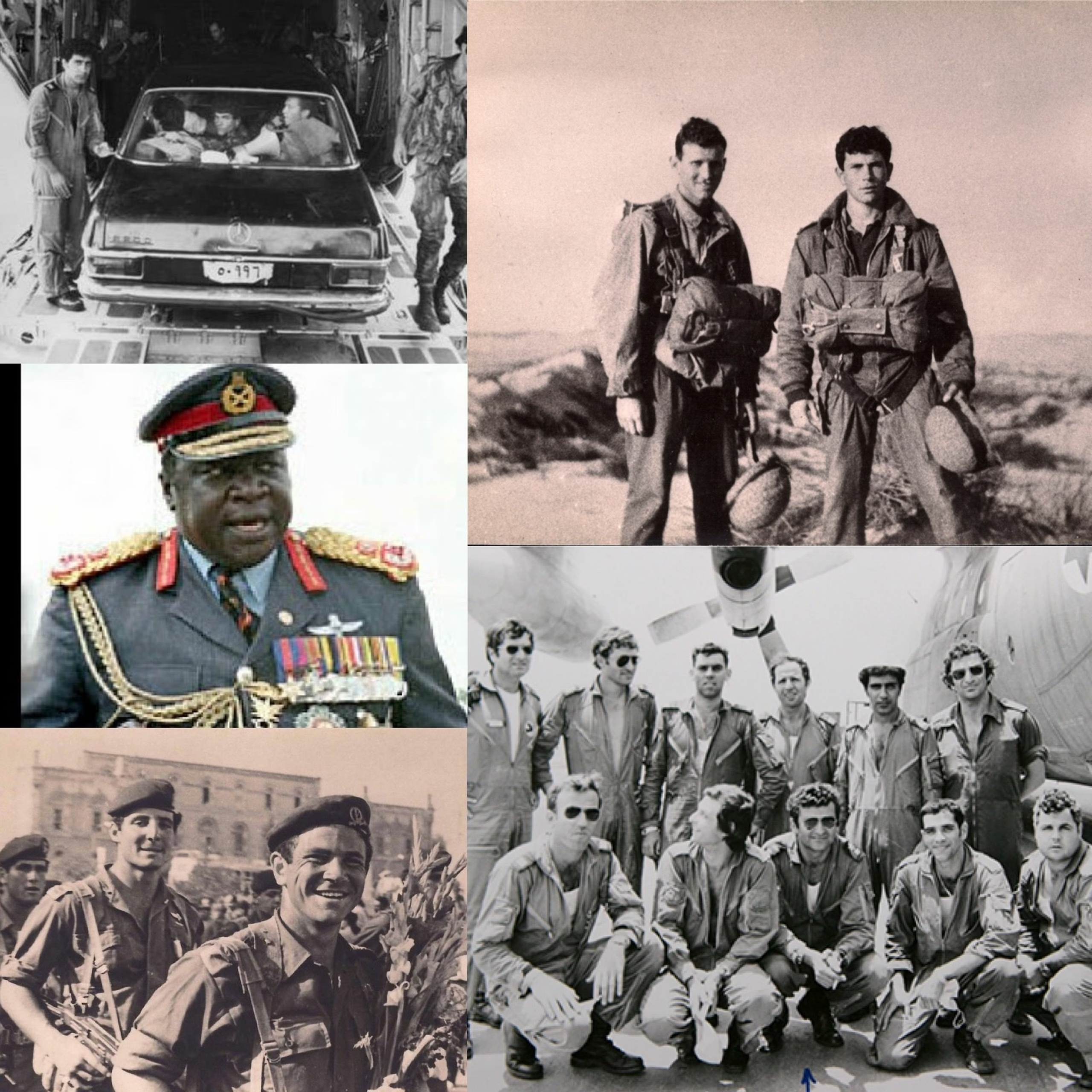
The Hijacking
On June 27, 1976, an Air France flight from Tel Aviv to Paris, carrying 248 passengers, was hijacked shortly after taking off from Athens. The hijackers were two members of the Popular Front for the Liberation of Palestine – External Operations (PFLP-EO) and two from the German Revolutionary Cells.
They diverted the plane to Entebbe, Uganda, where President Idi Amin gave them support and used the crisis to gain global attention.
The hijackers demanded the release of 40 Palestinian prisoners held in Israel and 13 more from other countries.
The Hostage Situation
The terrorists separated the Israeli and Jewish passengers from the rest. They released non-Israeli hostages over the next few days, but kept 106 hostages, mostly Israelis and the Air France crew, in the old terminal of Entebbe Airport.
Uganda’s military, under Idi Amin, surrounded the terminal and gave cover to the hijackers.
Israel Plans the Raid
As international diplomacy stalled, Israel secretly planned a military rescue operation. The mission involved elite commandos, intelligence officers, and a long-range flight of over 4,000 km to Entebbe.
Led by Lt. Col. Yonatan Netanyahu, the operation was high-risk, but time was running out.
Operation Thunderbolt Unfolds
On the night of July 3–4, 1976, four Israeli C-130 Hercules planes landed at Entebbe under the cover of darkness. The commandos quickly stormed the terminal, killing all hijackers and over 20 Ugandan soldiers.
In just 90 minutes, the operation was over. The commandos rescued 102 hostages and flew them back to Israel.
Tragically, Yonatan Netanyahu, the unit commander and brother of future Israeli Prime Minister Benjamin Netanyahu, was killed in action. Three hostages also died during the operation, and one (Dora Bloch) was later murdered in a Ugandan hospital on Amin’s orders.
Global Impact
The raid shocked the world and humiliated Idi Amin. It was praised as a military masterpiece and became a model for counter-terrorism missions.
Uganda faced international backlash for supporting the hijackers. Israel earned global respect, though it also faced criticism from some for violating Ugandan sovereignty.
Visit the Historic Site Today
The old terminal building at Entebbe Airport still exists and can be viewed by special arrangement. Many visitors interested in political history or military strategy include it on Uganda tours.
Museums in Israel also display artifacts, photos, and personal stories from the operation.
Plan Your Historical Safari
The 1976 Entebbe Operation is more than a military success story. It’s a tale of courage, strategy, and human resilience. Exploring this moment during your Uganda trip adds depth to your experience of the country’s past and present.