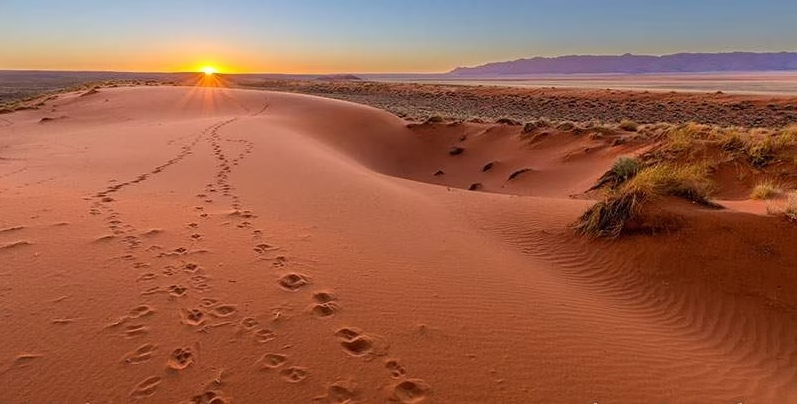

Sahara vs Kalahari
Sahara vs Kalahari: Which Desert Is Bigger and How Do They Compare?
When it comes to the world’s great deserts, the Sahara and Kalahari often dominate the conversation. Both are iconic African landscapes with unique geographies and cultural legacies—but which desert is bigger? The quick answer: The Sahara Desert is significantly larger than the Kalahari. However, the story doesn’t end there. These two deserts differ vastly in size, biodiversity, climate, and visitor experiences.
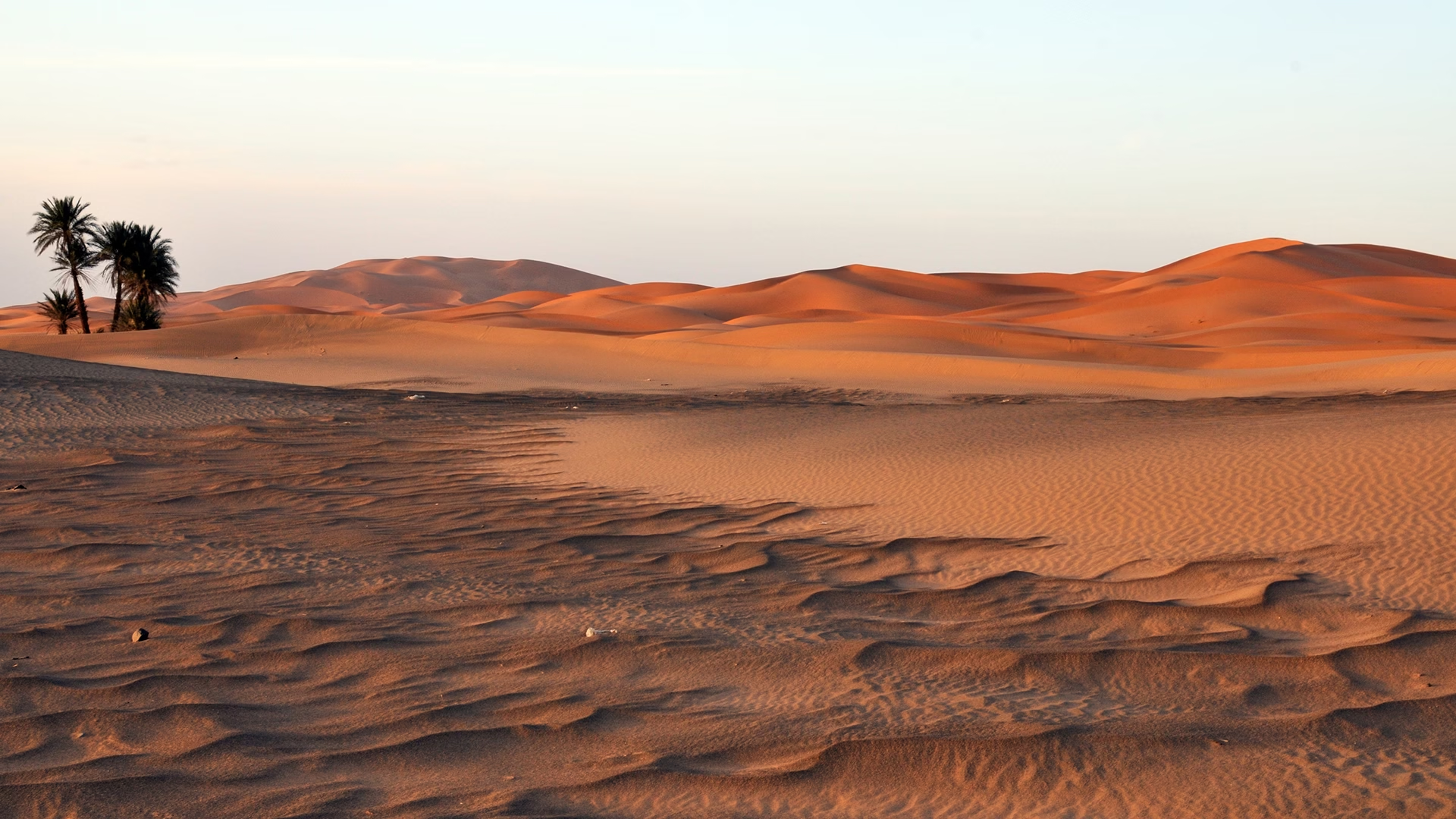
This blog post offers a full comparison to help you understand the true scale and character of each desert—and why both are worth exploring.
Size and Geography
The Sahara Desert is the largest hot desert in the world, covering about 9.2 million square kilometers. It stretches across 11 North African countries, including Algeria, Egypt, Libya, Mali, Sudan, and Chad. It spans from the Atlantic Ocean in the west to the Red Sea in the east, forming a natural boundary between the Mediterranean region and sub-Saharan Africa.
In contrast, the Kalahari Desert covers roughly 900,000 square kilometers, just over one-tenth the size of the Sahara. It lies in Southern Africa, covering most of Botswana and parts of Namibia and South Africa. Though called a desert, the Kalahari receives more rainfall than the Sahara and is often classified as a semi-arid savanna.
Climate and Terrain
The Sahara is incredibly arid and unforgiving. Some parts go years without rainfall, and daytime temperatures regularly exceed 50°C (122°F). Nights bring a sharp drop in temperature. The landscape features towering dunes, rocky plateaus, salt flats, and scattered oases. Vegetation is minimal.
The Kalahari, while hot and dry, receives seasonal rains, especially during the summer months. Rainfall can reach 200–500 mm annually, allowing grasslands, shrubs, and scattered trees to grow. It lacks the towering sand dunes of the Sahara but features rolling red sands, pans, and open savanna.
Wildlife and Biodiversity
The Kalahari Desert supports an impressive array of wildlife due to its higher rainfall and vegetation cover. It’s home to meerkats, cheetahs, gemsbok, springbok, giraffes, zebras, and the iconic black-maned Kalahari lions. The San people, or Bushmen, have lived here for thousands of years, relying on deep ecological knowledge to survive.
The Sahara, being much harsher, has more limited wildlife. Species include dromedary camels, fennec foxes, desert monitors, scorpions, and a few migratory birds. Life here revolves around the sparse water sources. Nomadic communities such as the Tuareg and Berber people have adapted to this extreme environment over centuries.
Cultural Significance
The Sahara is steeped in history. Ancient trade routes once connected West Africa to the Mediterranean via camel caravans, carrying salt, gold, and ideas. Cities like Timbuktu thrived as centers of Islamic learning. The Tuareg and Berber cultures remain vibrant today, despite modern challenges.
In the Kalahari, the culture of the San people is one of the oldest on Earth. Their traditions include click languages, rock art, and sustainable foraging practices. The region remains a vital center for indigenous knowledge and conservation-based tourism, especially in Botswana and Namibia.
Tourism and Experiences
The Sahara offers dramatic, otherworldly landscapes—perfect for adventure. Popular activities include camel trekking, sandboarding, desert camping, and visiting historical ruins. Morocco’s Erg Chebbi and Egypt’s White Desert are among the most visited parts.
The Kalahari focuses on wildlife and cultural safaris. Visitors can explore Kgalagadi Transfrontier Park, interact with San communities, and go on guided bush walks. The clear skies also make it a prime location for stargazing.
Sahara vs. Kalahari Desert – Comparison Table
| Feature | Sahara Desert | Kalahari Desert |
| Size | ~9.2 million km² | ~900,000 km² |
| Location | North Africa (11 countries) | Southern Africa (Botswana, Namibia, South Africa) |
| Desert Type | True desert (hyper-arid) | Semi-arid savanna |
| Rainfall | <100 mm/year | 200–500 mm/year |
| Vegetation | Sparse or none | Grasslands, shrubs, trees |
| Wildlife | Limited (camels, foxes, reptiles) | Rich (meerkats, lions, antelope, birds) |
| Human Cultures | Tuareg, Berber, nomadic traders | San (Bushmen), local pastoralists |
| Temperature Extremes | Very hot days, cold nights | Hot but moderated by seasonal rains |
| Tourism Focus | Camel safaris, dunes, ancient trade routes | Wildlife safaris, cultural walks, stargazing |
| Famous Sites | Erg Chebbi, White Desert, Timbuktu | Kgalagadi Park, Tsodilo Hills, Deception Valley |
Plan Your Desert Journey
While the Sahara is undeniably bigger, both deserts offer transformative travel experiences. The Sahara’s sheer scale and desolation inspire awe and introspection, while the Kalahari’s living wilderness offers a deeper connection to nature and culture. Whether you are chasing the sun over vast sand dunes or listening to the whispers of San elders under a starry sky, Africa’s deserts will leave a lasting imprint on your soul.