
Top 15 Deepest Lakes in the World
Top 15 Deepest Lakes in the World
The planet’s deepest lakes are not just bodies of water — they are ancient natural archives, biodiversity hotspots, and marvels of geological processes. This guide highlights the 15 deepest lakes in the world by maximum depth, and explores what makes each one unique.
-
Lake Baikal – Russia
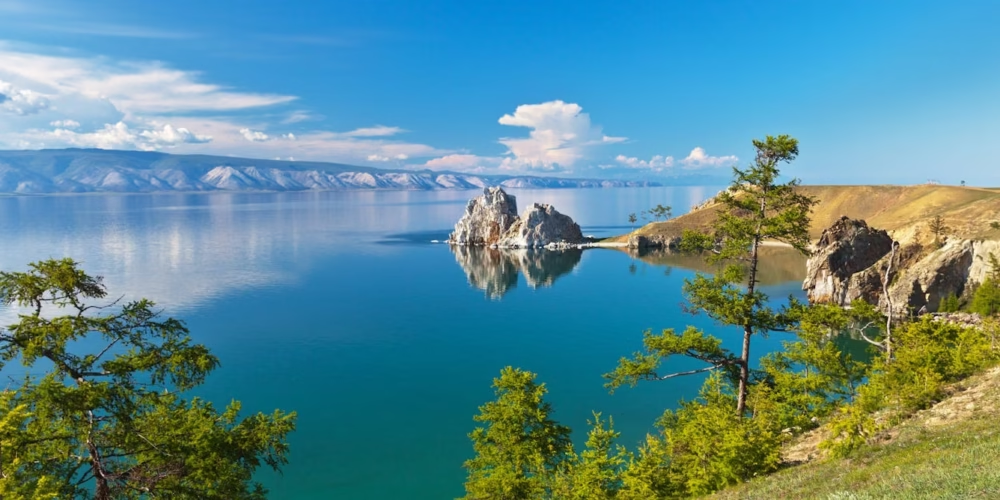
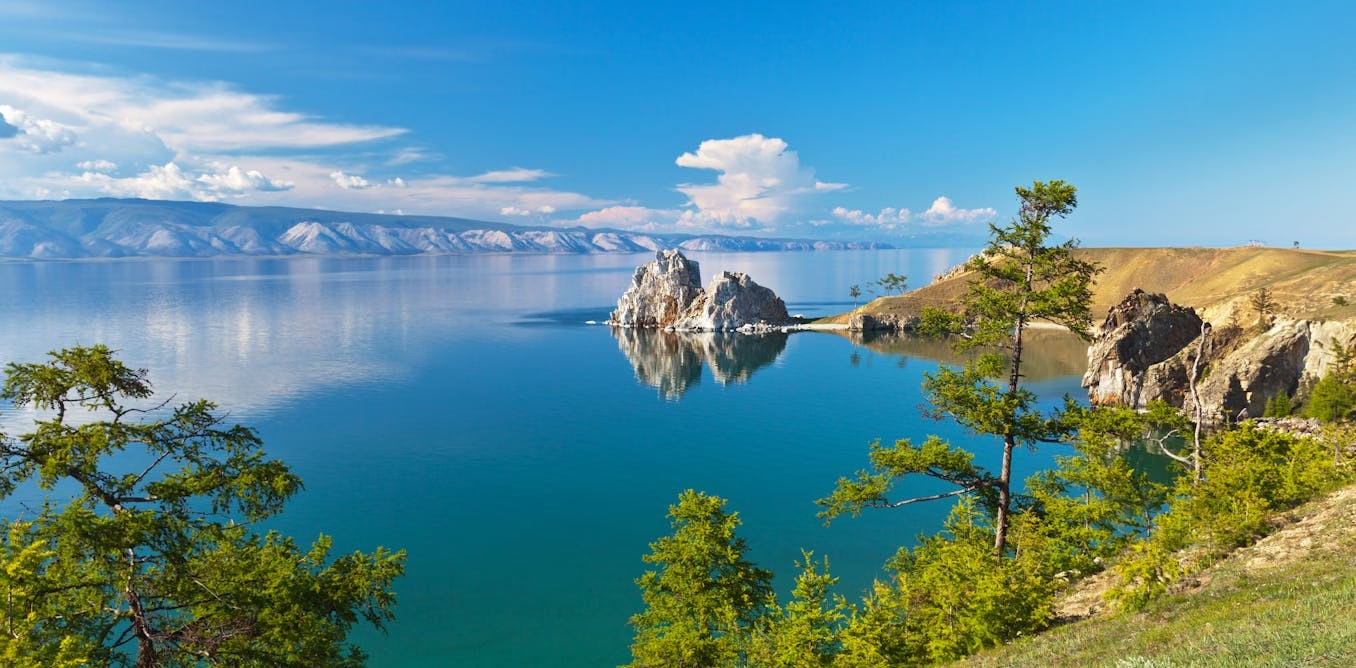
Lake Baikal, located in southern Siberia, is the deepest lake in the world at 5,387 feet (1,642 meters). It’s also the oldest, formed over 25 million years ago. Baikal holds about 20% of the Earth’s unfrozen surface freshwater and supports thousands of endemic species, including the Baikal seal. Its extreme depth results from tectonic rift activity, making it a key site for geological and biological research.
-
Lake Tanganyika – East Africa
Stretching across Tanzania, the Democratic Republic of Congo, Burundi, and Zambia, Lake Tanganyika is the second-deepest lake globally, plunging to 4,823 feet (1,470 meters). It is the longest freshwater lake and the second-largest by volume. Its age and isolation have given rise to remarkable biodiversity, especially in cichlid fish species, many of which are found nowhere else on Earth.
-
Caspian Sea – Eurasia
Though called a sea, the Caspian is technically the world’s largest enclosed inland body of water, making it a lake by definition. It reaches a maximum depth of 3,363 feet (1,025 meters). Shared by five countries—Russia, Kazakhstan, Turkmenistan, Iran, and Azerbaijan—the Caspian Sea contains saltwater and plays a strategic role in regional politics, energy extraction, and marine biodiversity.
-
Lake Vostok – Antarctica
Hidden beneath over 2 miles of glacial ice, Lake Vostok is one of Earth’s most mysterious lakes. It reaches depths of around 3,300 feet (1,000 meters). Isolated for over 15 million years, it intrigues scientists who speculate it may host life forms adapted to extreme conditions. Research here provides insights into Earth’s past climate and the possibility of life on icy moons like Europa.
-
O’Higgins-San Martín Lake – Chile & Argentina
Located in the Patagonian Andes, this glacial lake reaches a depth of 2,742 feet (836 meters). Known as Lake O’Higgins in Chile and Lake San Martín in Argentina, it’s surrounded by rugged mountain landscapes and nourished by ice fields. The lake’s vivid blue waters reflect its glacial origins and pristine condition, attracting trekkers and nature lovers.
-
Lake Malawi (Nyasa) – East Africa
Shared by Malawi, Mozambique, and Tanzania, Lake Malawi plunges to 2,316 feet (706 meters). It holds the third-largest volume of freshwater in Africa and hosts more fish species than any other lake in the world. The lake’s isolation has driven rapid speciation, especially among colorful cichlids, making it a hotspot for evolutionary biology and ecotourism.
-
Issyk-Kul Lake – Kyrgyzstan
Located in the Tien Shan mountains, Issyk-Kul is a saline lake that reaches a depth of 2,192 feet (668 meters). Despite its high altitude and surrounding snow-capped peaks, the lake never freezes, giving it the name “warm lake.” Issyk-Kul holds cultural significance for Central Asia and supports tourism, fisheries, and research into climate-sensitive alpine environments.
-
Great Slave Lake – Canada
As North America’s deepest lake, Great Slave Lake reaches 2,015 feet (614 meters). Found in the Northwest Territories, this glacial lake plays a vital role in the local economy, indigenous heritage, and transportation. During winter, an ice road connects remote communities, while in summer, the lake supports commercial fishing and recreation.
-
Crater Lake – Oregon, USA
Formed within the collapsed caldera of Mount Mazama, Crater Lake is the deepest lake in the United States at 1,949 feet (594 meters). Known for its intense blue color and remarkable clarity, the lake has no rivers entering or leaving it. Its isolation keeps the ecosystem pristine, making it a centerpiece of Crater Lake National Park and a popular destination for photographers and hikers.
-
Lake Matano – Indonesia
Lake Matano lies in Sulawesi, Indonesia, and plunges to a depth of 1,936 feet (590 meters). It is one of the deepest lakes in Southeast Asia and is notable for its unique oxygen-poor lower layers, which support bacteria adapted to extreme conditions. The lake is also a vital freshwater source for local communities and hosts endemic aquatic life.
-
Lake General Carrera / Lake Buenos Aires – Chile & Argentina
This cross-border glacial lake reaches 1,923 feet (586 meters) at its deepest point. Famous for its Marble Caves—smooth mineral formations sculpted by water—it lies in Patagonia and is fed by melting glaciers. The lake supports agriculture, hydroelectric power, and eco-tourism in both countries.
-
Lake Tahoe – USA (California/Nevada)
With a depth of 1,645 feet (501 meters), Lake Tahoe ranks as the second-deepest in the United States. Its alpine setting and clear blue waters attract millions of visitors yearly. Tahoe straddles two states and plays a major role in water supply, outdoor recreation, and regional ecology.
-
Lake Sarez – Tajikistan
Lake Sarez formed in 1911 when a massive earthquake-triggered landslide dammed the Murghab River. It reaches depths of up to 1,644 feet (501 meters). Although scenic and remote, it poses a geological risk due to its unstable natural dam, known as the Usoi Dam, one of the highest in the world.
-
Hornindalsvatnet – Norway
Hornindalsvatnet is the deepest lake in Europe at 1,686 feet (514 meters). Located in western Norway, it sits in a narrow fjord-like valley and is surrounded by steep terrain. The lake’s clean, cold waters support freshwater fish species and have earned it recognition for ecological integrity.
-
Lake Toba – Indonesia
Lake Toba, located on the island of Sumatra, is the largest volcanic lake in the world. It has a maximum depth of 1,657 feet (505 meters) and was formed by a supervolcanic eruption about 74,000 years ago. The lake features an island (Samosir) in its center and remains a hub of Batak culture, tourism, and research into post-volcanic ecosystems.
Why These Lakes Matter
These lakes reflect millions of years of Earth’s natural history. Some formed from tectonic rifts or calderas, while others emerged from glacial or landslide activity. Many are rich in endemic species, like Baikal’s freshwater seal or Malawi’s rainbow-colored cichlids. Some serve as crucial freshwater reserves; others act as climate archives hidden beneath layers of sediment.
Plan Your Deep Dive
Whether you are a geographer, diver, biologist, or an avid traveler, these lakes offer a chance to witness Earth’s raw, ancient beauty. From the frozen mystery of Lake Vostok to the biodiverse richness of Lake Tanganyika, each lake reveals a unique story of depth—both literally and scientifically. Plan your next adventure around one of these incredible natural wonders.