
Can Chimps Swim?
Can Chimps Swim?
Chimpanzees, our closest relatives in the animal kingdom, share nearly 98.8% of human DNA. Yet, one major difference lies in their relationship with water. Unlike humans, chimpanzees cannot swim naturally. Most chimps avoid deep water entirely and risk drowning if submerged. Despite living in rainforests with rivers and streams, chimps remain mostly land-bound when it comes to aquatic behavior. Let’s explore why.
Why Chimpanzees Can’t Swim Naturally
Chimpanzees lack the physical adaptations that allow many animals—and humans—to swim instinctively. Their dense, muscular bodies have little body fat, reducing buoyancy and making it harder to stay afloat. Unlike human children who often learn to swim through play, chimps grow up without exposure to or need for deep water. This absence of learning, coupled with instinctual fear, prevents them from acquiring swimming skills.
Additionally, chimpanzees’ anatomy is not well-suited for paddling or maintaining a floating position. They don’t instinctively hold their breath underwater, which increases the risk of drowning if they fall in.
Do Chimps Ever Interact with Water?
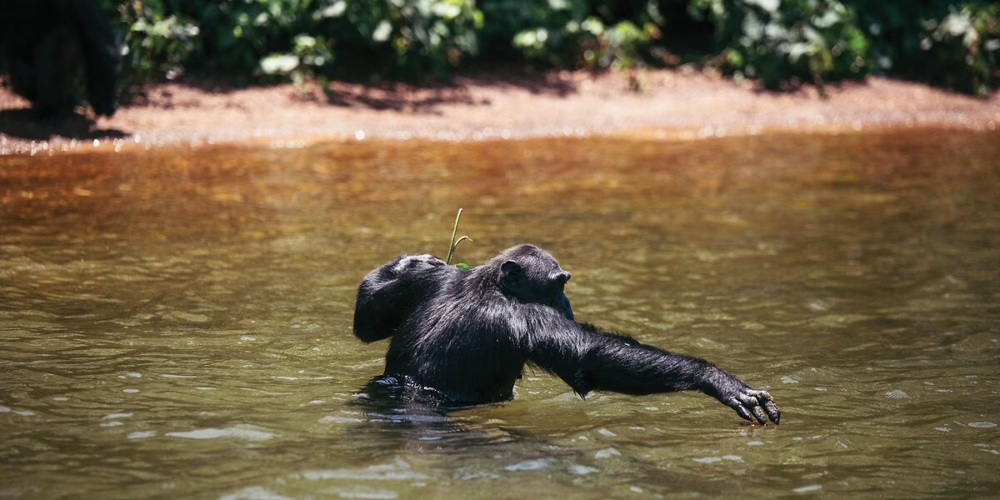
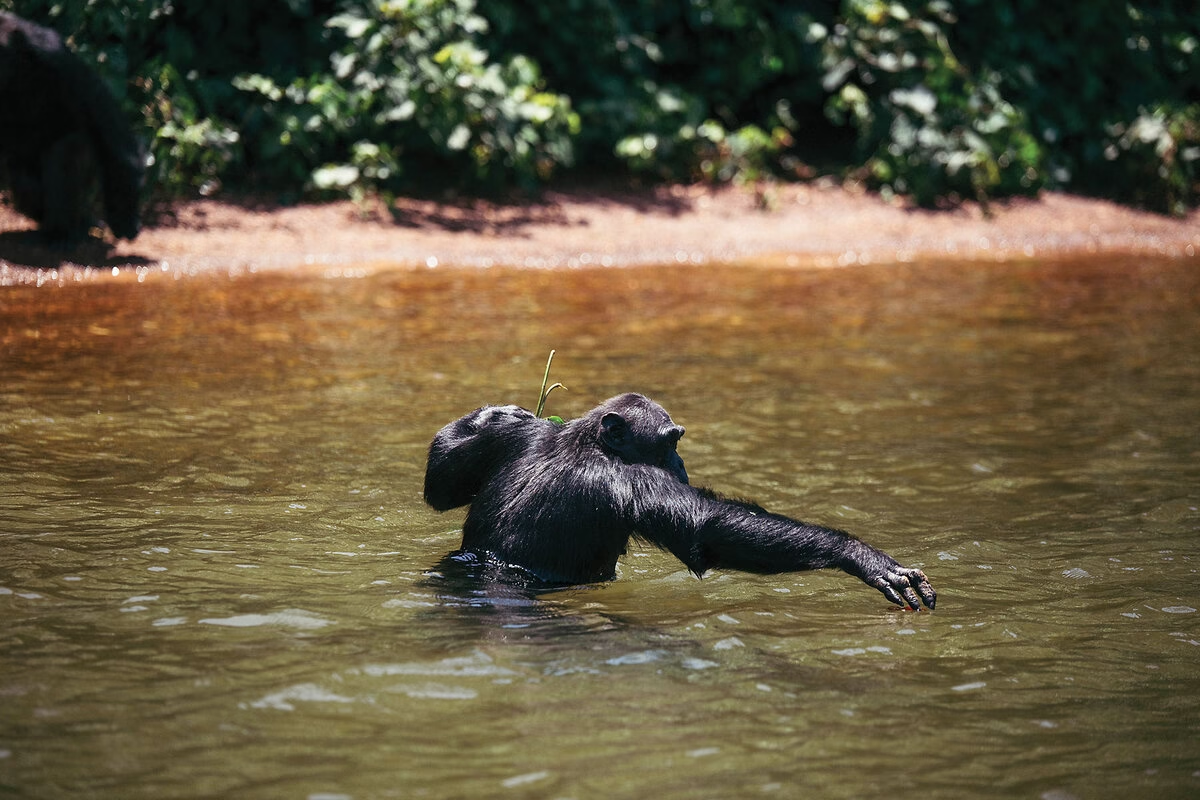
While they avoid deep water, chimps do interact with shallow water in the wild. They have been observed walking upright through streams or wading through swamps in search of food. After heavy rain, chimpanzees may play or splash in puddles, but they rarely immerse their entire bodies.
In captivity, chimps sometimes become more curious and less fearful. Some have shown a willingness to enter pools or shallow enclosures with water, though this behavior remains uncommon.
Rare Cases of Swimming Chimps
There are a few documented cases of chimpanzees learning to swim under human supervision. One famous example is a chimp named Cooper, who was raised in a sanctuary and learned to swim across a pool using a basic dog-paddle technique. In another case, an orangutan also demonstrated diving skills, showing that great apes can acquire the ability under specific conditions.
However, these are isolated cases and not typical of wild behavior. In the wild, chimps show no signs of swimming or diving voluntarily.
Do Chimps Fear Water?
Yes, chimpanzees exhibit a natural fear of deep water. This instinctual aversion likely evolved as a survival mechanism. Drowning poses a significant threat since they can’t swim, and water bodies may harbor predators like crocodiles. Rather than taking risks, chimps stick to the edges of rivers or find alternate paths through forested terrain.
How Chimps Compare to Other Apes
Great apes generally lack swimming skills. Gorillas, for example, also avoid water and can drown easily. Orangutans show slightly more curiosity and have demonstrated swimming in captivity, but it is not instinctive behavior. Humans are the only great apes that routinely learn to swim and develop comfort in water through cultural learning and physical adaptations.
Conclusion
While chimpanzees are highly intelligent and physically agile, they cannot swim naturally. Their dense bodies, low buoyancy, and lack of exposure to water all contribute to this limitation. Although rare examples exist of chimps swimming in captivity, these are learned behaviors and not representative of the species as a whole. Understanding this aversion to water helps clarify the boundaries of chimpanzee behavior and highlights how evolution shaped their interaction with the environment.