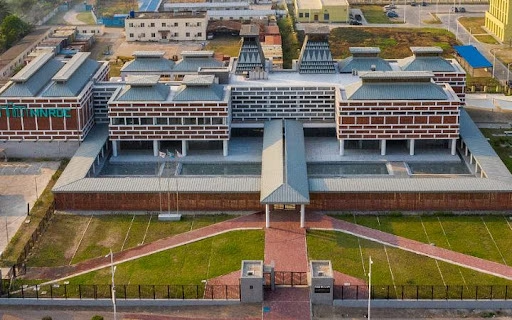

National Museum of the Democratic Republic of Congo
National Museum of the Democratic Republic of Congo
In the heart of Kinshasa, the vibrant capital of the Democratic Republic of Congo (DRC), stands a landmark dedicated to preserving and showcasing the soul of the nation: the National Museum of the DRC (Musée National de la République Démocratique du Congo, or MNRDC). More than just a museum, it is a celebration of Congolese identity—past, present, and future.
Opened in November 2019, this modern, world-class institution reflects a major investment in cultural preservation and education. For anyone seeking to understand Congo’s rich history, diversity, and resilience, the museum is an essential stop.
A Symbolic and Modern Structure
Designed by Junglim Architecture of South Korea and built with support from the Korea International Cooperation Agency (KOICA), the museum blends traditional African aesthetics with clean, contemporary design. The result is a space that feels both rooted and forward-looking.
Its minimalist structure emphasizes open air circulation and natural lighting. Solar energy powers parts of the facility, reflecting a sustainable, modern approach. The building covers over 6,000 square meters of exhibition space, making it one of Central Africa’s largest cultural institutions.
A Journey Through Congolese Culture
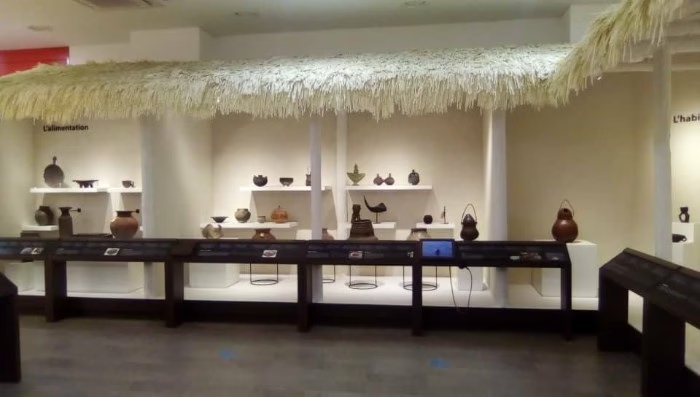
Inside the museum, visitors are led through a chronological and thematic journey showcasing Congo’s vast cultural wealth. The exhibitions are well-organized, multi-lingual (French, English, and local languages), and thoughtfully curated.
Ethnographic and Artistic Displays
The museum’s collection holds over 12,000 artifacts, with several thousand on permanent display. These include:
- Traditional masks, statues, and ceremonial tools from different ethnic groups
- Pottery, textiles, and musical instruments representing the everyday lives of various Congolese communities
- Historical artifacts, including tools, weapons, and colonial-era objects that reflect both resistance and transformation
- Sacred and spiritual items, providing insight into indigenous belief systems
Each object tells a story—not just about the object itself, but about the people and customs it represents.
Interactive and Educational Experiences
The MNRDC goes beyond passive display. It hosts cultural workshops, lectures, and rotating exhibitions that invite community involvement and educational engagement. Students, artists, researchers, and tourists are all welcome to explore deeper meanings and dialogues about Congo’s past and present.
The museum also includes multimedia presentations, maps, and video installations that provide context to the artifacts on display.
A Space for Contemporary Voices
While rooted in history, the museum also looks to the future. Temporary exhibits often highlight modern Congolese art, photography, and fashion. Local artists and curators are involved in shaping the programming, ensuring that the museum remains a living space—not just a static archive.
It’s not just a place to look at the past, but to reflect on identity and envision the future of Congolese culture in a changing world.
Visiting the Museum
The National Museum of the DRC is open from Monday to Saturday, 9:00 AM to 3:30 PM. It is closed on Sundays and public holidays.
Admission is affordable and contributes to museum operations and educational outreach:
- Foreign visitors: $10 for adults, $3 for children
- Local visitors: Reduced rates apply for Congolese citizens and school groups
Photography is permitted in most galleries, but flash and video recordings may require special permission.
The museum is centrally located in Kinshasa and easily accessible by taxi or hired transport. Guided tours are available at request in multiple languages, and the museum is wheelchair accessible.
Virtual Access and Digital Resources
For those unable to visit in person, the museum also offers virtual tours, allowing users to explore selected exhibits and rooms online. This initiative makes Congolese culture accessible to a global audience and supports the museum’s role as an educational hub.
Why the Museum Matters
The National Museum of the DRC is more than a collection of objects—it’s a monument to Congolese resilience and creativity. It offers a space for reflection, education, and pride. At a time when many African nations are reclaiming their histories and redefining their cultural narratives, Kinshasa’s museum stands as a powerful example.
For visitors, the museum provides insight not only into what the Congo was, but also what it continues to become.