
5 Fascinating Facts About Hippos
5 Fascinating Facts About Hippos.
Hippo Facts, Hippos are some of Africa’s most iconic animals, known for their massive size and unique behaviors. Despite their large, slow-moving appearance, hippos are surprisingly complex and interesting creatures. Here are five fascinating facts about hippos that highlight their behavior, lifestyle, and ecological significance.

-
They Are the Third Largest Land Mammals
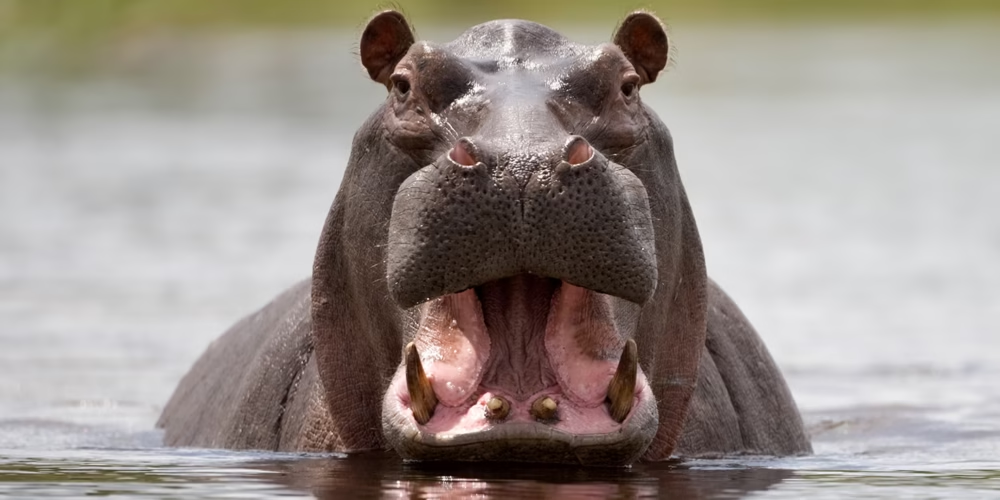
Hippos are the third largest land mammals, only surpassed in size by elephants and white rhinos. An adult male hippo can weigh between 3,000 to 5,000 pounds (1,400 to 2,300 kg), with some individuals even reaching up to 8,000 pounds (3,600 kg). Their huge size is matched by their large mouths, which can open up to 150 degrees wide, showing off their impressive tusks.
-
Hippos Spend Most of Their Time in Water
Despite being land mammals, hippos spend a significant amount of time submerged in water, particularly during the day to keep cool. Their skin is sensitive to sunlight, and staying in water helps them avoid sunburn. They typically come out of the water in the evening to feed. Hippos are excellent swimmers and can hold their breath underwater for up to 5 minutes, though they usually walk along the riverbed rather than swimming.
-
Surprisingly Aggressive
Although they may appear slow and docile, hippos are extremely territorial and can be quite aggressive, especially when it comes to protecting their space. They are responsible for more human fatalities in Africa than any other large animal, with estimates suggesting that hippos kill around 500 people annually. Hippos use their powerful jaws to defend their territory, which they fiercely protect, especially when they feel threatened.
-
Their Diet Is Mainly Grass
Hippos are herbivores, and their diet consists mainly of grass. They graze on land, typically at night, eating up to 80 pounds (35 kg) of grass in a single night. Their large bodies require a high intake of food to sustain them. Interestingly, while they spend so much time in the water, they do not eat aquatic plants, preferring the grasses they can find along the riverbanks.
-
Hippos Secrete a Unique “Blood Sweat”
One of the most unique and fascinating facts about hippos is the secretion of a red, oily substance from their skin, often referred to as “blood sweat.” This substance is not actually blood, but a special secretion that helps protect their skin from the sun’s harsh rays and has antibacterial properties. It acts as a natural sunscreen, protecting them from sunburn, and also helps to prevent infections in their skin, which can easily get irritated from constant exposure to water.
Plan Your Tour or Safari
Hippos are much more than their large, slow-moving appearances suggest. From their impressive size to their territorial nature and unique behaviors, they are one of Africa’s most intriguing animals. Contact Us. Their surprising aggression, distinctive secretion, and fascinating diet make them stand out as remarkable creatures in the wild.