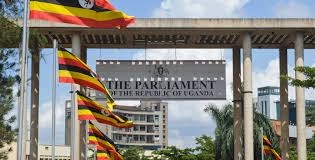

A Tour to Uganda’s Parliament.
A Tour to Uganda’s Parliament.
Uganda’s Parliament is more than just a symbol of governance in the country but rather a hub of national decision-making and a reflection of the country’s democratic values. The parliament is located in the country’s capital.
This iconic institution represents the Legislative Arm of Government where laws are debated, crafted, and passed to shape the nation’s future. A tour of Uganda’s Parliament offers a fascinating glimpse into the country’s political history, governance structure, and legislative processes.
Uganda’s Parliament.
The Parliament of Uganda is the cornerstone of the country’s democratic system established under the 1995 Constitution.
It operates as a unicameral legislature which means it has a single chamber where all Members of Parliament (MPs) sit to deliberate on national issues.
Parliament comprises;
- Directly elected MPs representing constituencies.
- Special interest group representatives, including women, youth, persons with disabilities, and the Uganda People’s Defence Forces (UPDF).
- Ex-officio members, such as the Prime Minister and Ministers who are not elected MPs but participate in parliamentary business.
The Speaker of Parliament presides over its sessions, ensuring order and adherence to parliamentary rules.
Highlights of the Tour.
A visit to Uganda’s Parliament provides a unique opportunity to learn about its history, functions and role in governance. Key highlights include:
-
Exploring the Parliamentary Chambers.
The Parliament House features a modern chamber where MPs convene for debates and legislative discussions.
Visitors can marvel at the chamber’s architecture, complete with seating arrangements, state-of-the-art technology, and a Speaker’s platform.
-
Understanding Legislative Processes.
Guided tours offer insights into how laws are made in Uganda. Learn about the stages of a bill, from drafting to debate, committee review, and final approval.
This process demonstrates the intricate checks and balances in place to ensure accountability.
-
Visiting historical Exhibits.
The Parliament complex houses exhibits showcasing Uganda’s political history, including milestones such as independence in 1962, the adoption of the 1995 Constitution, and pivotal legislative achievements.
-
Meeting legislators (subject to availability).
Some tours include opportunities to meet MPs or other parliamentary officials, allowing visitors to ask questions and gain firsthand insights into their roles and responsibilities.
-
Cultural and Architectural Features.
The Parliament building reflects Uganda’s heritage through its design and decor. Elements such as traditional art and symbols highlight the country’s cultural diversity and unity.
Best Time to Visit.
Parliament sessions usually run from Tuesday to Thursday, and visiting during a plenary sitting offers a chance to observe live debates.
Contact Us are available on weekdays, but booking in advance is recommended.
Key Areas to Explore.
- The Public Gallery. Watch live parliamentary sessions.
- Committee Rooms. Learn how smaller groups of MPs tackle specific issues like finance, health, and education.
- Parliamentary Gardens. Enjoy the serene outdoor spaces around the Parliament building.
Tips for Visitors.
- Book in Advance
Tours require prior approval before one has to contact the Parliamentary Public Relations Office to schedule your visit. - Dress Appropriately
Business or smart casual attire is recommended as Parliament is a formal environment. - Carry Identification
Visitors must present valid identification (passport, national ID) for security clearance. - Respect Protocol.
Photography may be restricted in certain areas, and visitors are expected to maintain decorum during their visit. - Prepare Questions.
If meeting an MP or parliamentary official, prepare thoughtful questions to make the most of the interaction and get to learn deeper of who happens in this marvelous institution.
How to Get to Uganda’s Parliament.
The Parliament of Uganda is conveniently located in the heart of Kampala near key landmarks like the Kampala Serena Hotel and Constitution Square.
Private Vehicle
Ample parking is available for visitors with prior clearance.
Public Transport
Buses and taxis frequently serve the city center, dropping passengers near Parliament Avenue.
Boda Bodas
Motorcycle taxis offer a quick way to navigate Kampala’s traffic and reach the Parliament complex.