
Wildlife in Kibale National Park
Wildlife in Kibale National Park
Kibale National Park is world-renowned for its impressive biodiversity, particularly its primate population, making it a paradise for wildlife enthusiasts.
The park is home to various mammals, birds, insects, and reptiles.
Primates
Kibale is often referred to as the “Primate Capital of the World,” hosting 13 different primate species, the highest density of primates in Uganda. Some of the notable species include:
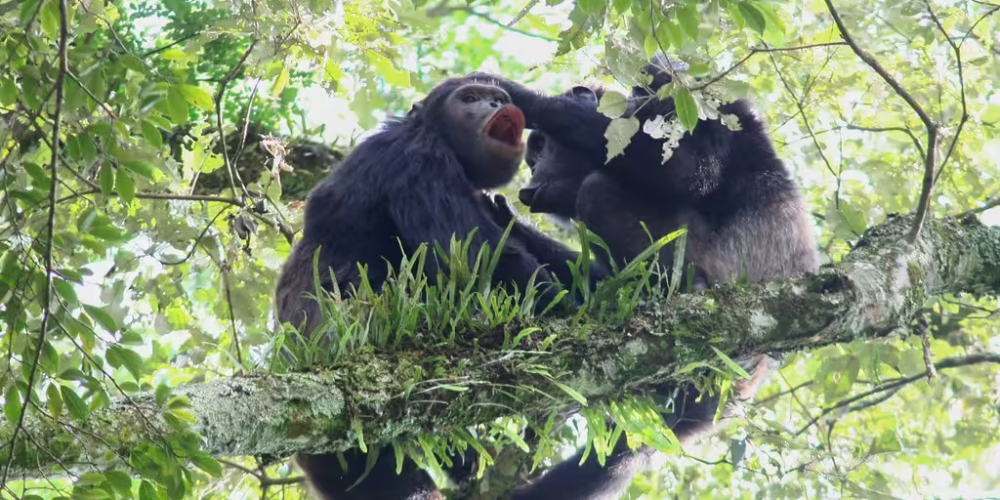
- Chimpanzees (Pan troglodytes)
The park’s most famous residents, chimpanzees are highly social and intelligent primates, closely related to humans.
Visitors have the rare opportunity to track and observe these fascinating animals in their natural habitat, watching them forage for food, care for their young, and communicate with each other.
Kibale boasts a population of over 1,500 chimpanzees.
- Red Colobus Monkeys (Procolobus rufomitratus)
Known for their striking red fur, these monkeys live in large troops, usually found in the tree canopy.
They are particularly unique to Kibale, as their population here is one of the few strongholds remaining for this species.
- L’Hoest’s Monkeys (Cercopithecus lhoesti)
These terrestrial monkeys have a distinctive white beard and are often found on the forest floor.
They are shy and elusive, making a sighting of them quite special.
- Black-and-White Colobus Monkeys (Colobus guereza)
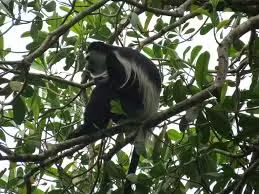
Easily recognized by their long, flowing white tails and black fur, these monkeys are common in the park.
They move gracefully through the forest canopy in search of leaves, flowers, and fruits.
- Grey-cheeked Mangabey (Lophocebus albigena)
These large, dark-colored monkeys have distinctive grey cheeks and are often seen in the company of other primates.
They live in both forested areas and swamps within the park.
- Olive Baboons (Papio anubis)
-
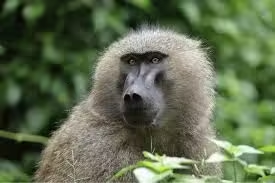
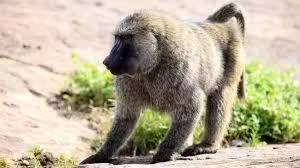
Baboons are larger primates that are easily spotted due to their size and tendency to forage on the ground.
They are omnivorous and have a complex social structure, often seen in groups known as “troops.”
Mammals
Beyond its primate population, Kibale is also home to a variety of other mammals:
- Forest Elephants (Loxodonta cyclotis)
Although sightings are rare, Kibale is inhabited by smaller and hairier forest elephants, a subspecies of the African elephant.
These elusive creatures live in the dense forest and are more adapted to the jungle environment.
- Bush Pigs (Potamochoerus larvatus)
These wild pigs are nocturnal and feed on a variety of plant material, including roots, fruits, and tubers.
Visitors may occasionally spot them foraging near water sources or in the forest.
- Duikers
These small antelopes, including species like the Blue Duiker and Red Duiker, are often found in the underbrush of the park.
They are shy, solitary animals that feed on fruits, leaves, and flowers.
- Buffalo (Syncerus caffer)
While more commonly seen in open savannahs, some forest-dwelling buffalo can be found in Kibale.
These animals often keep to the park’s edges but are known to wander deeper into the forest in search of food.
- Leopards (Panthera pardus)
Though elusive and difficult to spot due to their nocturnal habits, leopards do roam the forests of Kibale.
They prey on smaller mammals, using their stealth and camouflage to ambush their prey.
Birdlife
Kibale National Park is a bird-watcher’s haven, boasting over 370 bird species.
Some of the rare and notable birds include:
- African Pitta (Pitta angolensis)
This colorful bird is one of the more elusive species, best seen during the rainy season.
Its vivid colors and distinct calls make it a prized sight for bird watchers.
- Great Blue Turaco (Corythaeola cristata)
With its striking blue plumage, large size, and melodious calls, the Great Blue Turaco is one of the park’s iconic birds.
It is often seen gliding between the trees in search of fruits.
- Black Bee-eater (Merops gularis)
A small bird with vibrant blue and red feathers, the Black Bee-eater is typically found in forest clearings or near water sources.
It feeds on flying insects like bees and butterflies.
- Yellow-rumped Tinkerbird (Pogoniulus bilineatus)
This small, colorful bird is often heard before it’s seen.
It produces a distinct “tink” call and it feeds on fruits, insects and seeds.
Butterflies and Insects
Kibale is teeming with a rich variety of butterflies and insects.
The forest is home to over 250 species of butterflies, making it an ideal destination for insect enthusiasts.
The vivid colors of butterflies like the African Swallowtail and Green-banded Urania add to the park’s magical atmosphere.
In addition to butterflies, the forest is home to various beetles, ants and moths, contributing to the park’s vibrant ecosystem.
Reptiles and Amphibians
Though less frequently spotted, Kibale is also home to various reptiles and amphibians, such as:
- Chameleons
The Three-horned Chameleon is one of the most distinctive species in Kibale, and its known for its color-changing abilities while in the forest canopy.
- Forest Cobras (Naja melanoleuca)
Though rare, forest cobras inhabit Kibale’s dense vegetation.
These large, venomous snakes are generally shy and prefer to avoid human interaction.
- Frogs and Toads
Various frog species like the African bullfrog and common reedfrog thrive in Kibale’s forest environment, particularly near water sources.
Planning and Booking Your Safari with Gecko Safaris Africa.
Planning your safari to Kibale National Park with Gecko Safaris Africa ensures a hassle-free and well-coordinated experience that caters for interests for all travellers on board.
- Customized Itineraries:
Gecko Safaris offers personalized itineraries that allow you to explore Kibale’s diverse attractions at your own pace.
Whether you’re on a family holiday or an adventure tour, Gecko Safaris has options to suit your needs.
- Professional Guides
Their knowledgeable guides are well-versed in the park’s biodiversity, ensuring you get the most out of every safari experience.
- Transport and Accommodation
Gecko Safaris arranges all transport to and from Kibale, whether by road or air, as well as accommodation options that range from luxury lodges to budget-friendly camps.
- Chimpanzee Permits
Gecko Safaris takes care of securing your permits for chimpanzee tracking and any other required fees, ensuring a smooth experience without any administrative hassle.
To plan and book your safari, simply contact Gecko Safaris through our website or reach out to our customer service team for assistance.