
Exploring Uganda’s Royal Heritage
Tucked on the hills of Kampala lies one of Uganda’s most sacred and historical landmarks—Kasubi Tombs. A UNESCO World Heritage Site, this royal burial ground offers a deep look into the heart of the Buganda Kingdom. For culture lovers and history seekers, Kasubi Tombs is more than a tourist stop—it’s a spiritual and cultural journey.
A Sacred Site with Royal Roots
The Kasubi Tombs date back to 1882, when Kabaka Muteesa I built a palace on Kasubi Hill. After his death, the palace became his final resting place. Over time, it evolved into a royal tomb for four Buganda kings: Muteesa I, Mwanga II, Daudi Chwa II, and Muteesa II.
Tombs are not just graves—they are sacred shrines where rituals are still performed by the Baganda people. The site holds immense spiritual significance and remains an active cultural space.
Why the Kasubi Tombs Matter
This site is one of the most important symbols of the Buganda Kingdom, Africa’s largest surviving monarchy. It showcases how traditional beliefs and spiritual practices blend with history. The tombs are managed by royal descendants, keeping the lineage and customs alive.
UNESCO declared Kasubi a World Heritage Site in 2001 for its cultural value. Although a major fire damaged the tombs in 2010, craftsmen are carefully restoring them using traditional Ganda architecture.
What to See at Kasubi
Muzibu Azaala Mpanga
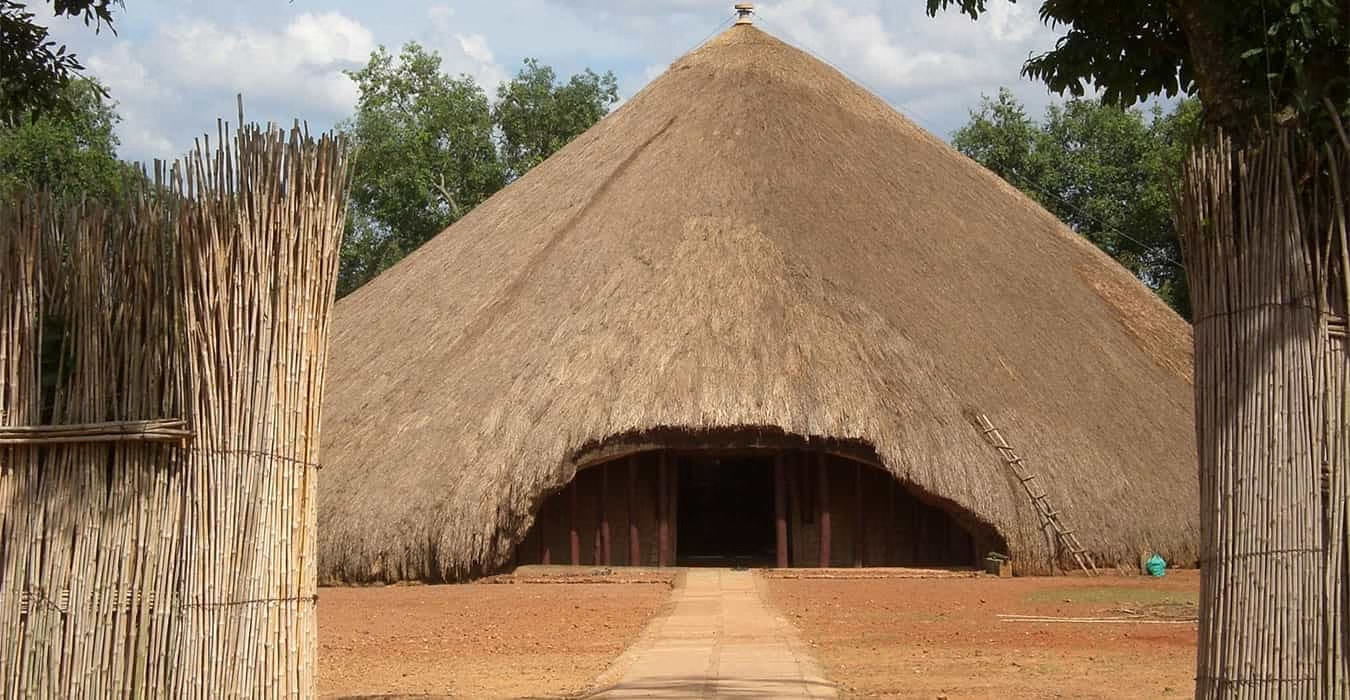
At the heart of the tombs lies Muzibu Azaala Mpanga, a massive, circular structure that serves as the main burial house. Built from natural materials like wood, reeds, thatch, and cow dung, it stands as a masterpiece of traditional architecture.
The structure is ringed by spears and adorned with symbols of Buganda’s 52 clans. Once inside, the tomb feels like a cathedral of silence, where history whispers from every beam and fiber.
The Royal Guide Tour
Upon arrival, a trained royal guide will walk you through the history, customs, and rituals of the Buganda monarchy. You’ll hear stories of each Kabaka buried here and how their reigns shaped modern Uganda.
Don’t miss the clan drums, the sacred bark cloths, and the fire pit that represents continuity between the living and the dead.
Cultural Etiquette
- Dress modestly: Shoulders and knees should be covered.
- Shoes must be removed: Visitors must take off shoes before entering the sacred tomb area.
- Speak respectfully: This is a place of honor.
- Ask before photographing: Especially inside the sacred chambers.
Respecting the local customs ensures a deeper and more meaningful experience.
Practical Information
- Location: Kasubi Hill, Kampala, Uganda (5 km from city center)
- Opening Hours: Monday to Saturday, 9:00 AM – 5:00 PM
- Guided Tours: Available on-site with English-speaking guides
- Entrance Fees( these can be changed)
- Ugandan Pupils – UGX 3,000
- Ugandan Adults – UGX 10,000
- East African Adults – UGX 20,000
- Non-Residents – $20
You can reach the tombs via taxi, boda-boda (motorbike taxi), or private car.
Nearby Attractions
Combine your trip to Kasubi with visits to:
- Kabaka’s Palace (Lubiri): The official residence of the Buganda king, located a short drive away.
- Uganda Museum: Showcasing Uganda’s cultural and natural history.
- Wamala Tombs: The burial site of Kabaka Ssuuna II, another sacred spot for the Baganda.
A half-day cultural tour of Kampala is the perfect way to include Kasubi in your itinerary.
Final Thoughts
Visiting the Kasubi Tombs offers more than a look at royal graves. It gives you a powerful connection to Uganda’s soul. This is where legends sleep, rituals live, and traditions breathe.
If you are in Kampala—even for a short time—this site belongs on your list. Come with respect. Leave with insight.