The Khoisan People: Africa’s Oldest Cultural Group
The Khoisan people are considered the oldest known inhabitants of Southern Africa, with a lineage that stretches back over 100,000 years. Known for their distinct languages, unique click consonants, deep understanding of the land, and complex cultural heritage, the Khoisan consist of two major groups: the Khoikhoi (formerly called Hottentots) and the San (formerly Bushmen). Their legacy reflects a profound connection to Africa’s landscapes and early human civilization.
-
Who Are the Khoisan?
The term “Khoisan” combines two related but distinct indigenous groups:
- Khoikhoi: Traditionally pastoralists, the Khoikhoi raised cattle and sheep, living in structured social units.
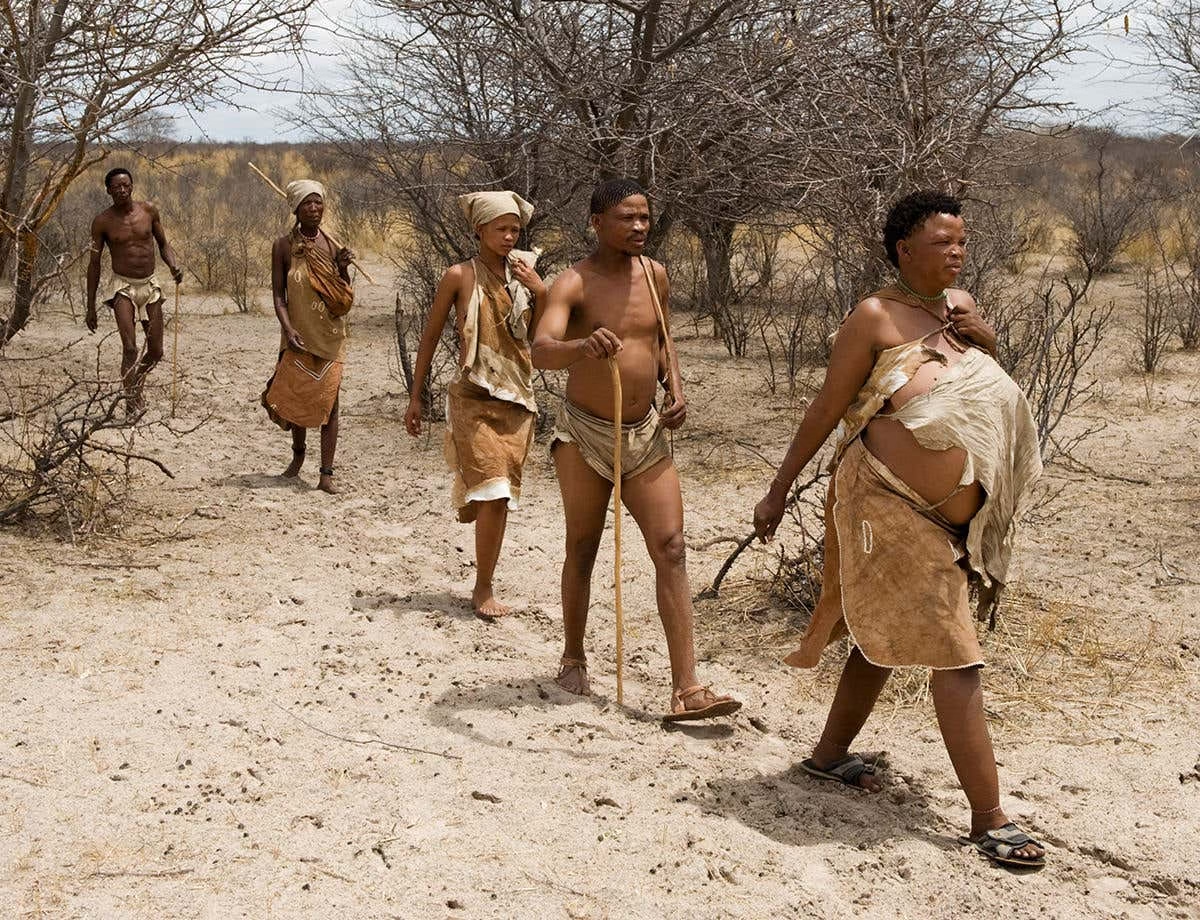
- San: Hunter-gatherers who lived a nomadic life, relying on deep ecological knowledge of plants, animals, and seasonal cycles.
Despite these differences, the two groups share linguistic roots and certain cultural practices.
-
Origins and Historical Significance
The Khoisan are believed to be descendants of early Homo sapiens, making them one of the world’s oldest continuous cultures. Archaeological findings in the Kalahari and coastal caves suggest they have lived in Southern Africa for tens of thousands of years—long before Bantu migrations or European colonization.
Their rock art, tools, and burial sites provide a rich record of early human life and spiritual beliefs.
-
Language and Click Sounds
Khoisan languages are famous for their distinctive click consonants, which are rare in most other language families. Some of the major Khoisan languages include:
- !Xóõ
- Nǁng
- Ju|’hoansi
These languages are complex and rich in oral traditions. Sadly, many are now endangered due to assimilation, colonization, and modernization.
-
Lifestyle and Survival Skills
The San people traditionally lived by hunting antelope and small game, gathering wild fruits, tubers, and edible roots. Their tracking skills are legendary—they could follow animal tracks for miles, interpreting the signs to predict behavior and direction.
Khoikhoi communities herded livestock and moved seasonally to find pasture and water. Both groups held deep respect for nature, believing in spiritual harmony with the land.
-
Rock Art and Spiritual Beliefs
Khoisan rock paintings and engravings appear across Southern Africa, especially in the Drakensberg and Cederberg regions. These artworks depict animals, hunting scenes, and trance dances, reflecting the San’s spiritual connection to nature and ancestors.
Their religious beliefs often involved a trance state, reached through dance or drumming, allowing shamans to connect with the spirit world and heal the sick.
-
Impact of Colonization and Marginalization
European colonization brought devastating consequences. The Khoikhoi were among the first indigenous peoples to lose their lands to Dutch settlers in the 1600s. Conflict, diseases like smallpox, and social disruption led to widespread displacement.
Many San groups were hunted, enslaved, or forced into labor. Their nomadic lifestyle became impossible under colonial land ownership systems.
-
Modern-Day Struggles and Recognition
Today, the Khoisan people are spread across Namibia, Botswana, Angola, and South Africa, often living on the margins of society. They face poverty, landlessness, and discrimination.
However, recent years have brought efforts toward cultural revival and legal recognition. South Africa has taken steps to recognize Khoisan communities and their leaders, while advocacy groups push for language preservation and land rights.
-
Conservation and Cultural Revival
Several initiatives work to preserve Khoisan heritage, including:
- Cultural centers and museums in South Africa and Namibia
- Language revival programs
- Ethnographic documentation of oral histories
- Legal support for land restitution
Tourism also plays a role. Guided bush walks with San trackers or visits to rock art sites educate travelers while supporting local communities.
Plan Your Journey to Khoisan Cultural Sites
If you want to learn about the deep human history of Africa, visiting Khoisan heritage areas offers a meaningful connection. Key destinations include:
- The Kalahari Desert (Botswana/Namibia): Home to San communities and wildlife safaris.
- !Khwa ttu San Heritage Centre (South Africa): A cultural village and educational hub.
- Cederberg Mountains: View some of the best-preserved San rock art.
- Namibia’s Tsumkwe Region: Traditional San settlements and tracking experiences.
By traveling respectfully, you support community conservation and ensure this rich culture is passed down to future generations.