The 20 Ugliest Animals on Earth.
Ugliest Animals on Earth. Nature is full of breathtaking beauty—but it’s also home to creatures that challenge our traditional ideas of attractiveness. While many animals dazzle with vibrant colors and graceful features, others appear downright bizarre, creepy, or downright ugly. Still, each of these animals plays a vital role in their ecosystems. Some are rare, endangered, or even critically important to scientific research and conservation efforts.
Here are the 20 ugliest animals on Earth, each with a face only evolution could love.
-
Blobfish (Psychrolutes marcidus)
Famously dubbed the “world’s ugliest animal,” the blobfish looks like a gelatinous blob out of water. Found in deep seas off Australia, its jelly-like appearance helps it withstand extreme pressure, though it becomes grotesquely misshapen when brought to the surface.
-
Naked Mole Rat (Heterocephalus glaber)
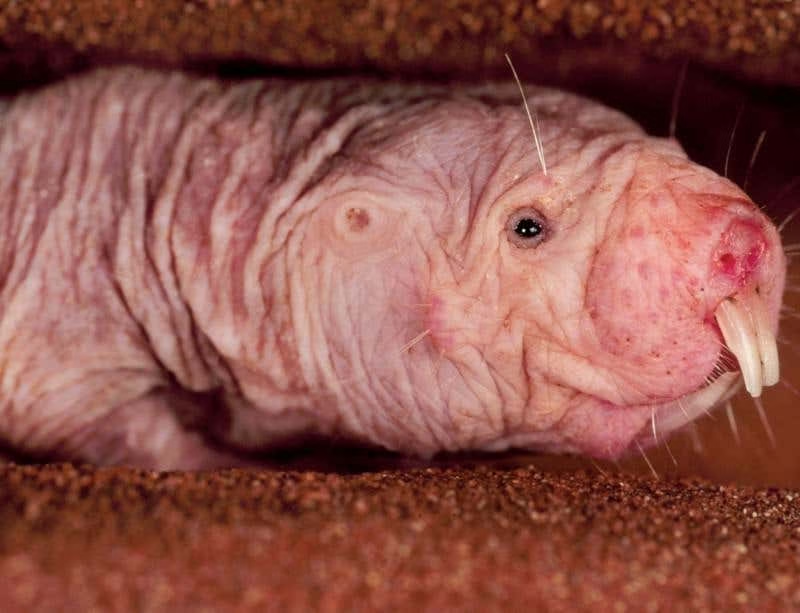
Hairless, wrinkled, and with giant protruding teeth, the naked mole rat is one of the most visually unappealing mammals. Yet it’s biologically fascinating—resistant to cancer, highly social, and capable of surviving in low-oxygen environments.
-
Aye-Aye (Daubentonia madagascariensis)
This lemur from Madagascar has bulging eyes, bat-like ears, and a creepy skeletal middle finger used to dig grubs from tree bark. It’s often mistaken for an omen of bad luck in local folklore due to its eerie appearance.
-
Proboscis Monkey (Nasalis larvatus)
This monkey sports an enormous drooping nose, which males use to amplify calls and attract mates. Though comical in appearance, it’s an endangered species found only in Borneo’s swampy forests.
-
Star-Nosed Mole (Condylura cristata)
Its most distinctive feature? A nose covered in 22 pink, fleshy tentacles that resemble a sea anemone. The star-nosed mole uses this bizarre snout to feel and detect food faster than the human eye can follow.
-
Horseshoe Bat (Rhinolophidae family)
These insect-eating bats have distorted, leaf-shaped facial structures that help with echolocation. Their twisted snouts, oversized ears, and wrinkled faces make them unsettling to many.
-
Warthog (Phacochoerus africanus)
With warts, tusks, and coarse hair, the warthog won’t win any beauty contests. Yet it’s tough, adaptable, and commonly seen in African savannas—often running with its tail straight up like a radio antenna.
-
Marabou Stork (Leptoptilos crumenifer)
Nicknamed the “undertaker bird,” this African scavenger has a bald head, enormous beak, and a fleshy throat pouch. It’s unsightly—but perfectly designed for picking over carcasses.
-
Chinese Crested Dog
Often hairless with patches of unruly fur, missing teeth, and bug-like eyes, this breed regularly wins “World’s Ugliest Dog” competitions. Still, their affectionate temperament makes them beloved pets.
-
Titicaca Water Frog (Telmatobius culeus)
Known as the “scrotum frog” for its loose, wrinkled skin, this aquatic frog lives in Lake Titicaca between Bolivia and Peru. Its folds help it absorb oxygen from the water—an adaptation to the lake’s high altitude.
-
California Condor (Gymnogyps californianus)
This massive vulture-like bird has a bald, reddish-pink head that often looks raw. Despite its looks, it’s a critically endangered species with immense ecological value.
-
Sphynx Cat
Hairless and wrinkled with large ears and wide eyes, sphynx cats often look alien or ghostly. But they are intelligent, affectionate, and popular among people with cat allergies.
-
Shoebill Stork (Balaeniceps rex)
With a prehistoric stare and an oversized shoe-shaped beak, this bird looks like something out of Jurassic Park. It’s slow-moving and stoic—perfectly suited for stalking fish and frogs in East African swamps.
-
Goblin Shark (Mitsukurina owstoni)
This deep-sea shark has a protruding, blade-like snout and a jaw that launches forward like a trap. Its pale, rubbery skin and bizarre profile have earned it the nickname “living fossil.”
-
Japanese Spider Crab (Macrocheira kaempferi)
With spindly legs reaching up to 12 feet across, this giant crab resembles a nightmare creature. It lives in the Pacific depths near Japan and is the largest known arthropod on Earth.
-
Indian Purple Frog (Nasikabatrachus sahyadrensis)
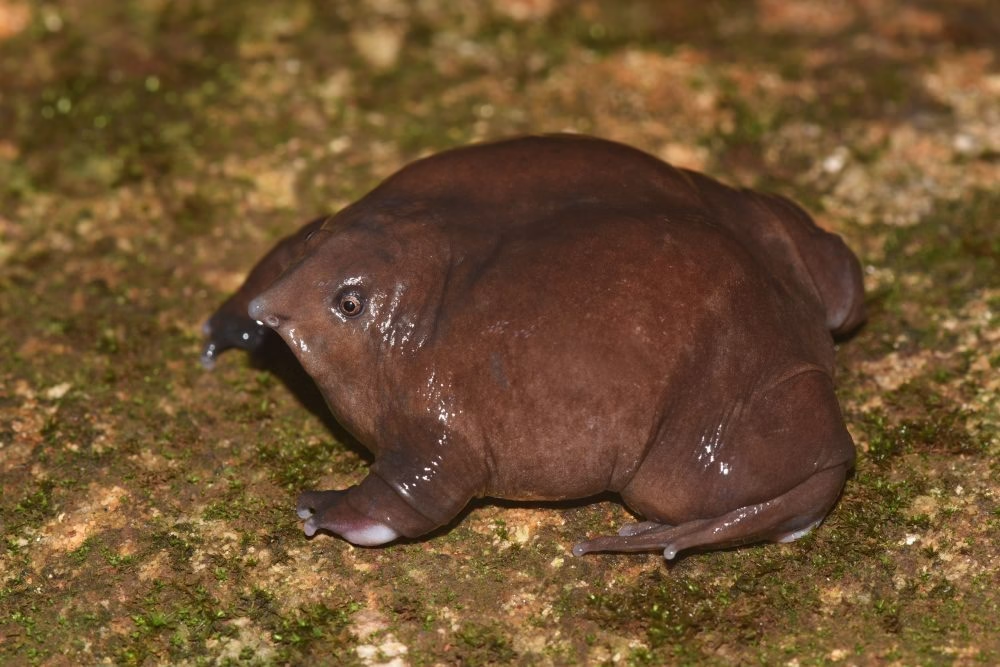
This bloated, violet-colored amphibian has a small head, pointed snout, and squashed body. It lives underground most of the year and emerges only during the monsoon to breed.
-
Red-Lipped Batfish (Ogcocephalus darwini)
This odd fish, found near the Galápagos Islands, looks like it’s wearing red lipstick. With its flat body and awkward “walking” fins, it seems better suited for a costume party than the ocean floor.
-
Monkfish (Lophius spp.)
Also known as the “sea devil,” the monkfish has a massive head, sharp teeth, and a lure to attract prey. It’s terrifying to look at—but a delicacy in fine dining, especially in French cuisine.
-
Matamata Turtle (Chelus fimbriata)
This South American turtle looks like rotting bark with a face only a herpetologist could love. Its wide, flattened head and flappy skin make it a master of camouflage in murky rivers.
-
Axolotl (Ambystoma mexicanum)
With its external gills, blank stare, and permanent juvenile appearance, the axolotl is both adorable and unsettling. Native to Mexico, this salamander is a model species in regeneration research.
Plan Your Encounter: Where to See These Unusual Creatures
While some of these animals can be found in zoos, aquariums, or research centers, others require travel to remote forests, high-altitude lakes, or deep-sea expeditions. If you’re intrigued by nature’s oddities, consider eco-tours to places like Madagascar, the Amazon, or Southeast Asia, where rare and strange creatures still thrive.
And remember: behind every “ugly” face is an important ecological role, a fascinating evolutionary history, or a unique set of survival skills.