
Smartest Animals in the World: Top 30 Brilliant Creatures in Nature
Animal intelligence isn’t just about memory or instinct—it includes communication, emotional depth, problem-solving, and adaptability. Across different species, some animals demonstrate extraordinary cognitive abilities that rival early human development. In this guide, we explore the top 30 smartest animals in the world, from apes to birds to sea creatures.
-
Chimpanzee
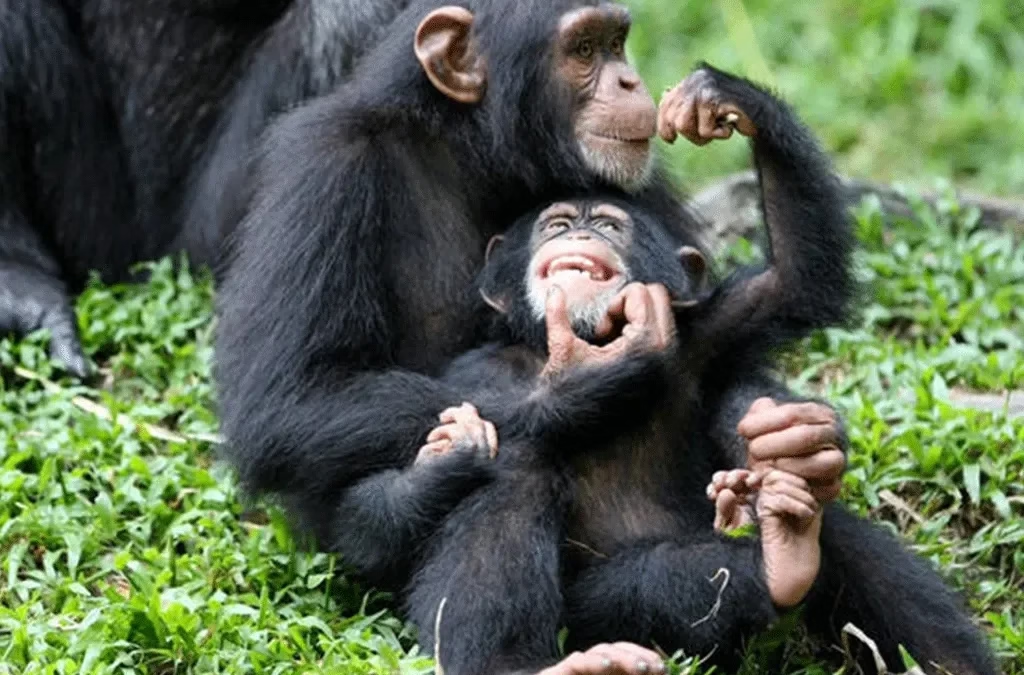
Chimpanzees share about 98% of our DNA and display impressive intelligence. They use tools, solve problems, mimic behavior, and communicate using vocal and gestural signs. Some have been taught symbolic languages in research settings.
-
Bottlenose Dolphin
Dolphins recognize themselves in mirrors, use signature whistles (names), and display complex social behavior. They can learn tricks, understand commands, and even cooperate to solve tasks.
-
African Elephant
Elephants remember waterholes for years, mourn their dead, and use tools like branches to swat flies. Their social behavior and communication are highly advanced.
-
African Grey Parrot
These birds have exceptional memory and language skills. They can count, identify colors, and understand abstract concepts such as “same” and “different.”
-
Orangutan
Orangutans build tools, remember past events, and show cultural learning. In the wild, they teach offspring how to use leaves for drinking or cover.
-
Octopus
Octopuses navigate mazes, open containers, and use tools like coconut shells. Their arms contain neurons, allowing independent movement and problem-solving.
-
Crow
New Caledonian crows craft hooks to retrieve food and can complete multi-step puzzles. They learn from observation and show excellent memory.
-
Raven
Ravens plan ahead, hide food strategically, and mimic sounds. They also understand cause and effect, and even engage in playful activities.
-
Pigeon
Pigeons can recognize themselves in mirrors and identify individual human faces. They also learn sequences and abstract rules.
-
Border Collie (Dog)
Border Collies and other intelligent breeds understand hundreds of words, follow instructions, and solve simple logical problems. They also show emotional awareness.
-
Pig
Pigs learn quickly, respond to their names, and can operate levers and joysticks. They perform better than some primates in memory and object recognition tasks.
-
Orca (Killer Whale)
Orcas hunt cooperatively, teach hunting methods to offspring, and have distinct dialects. Their family groups follow complex cultural traditions.
-
Sea Lion
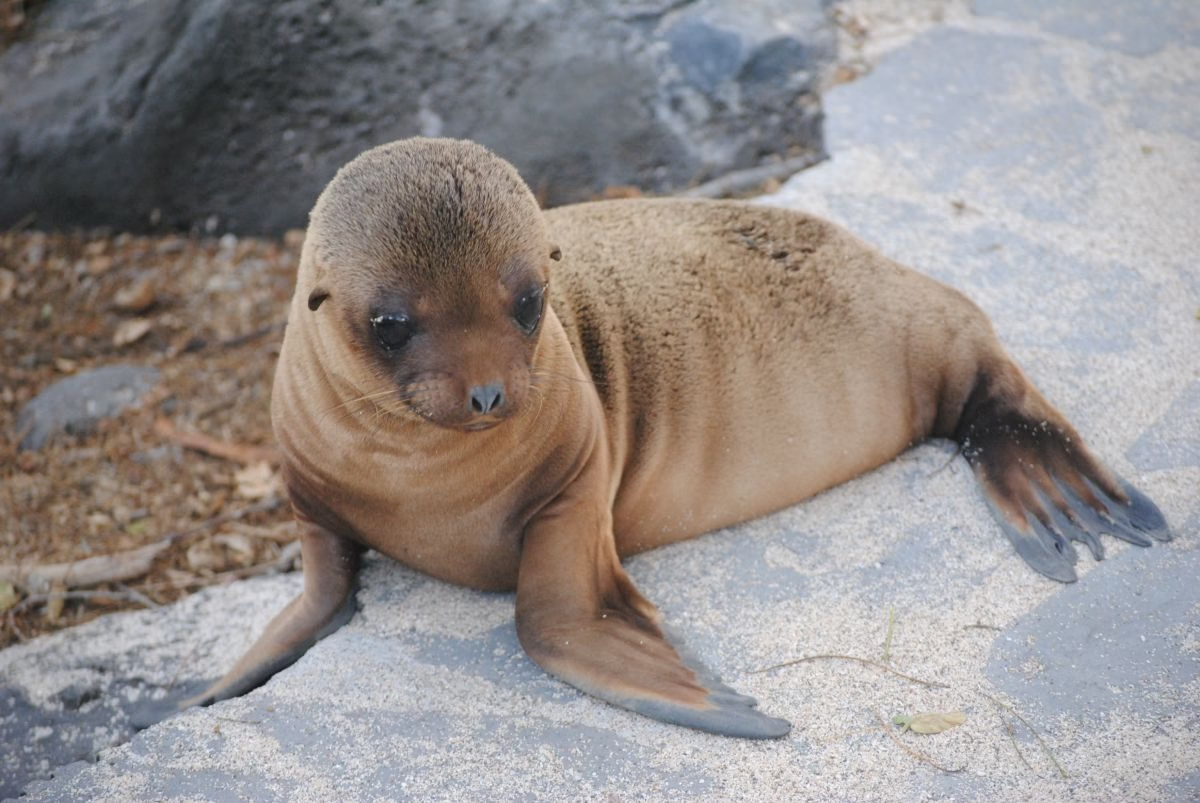
Sea lions solve puzzles and follow visual commands. They show long-term memory and have been trained for advanced communication.
-
Bonobo
Bonobos use tools, exhibit empathy, and maintain peaceful group dynamics. They share many cognitive traits with chimpanzees.
-
Cat
Domestic cats read human cues and adapt routines based on environment and memory. They learn through observation and trial-and-error.
-
Gorilla
Gorillas use sign language, remember people and locations, and express grief. Some have even been documented showing humor and affection.
-
Honeybee
Bees communicate using a “waggle dance,” understand quantity, and can distinguish between similar patterns or concepts like zero.
-
Horse
Horses read human emotion and gestures. They remember training long-term and show empathy toward companions.
-
Raccoon
Urban raccoons open latches, lift lids, and learn solutions through experience. They remember these solutions for long periods.
-
Cuttlefish
These intelligent sea creatures have sharp memory, rapid camouflage skills, and demonstrate delayed gratification in lab experiments.
-
Rat
Rats solve mazes, detect patterns, and exhibit empathy. They are widely used in psychology studies due to their learning capacity.
-
Parrotfish
Some parrotfish make mucus cocoons at night and exhibit learning behaviors while feeding and avoiding predators.
-
Capuchin Monkey
Capuchins use stones as tools and exhibit social learning. They understand value and fairness during interactions.
-
Ant
Ant colonies show collective intelligence—organizing farming, building structures, and defending territory with precision and coordination.
-
Macaw
Macaws learn words, perform tasks, and form strong social bonds. They also remember interactions and adapt quickly to routines.
-
Portia Spider
Despite their size, Portia spiders plan hunting paths and adapt their strategy based on the prey’s behavior.
-
Chicken
Chickens can count, solve logic puzzles, and remember over 100 individuals. They also show social complexity and learning from observation.
-
Degu (Rodent)
These rodents display memory and cooperative problem-solving. They learn through trial and error and pass knowledge socially.
-
Bowerbird
Male bowerbirds build elaborate nests, arranging objects by color and symmetry to attract females—showing design and decision-making skills.
-
Kea (Parrot)
Kea parrots are known for curiosity and puzzle-solving. They work together to complete tasks and understand cause and effect.
Plan Your Safari to See the Smartest in Action
From octopuses solving puzzles to apes using tools and birds outwitting humans, animal intelligence appears in many unexpected forms. Understanding these abilities deepens our respect for nature—and reminds us that intelligence is not exclusive to our species. Several of these species can be seen in the wild on safari, particularly in Africa:
- Chimpanzees: Trek in Uganda’s Kibale Forest or Rwanda’s Nyungwe National Park.
- Elephants: Visit Amboseli in Kenya or Chobe in Botswana for close-up views.
- Dolphins: Explore the coasts of Zanzibar or Watamu Marine Park.
- Gorillas: Head to Volcanoes National Park in Rwanda or Bwindi Impenetrable Forest in Uganda.
- Crows, bees, and ravens: Commonly found across savannah and woodland ecosystems in East and Southern Africa.