
How to Plan a Memorable Self-Drive Safari in Kenya’s Masai Mara
A self-drive safari in Masai Mara offers one of the most authentic and flexible wildlife experiences in Africa. You control the pace, choose the routes. You explore the savannah wilderness on your own terms. It’s the ultimate adventure for travelers who want freedom, independence, and an up-close encounter with nature.
Whether you’re a first-timer or a seasoned safari-goer, this guide will help you plan a smooth and unforgettable self-drive safari to Kenya’s most iconic national reserve.
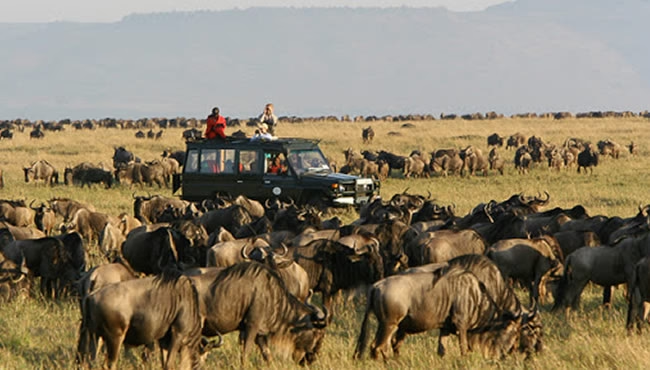
Why Choose a Self-Drive Safari in Masai Mara?
Unlike guided tours, a self-drive safari allows you to:
- Explore the reserve at your own pace
- Choose the time and direction of your game drives
- Enjoy privacy and fewer interruptions
- Save on guide fees and gain flexibility
It’s perfect for couples, friends, or families looking for a more intimate wildlife experience.
Step 1: Choose the Right Vehicle
The Masai Mara’s terrain demands a 4×4 vehicle. Some roads are rough, especially during the rainy season. A raised vehicle gives you better game-viewing and clearance.
Recommended vehicle types:
- Toyota Land Cruiser
- Toyota Prado
- Nissan Patrol
- Land Rover Defender
Make sure the car is well-maintained, has a spare tire, and includes recovery gear like a jack, tow rope, and shovel.
Step 2: Know the Entry Gates and Access Routes
The main gates to Masai Mara are:
- Sekenani Gate – Ideal if coming from Nairobi (about 5.5 hours by road).
- Talek Gate – Close to many mid-range and budget lodges.
- Oloololo Gate – For those coming via Narok and Lemek.
- Oloolaimutia Gate – Eastern part of the park, less crowded.
The Nairobi-Narok-Sekenani route is the most commonly used for self-drivers.
Step 3: Secure Your Park Entry and Permits
You can pay park fees online via eCitizen or at the gate using Visa/MasterCard. Carry identification and booking confirmation from your accommodation provider.
Current (2025) rates for foreign non-residents:
- Adults: USD 100 per day (Jan–Jun), USD 200 per day (Jul–Dec)
- Children: USD 50–75 per day
You are charged per 24 hours in the park.
Step 4: Book Accommodation in Advance
The Masai Mara offers everything from campsites and budget lodges to luxury tented camps.
Popular mid-range and self-drive-friendly options:
- Mara River Lodge
- Talek Bush Camp
- Julia’s River Camp
- Mara Leisure Camp
- Enchoro Wildlife Camp
If you’re camping, ensure the campsite is within park boundaries or adjacent conservancies. Most camps provide kitchen shelters, toilets, and security.
Step 5: Plan Your Safari Routes
Create a daily route plan for game drives. The best areas for wildlife include:
- Mara Triangle – Rich in wildlife, less crowded.
- Talek and Sekenani Area – Home to the famous Marsh Pride lions.
- Musiara Marsh and Paradise Plains – Great for big cat sightings.
- Mara River crossings – Best during the Great Migration (Jul–Oct).
Start game drives early in the morning and again in late afternoon for best chances of sightings.
Step 6: Prepare a Packing Checklist
Carry essentials, as fuel and supplies are limited inside the park. Essentials include:
- Valid driver’s license & ID
- Vehicle logbook & insurance documents
- Binoculars and camera
- Maps or GPS device
- First-aid kit
- Portable charger or power bank
- Food, snacks, and drinking water
- Extra fuel (at least one jerry can)
Also, pack warm clothing for early mornings and evenings.
Step 7: Understand the Park Rules
To ensure your safety and protect wildlife:
- Stick to designated roads and tracks.
- Stay in your vehicle unless at marked picnic spots.
- Don’t drive after 6:30 PM inside the park.
- Keep noise to a minimum.
- Don’t feed or approach wild animals.
Park rangers monitor movements, so stay respectful and follow guidance.
Step 8: Stay Safe on the Road
Driving through wildlife territory requires focus:
- Maintain a safe speed – 40 km/h is the limit.
- Watch out for crossing animals and soft ground.
- Avoid driving in heavy rain or late at night.
- In case of breakdown, stay near your vehicle and call for help using your lodge contact or park emergency number.
Always inform your lodge or ranger of your planned routes and estimated return time.
When to Go
The best time for a self-drive safari in Masai Mara is during the dry seasons:
- June to October – Great Migration and predator activity
- January to March – Calving season and fewer crowds
Avoid April and May, when heavy rains can flood roads and reduce visibility.
Plan Your Self-Drive Safari With Us
Ready to explore Masai Mara behind the wheel? We offer:
- Reliable 4×4 vehicle rentals
- Tailored self-drive safari itineraries
- Lodge and campsite bookings
- 24/7 emergency support
- Pre-loaded GPS routes and offline maps
📧 Contact us: info@visitrwandagorilla.com
🌍 Visit: www.visitrwandagorilla.com
Enjoy Kenya’s wild beauty at your pace—your safari, your rules.