Lozi Culture: A Living Heritage of Zambia’s Western Province
Barotseland. Deep in Zambia’s Western Province lies Barotseland, home to the Lozi people, one of the most culturally rich and historically significant groups in southern Africa. Their kingdom, customs, and deep-rooted connection to the Zambezi River shape a fascinating cultural identity that still thrives today.
The Lozi People and Barotseland
The Lozi people—also called Barotse—live mainly along the upper Zambezi River in Zambia. Their society is highly organized under a royal monarchy led by the Litunga, or king, who holds both political and spiritual authority. Barotseland, their historic homeland, once operated as an autonomous kingdom and retains a strong identity rooted in tradition, leadership, and unity.
The Kuomboka Ceremony
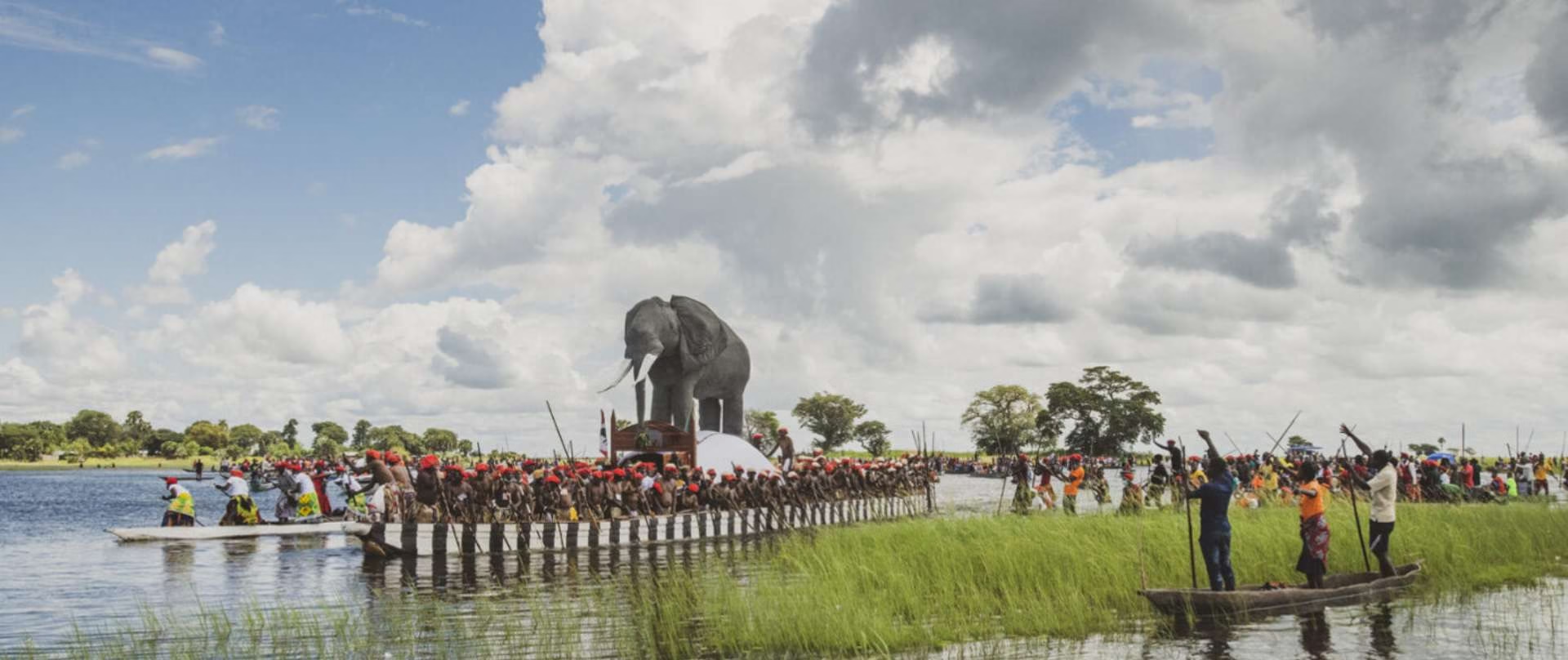
Kuomboka is the most iconic expression of Lozi heritage. When the Zambezi River floods the plains, the Litunga moves from the low-lying Lealui Palace to the higher Limulunga Palace. This journey happens aboard the royal barge, Nalikwanda, paddled by over a hundred men in traditional regalia. The air fills with drumming, singing, and dancing as thousands gather to witness the event. Kuomboka celebrates not just movement but survival, leadership, and cultural continuity.
Language and Identity
The Lozi speak Silozi, a Bantu language influenced by Sesotho and spoken widely in Zambia’s Western Province. It plays a crucial role in unifying diverse communities across the floodplains and even in parts of Angola and Namibia. Through language, the Lozi preserve oral history, pass down values, and express their worldview.
Traditional Dress and Royal Symbols
Lozi attire carries strong cultural symbolism. Men often wear white skirts with red berets during ceremonies, while women don vibrant chitenge cloth wraps and jewelry. The Litunga’s ceremonial uniform includes a British admiral’s coat, symbolizing royal dignity, legacy, and the kingdom’s historical ties to colonial treaties.
Connection to Land and Water
The seasonal flooding of the Barotse Floodplains defines Lozi life. People here rely on fishing, cattle herding, and small-scale farming. Their deep respect for the Zambezi River reflects both spiritual belief and practical dependence. Water is life—and the rhythm of the flood shapes their calendar, ceremonies, and daily routines.
Music, Dance, and Oral Storytelling
Lozi music forms the heartbeat of cultural events. Mbunda drums, maoma, and flutes set the rhythm during dances and celebrations. Traditional songs tell stories of migrations, battles, and royal lineages. Dancing isn’t just entertainment—it’s a form of storytelling and communal bonding.
Craftsmanship and Local Art
Artisans across Barotseland are skilled in basket weaving, pottery, and wood carving. Their designs often reflect local wildlife, royal symbols, and daily life. These crafts serve both as household tools and cultural expressions, and are sold at local markets and cultural fairs.
Spiritual Life and Ancestral Belief
Though many Lozi identify as Christian today, traditional beliefs remain strong. Ancestral spirits and natural forces play a role in family and community well-being. Traditional healers (ng’angas) use herbal medicine and spiritual rituals to diagnose and treat ailments. The balance between Christianity and indigenous belief gives Lozi spirituality its distinctive depth.
Lozi Culture in the Modern World
Despite modernization, Lozi traditions remain vibrant. Youth participate in dances, festivals, and ceremonies. Elders continue to teach customs and language, ensuring cultural survival. Education, social media, and tourism have introduced new ways of expressing pride in Lozi identity—without losing its roots.
How to Experience Lozi Culture
- Attend the Kuomboka Ceremony during the March–April flood season
- Visit Mongu, the heart of Barotseland, and tour the royal palaces
- Explore the Barotse Floodplains with a local guide
- Take part in village homestays and learn about daily life
- Shop at local markets for handmade baskets, textiles, and carvings
Final Thought
Lozi culture is not just preserved—it’s lived. It breathes through music, ceremony, storytelling, and the timeless flow of the Zambezi River. For any traveler seeking deep, authentic African experiences, Barotseland is a destination that offers memory, meaning, and movement.
Plan Your Cultural Safari Today
At VisitRwandaGorilla.com, we organize immersive cultural trips to Zambia and beyond—including Kuomboka, Barotse village tours, and cultural safaris through Western Province.
👉 Contact us to build a tailor-made itinerary into the heart of Lozi heritage.