Kenya’s Black Rhino Habitat Expands With New Sanctuary
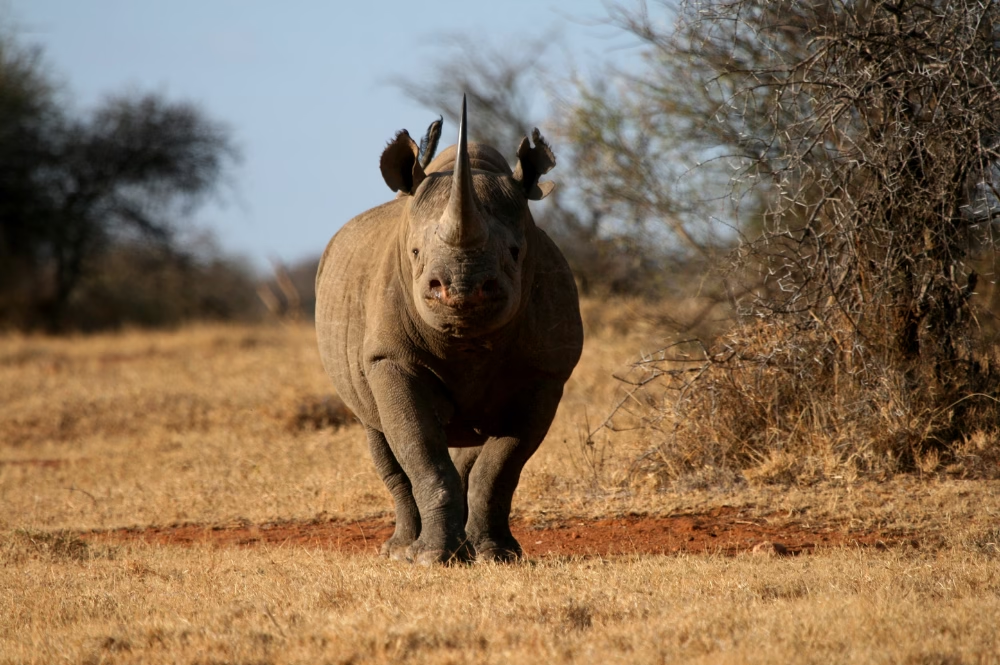
Kenya has taken a bold step in black rhino conservation. In 2025, the Kenya Wildlife Service (KWS) announced the launch of a new black rhino sanctuary—a secure, expansive habitat designed to support one of Africa’s most endangered species.
This move brings fresh hope for the survival and recovery of the critically endangered eastern black rhinoceros (Diceros bicornis michaeli).
A New Safe Haven
The new sanctuary spans over 100 square kilometers and lies within a secure zone inside Tsavo West National Park. This protected area offers rich vegetation, low human interference, and space for the rhino population to grow naturally.
Equipped with modern fencing, patrol roads, and 24/7 ranger surveillance, the sanctuary is one of the most advanced rhino habitats in East Africa. It can house up to 100 rhinos over the next decade—doubling the current carrying capacity of some older sanctuaries.
Why Expand Black Rhino Habitat?
Black rhinos once roamed across much of sub-Saharan Africa. Poaching and habitat loss decimated their numbers. Today, fewer than 6,000 survive in the wild. Kenya protects about 900, the third-largest population on the continent.
Expanding habitat is vital because:
- Existing sanctuaries are full or nearing capacity
- Breeding slows in crowded or stressful conditions
- Dispersing rhinos lowers the risk of disease outbreaks
- New populations boost genetic diversity
By spreading out rhino numbers and giving them space to thrive, Kenya strengthens long-term survival prospects.
How the Sanctuary Was Created
The project is the result of years of planning. KWS partnered with conservation NGOs, local communities, and private donors. Key actions included:
- Conducting ecological surveys to identify suitable terrain and water sources
- Constructing secure fencing and ranger outposts
- Relocating rhinos from crowded areas like Lake Nakuru and Solio Ranch
- Training rangers and vets for long-term monitoring
The first group of 20 black rhinos has already arrived. Rangers report signs of successful acclimatization, including feeding, wallowing, and calm behavior.
Community Involvement and Protection
The new sanctuary is more than a fenced zone—it’s a community-supported conservation model.Local communities near Tsavo take part in security, tourism, and ecological monitoring.
Eco-tourism initiatives will soon create jobs and generate revenue for local residents. Education campaigns have also helped reduce bushmeat hunting and promote wildlife pride.
Technology and Monitoring
Each rhino is fitted with GPS tracking collars. Drones and motion-sensor cameras assist rangers in monitoring movement and behavior. Poaching attempts have dropped sharply due to the layered surveillance approach.
The sanctuary will also contribute to research on breeding patterns, territory behavior, and ecosystem impact, helping improve rhino conservation across Africa.
A Conservation Milestone
Kenya has made great strides in rhino protection. In 2024, the country recorded zero black rhino poaching deaths for the first time in over two decades. The new sanctuary builds on that momentum.
It sends a clear message: Kenya is committed to saving its black rhinos—not just through protection but by giving them the space to thrive naturally.
Plan Your Visit
The new sanctuary is expected to open to low-impact tourism by late 2025. Visitors will enjoy guided game drives, rhino tracking, and conservation education. If you’re seeking a safari with purpose, this is a powerful place to start.