How Strong is a Lion’s Bite? Lion Bite Force Explained
Lion Bite Force. The African lion is known for its strength, speed, and status as one of the top predators in the animal kingdom. But one of its most critical hunting tools is often overlooked—its bite force. While a lion’s roar may signal power, it’s the pressure of its bite that secures its place as an apex predator.
So, how strong is a lion’s bite compared to other animals? Let’s explore the numbers, anatomy, effectiveness, and how this bite fits into the lion’s hunting and feeding strategy.
Lion Bite Force in PSI (Pounds per Square Inch)
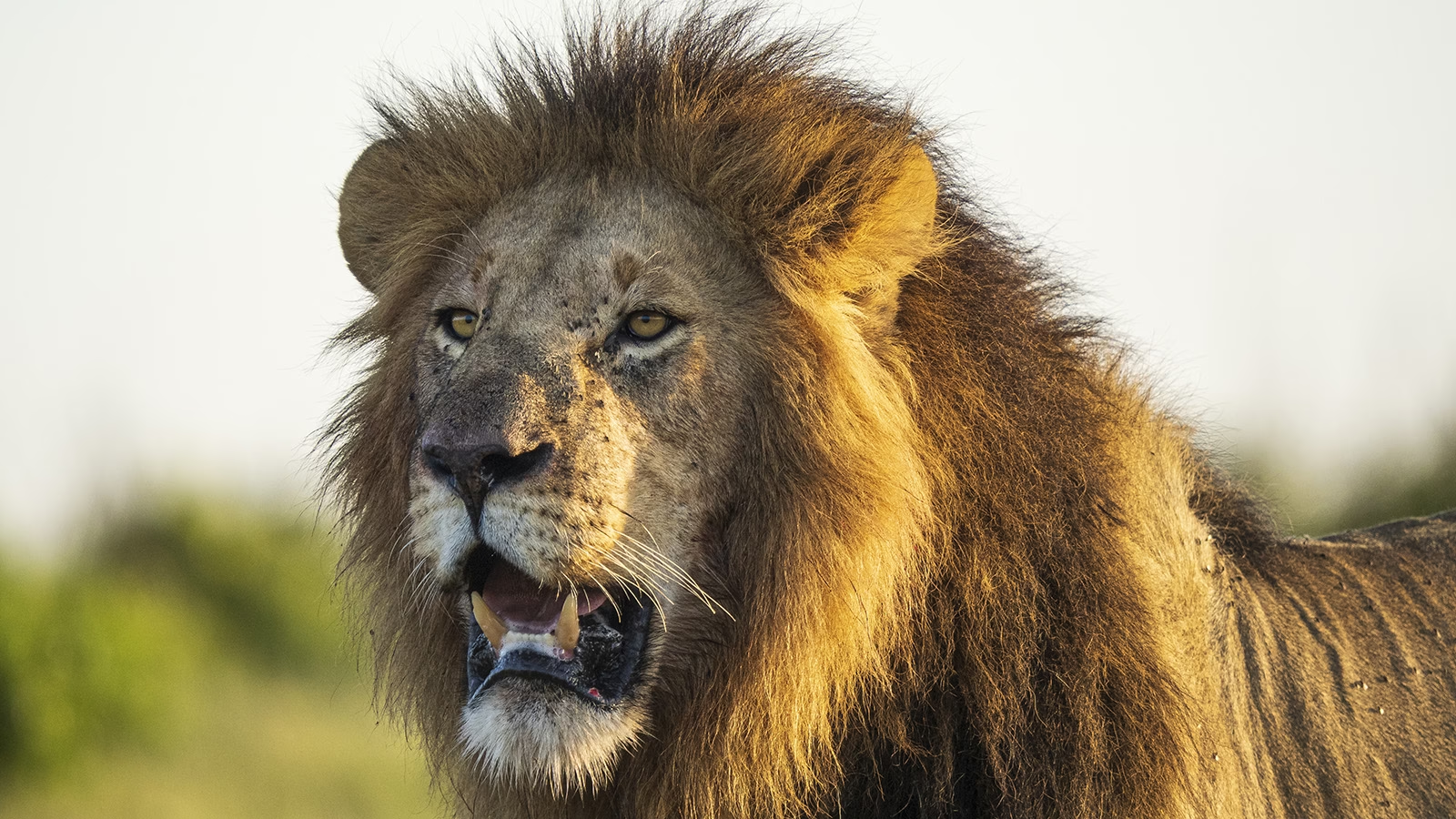
The bite force of a lion measures between 650 and 1,000 pounds per square inch (PSI). On average, lions bite with around 650 PSI. That’s powerful enough to pierce thick hide, crush vertebrae, and break large bones. Though not the highest among predators, it’s more than sufficient to bring down prey weighing over 500 kilograms.
This strength allows lions to:
- Clamp onto the throats or muzzles of large prey and suffocate them.
- Tear through thick flesh and skin during feeding.
- Crush bones to access nutritious marrow.
Unlike some predators that rely heavily on bite force to kill instantly, lions use their bite in combination with body weight, teamwork, and strategy, making them especially effective hunters.
How Does a Lion’s Bite Compare to Other Predators?
While lions have impressive bite strength, several predators bite even harder. Here’s how lions compare to other well-known carnivores:
- Jaguar: Holds one of the strongest bites in the animal kingdom, measured at 1,500 PSI—enough to crush turtle shells and skulls with ease.
- Tiger: Has a bite force of around 1,050 PSI, slightly stronger than the lion’s and used effectively for solo ambush kills.
- Spotted Hyena: Possesses a bite of about 1,100 PSI, with incredibly strong jaw muscles designed to pulverize bones and digest calcium.
- Leopard: Bites with 300–350 PSI, making it less powerful, but uses stealth and precision to target the back of the skull or throat.
Despite not having the strongest bite, lions’ success lies in social hunting and versatility. They don’t need to overpower with jaw strength alone—they work as a pride, using group tactics and their collective force to take down prey.
Anatomy Behind the Lion’s Bite Power
The lion’s skull and jaw structure are uniquely adapted for a carnivorous lifestyle. Its bite power comes from a combination of features:
- Massive jaw muscles: These connect to large ridges along the skull and give lions the strength to apply powerful downward pressure.
- Long, curved canine teeth: Measuring up to 7 cm, these teeth are designed to grip and puncture deep into muscle or bone.
- Carnassial teeth: Sharp, blade-like molars that shear flesh efficiently, allowing lions to strip meat with minimal effort.
- Reinforced skull and neck muscles: Provide the stability needed to deliver fatal bites during high-tension attacks or fights.
Lions don’t just bite hard—they bite smart. They use their jaws to suffocate prey by sealing the windpipe or clamping down on the snout to prevent breathing.
When Do Lions Use Their Full Bite Force?
Lions unleash their full bite force in specific situations:
- During Hunts: Especially when targeting large herbivores like buffalo, zebra, or wildebeest. The lion bites down on the throat, muzzle, or neck vertebrae to subdue prey.
- Territorial Fights: Male lions use their bite aggressively during clashes with rivals. Injuries around the head, spine, or legs are common after dominance battles.
- Feeding and Bone Cracking: While feeding, especially when competing within a pride, lions will bite into ribs, limbs, and pelvis bones to access marrow.
- Defending Cubs or Kills: Lionesses may use full bite force to protect their young or fight off scavengers like hyenas or jackals.
In all these situations, the lion’s bite becomes a tool not only for survival but for asserting dominance.
Plan Your Safari: Witness the Lion’s Power in Action
Watching a lion hunt or feed in the wild gives you a new appreciation for its physical strength and behavioral intelligence. Several national parks across Africa offer high chances of observing lions in action.
Some of the best places to witness lions use their bite include:
- Serengeti National Park, Tanzania: Home to some of the largest lion populations and dramatic hunts during the Great Migration.
- Masai Mara, Kenya: Offers close-range encounters and is one of the best places to film lion predation.
- South Luangwa National Park, Zambia: Known for night drives, where you might see lions feeding or confronting hyenas.
- Kruger National Park, South Africa: High lion density and accessible year-round sightings.
- Kgalagadi Transfrontier Park, Botswana/South Africa: Offers a chance to watch powerful black-maned lions in action, especially in dry seasons.
The lion’s bite force—averaging around 650 PSI—may not top the charts, but in the context of the savannah, it’s a perfect balance of power, precision, and purpose. Combined with teamwork, speed, and hunting strategy, it makes the lion one of the most efficient predators on Earth. Whether you’re fascinated by big cat biology or planning a safari, understanding the mechanics of a lion’s bite adds a new layer of respect for the “King of Beasts.”