How Gorilla Trekking Permits Support Local Communities
Gorilla trekking permit benefits. Gorilla trekking in Uganda, Rwanda, and the Democratic Republic of Congo is one of the most powerful wildlife experiences in Africa. But behind the magical forest encounter lies a deeper purpose: every gorilla permit sold directly supports local communities.
When you buy a permit, you’re not just funding conservation. You’re helping to build schools, clinics, water sources, and better lives for people living near gorilla habitats.
The Permit System: More Than Just Access
In Uganda, a gorilla trekking permit costs $800 (as of 2025). In Rwanda, the price is $1,500, while Congo charges around $400–$500 depending on the park and time of year.
A portion of each fee goes toward wildlife protection — but a significant percentage is shared with local communities. This approach turns tourism into a tool for peace, development, and sustainability.
Revenue Sharing with Communities
Uganda and Rwanda both have revenue-sharing programs that allocate part of gorilla tourism income to neighboring villages.
In Uganda, the Uganda Wildlife Authority (UWA) channels 20% of park entry fees back into local projects through Community Protected Area Institutions (CPIs). These funds are used for:
- Building primary schools and health clinics
- Supporting clean water systems
- Creating local roads and infrastructure
- Funding agriculture and skills training
These benefits are visible in areas around Bwindi Impenetrable National Park and Mgahinga Gorilla National Park, where gorilla trekking is concentrated.
In Rwanda, the Rwanda Development Board (RDB) also invests in community development, especially near Volcanoes National Park. Projects range from housing for vulnerable families to modern schools and hospitals.
Creating Jobs for Locals
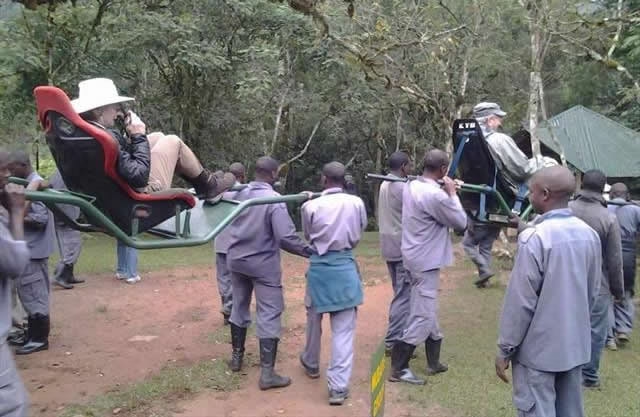
Gorilla tourism has become a major employer in remote areas. Many locals now work as:
- Porters who assist trekkers by carrying bags and gear
- Rangers and trackers trained to monitor gorilla movements
- Guides and interpreters who lead treks and educate tourists
- Lodge and camp staff in nearby accommodations
This provides stable income for many families that once depended on subsistence farming or risky activities like poaching.
Reducing Human-Wildlife Conflict
When local communities benefit from gorilla tourism, they become protectors of the forest rather than threats. People living near national parks see real value in preserving gorillas and their habitat.
In the past, gorillas were often harmed by snares set for bushmeat or by encroachment on protected land. Now, with economic incentives, there is more cooperation between conservation teams and communities.
Some villages have formed vigilante groups to report illegal activities, while others help rehabilitate poachers into wildlife guides.
Supporting Women and Youth
Permit revenues have also been used to support women-led cooperatives and youth empowerment programs. These include:
- Handicraft production for souvenirs
- Conservation education
- Vocational training
- Micro-finance groups
Encouraging Long-Term Conservation
By directly linking gorilla conservation with economic gain, the permit system creates a sustainable model. Locals understand that healthy gorillas mean steady income. This mindset leads to less deforestation, better land use, and more wildlife protection.
Tourists, in turn, become part of this story. Every permit purchased becomes an investment in both nature and people.
Plan Your Safari
When you choose to go gorilla trekking, you’re doing more than seeing a rare species. Helping a farmer send their child to school. You’re supporting a mother who builds crafts to support her family AND giving communities a reason to protect what’s wild.
Gorilla permits are not just a fee—they are a lifeline. Travel with purpose. Trek with impact.
Let your journey uplift the land and the lives that call it home.