
Budongo Central Forest – Chimpanzee Trekking and Habituation Experience
Budongo Forest Reserve is situated in Masindi District, Uganda, and forms part of the larger Murchison Falls National Park. Covering approximately 826 square kilometers, it is Uganda’s largest natural forest, with half of it remaining undisturbed. The forest is divided into three main tourism areas: Kaniyo Pabidi, Busingiro, and Sonso. During World War II, Polish refugees briefly took shelter in this remote wilderness, leaving behind only a Catholic church as evidence of their stay.
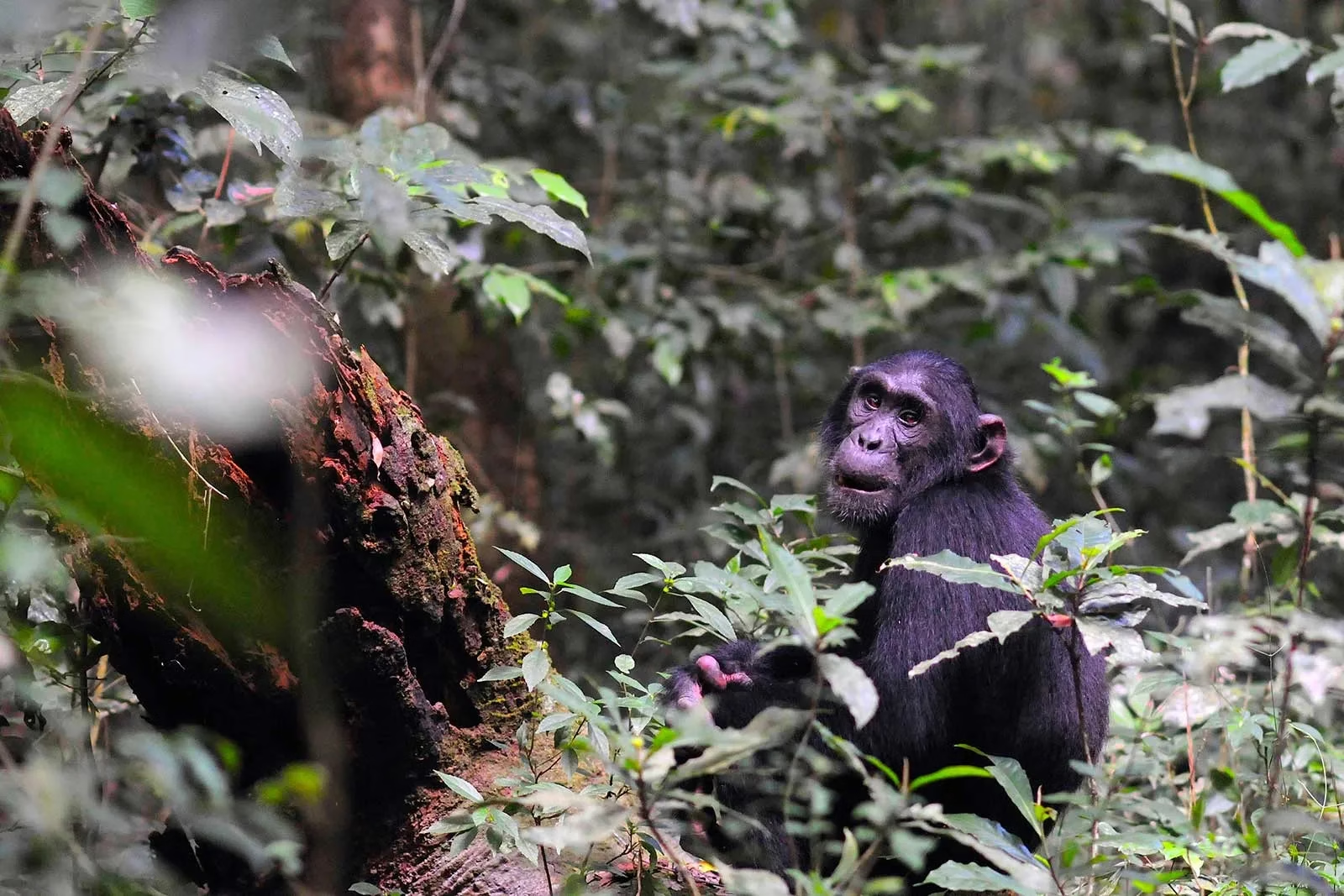
Four rivers, including the Kamirambwa, Waisoke, Siba, and Sonso, traverse the forest and flow into Lake Albert. Budongo is famous for its large chimpanzee population and majestic mahogany trees, which can grow up to 85 meters in height and 21 meters in diameter. The forest is also home to over 464 tree species, 24 mammals, 300 butterfly species, and nine primates. Chimpanzee trekking remains the forest’s main attraction, followed by guided nature walks. Over 600 chimpanzees inhabit the forest, with a smaller habituated group open to tourism. Visitors can also encounter other primates such as olive baboons, blue monkeys, black-and-white colobus monkeys, red-tailed monkeys, and grey-cheeked mangabeys, as well as numerous bird species.
Being part of the Murchison Falls National Park conservation area allows occasional sightings of larger mammals, including buffaloes, lions, and leopards, which wander into the forest from the surrounding plains.
Wildlife and Birdlife
Budongo Forest is a haven for birdwatchers, hosting over 355 bird species, including African emerald cuckoos, African pied and shrike flycatchers, black-and-white casqued hornbills, blue-throated rollers, crested malimbes, crowned eagles, and many more. The forest experiences two rainy and two dry seasons, with the main rains occurring from March to May and September to November, and the main dry season between December and February.
Chimpanzees in Budongo
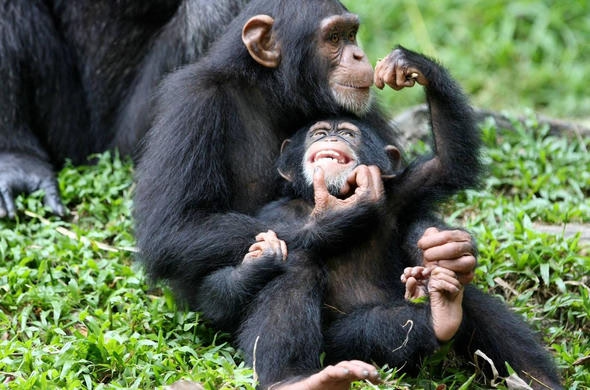
Chimpanzees are our closest relatives, sharing more than 98% of human DNA. They are highly intelligent and omnivorous, feeding on fruits, plants, and occasionally meat. Adult male chimpanzees can weigh up to 70 kilograms, while females reach around 50 kilograms. They can live up to 60 years in captivity. Female chimpanzees typically leave their natal communities upon reaching adolescence, while communities adapt to their environment, developing unique behaviors in different locations.
Budongo Forest is a vital stronghold for chimpanzees in Uganda. The forest was first studied extensively by primatologists Vernon Reynolds, Adriaan Kortlandt, and Jane Goodall. During periods of political instability in Uganda between 1972 and 1986, research and conservation efforts were interrupted, leading to severe declines in the chimpanzee population. By 1995, fewer than 55 individuals were recorded due to poaching and illegal wildlife trade.
Conservation Efforts
In response, a team of researchers established the Budongo Conservation Field Station (BCFS), initially funded by the Edinburgh Zoo and the Royal Zoological Society of Scotland (RZSS). BCFS combines research, conservation, and sustainable forest management. The project monitors chimpanzee health, records behavioral data, and habituates over 300 chimpanzees for tourism. The organization also engages local communities by offering alternative livelihoods, such as livestock, to discourage poaching. Ex-poachers are often employed to identify dangerous snares in the forest. These initiatives have significantly improved chimpanzee populations and reduced illegal trade.
Things to Do in Budongo Forest
Chimpanzee Trekking
Chimpanzee trekking is the main activity attracting visitors to Budongo. Most trekking occurs at the Kaniyo Pabidi section, south of Murchison Falls National Park. Treks typically start at the Budongo Eco Lodge, where guides provide briefings. Visitors then follow established trails to locate chimpanzees and other wildlife. Trekking is offered in morning and afternoon sessions, with chimps being most active in the morning. The experience lasts around three hours, with one hour spent observing the chimpanzees once located.
Participants must be healthy and free of contagious diseases, as chimpanzees are susceptible to human illnesses. The minimum age for trekking is 15 years, and permits currently cost $130. Chimpanzee trekking can be combined with game drives in Murchison Falls in packages organized by Gecko Safaris Africa.
Chimpanzee Habituation Experience
The chimpanzee habituation experience allows visitors to observe chimps more extensively, often throughout the day. This program, led by senior researchers, involves following a community of chimps and learning about their behavior. The habituation process usually takes two years to complete and provides a deeper understanding of chimpanzee life. Participants should wear long-sleeved shirts, pants, gloves, hiking boots, sunglasses, and hats. The cost of the habituation experience is $160, slightly lower than similar experiences in Kibale National Park.
Birdwatching
Budongo is one of Uganda’s premier birdwatching destinations. Experienced guides lead full- or half-day tours, with the Royal Mile in Busingiro being the most productive area. Birders may spot rare species such as the Guinea Congo forest biome, Pitta reichenowi, yellow-footed flycatchers, Illadopsis puveli, and Parmoptila woodhousei. A single day of birdwatching can reveal nearly half of the forest’s 360 recorded species.
Nature Walks
Guided nature walks take visitors deep into the forest to explore ecosystems and see iconic mahogany trees over 70 years old. Hikes may extend to the savanna plains connected to Murchison Falls National Park, offering sightings of larger mammals like elephants, lions, and leopards. All walks are conducted with armed rangers for safety, and visitors should carry water and snacks.
Other Activities
Visitors can combine their forest experience with trips to Murchison Falls, including game drives, boat cruises, and cultural visits to local communities. Budongo’s proximity to Ziwa Rhino Sanctuary allows visitors to see the Big Five in a single tour package organized by Gecko Safaris Africa.
How to Reach Budongo Forest Reserve
Budongo Forest is located in northwestern Uganda, approximately three hours from Kampala. Travelers first drive to Masindi town and then continue to the forest reserve. Entrance fees are currently $40 per person. Gecko Safaris Africa can organize transportation, making access to the forest simple and convenient.
Accommodation
There are several lodging options for visitors to Budongo Forest, depending on budget and preference. The Budongo Eco Lodge, situated within the forest, offers comfortable cabins and dormitory-style rooms suitable for large groups. The lodge features a restaurant serving local and international cuisine. Guests can participate in chimpanzee trekking, habituation experiences, birdwatching, and nature walks while staying at the lodge. Alternative accommodations are available in Masindi town or Murchison Falls National Park, including lodges, campsites, and budget hotels.
For an unforgettable chimpanzee trekking and habituation experience in Budongo Forest, Gecko Safaris Africa provides expertly guided tours, permit arrangements, and fully organized wildlife adventures. Book your trip with us and explore Uganda’s incredible primate habitats safely and comfortably.