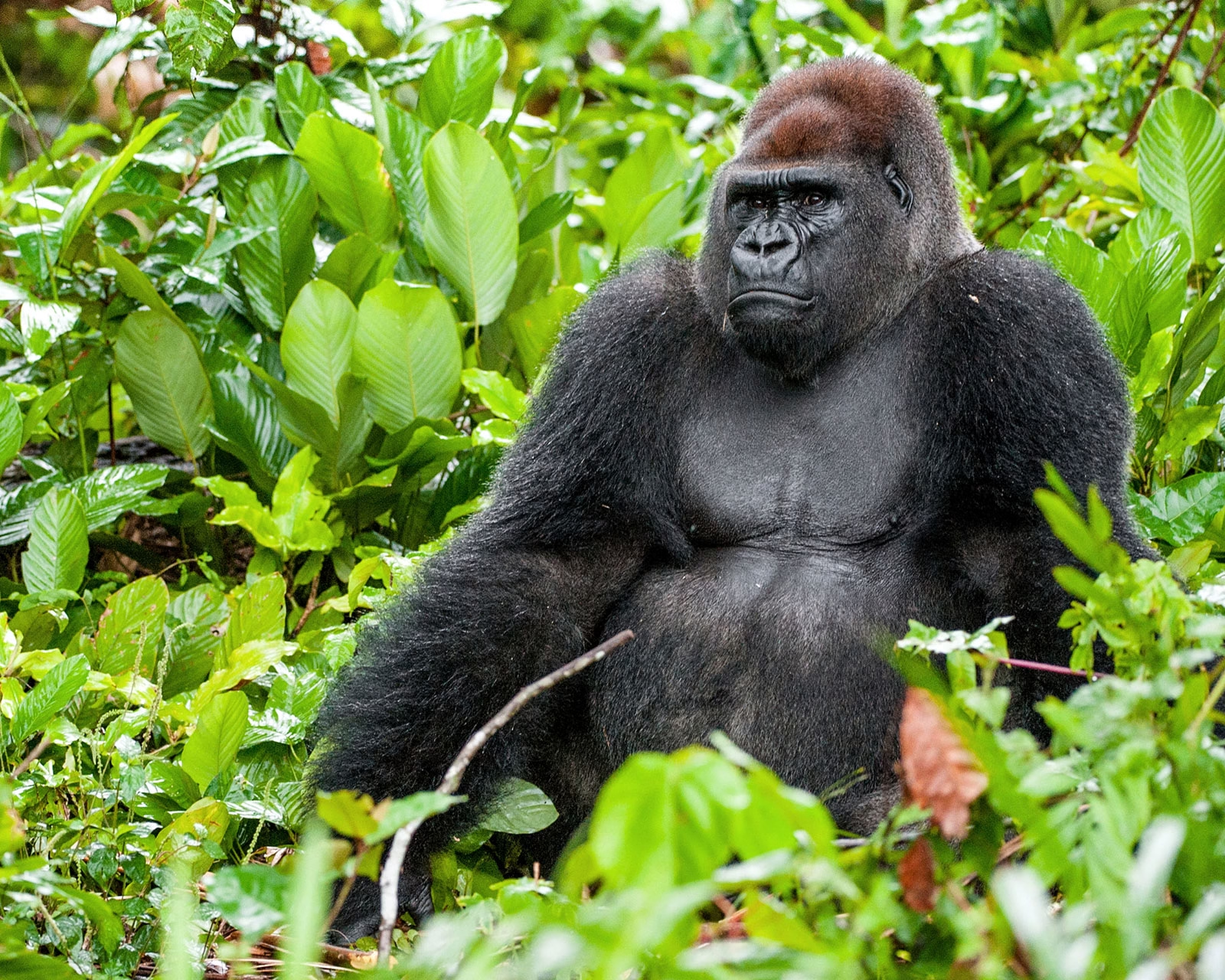

Western Lowland Gorillas
Western Lowland Gorillas: Everything You Need to Know
Western lowland gorillas (Gorilla gorilla gorilla) are the most widespread and numerous of all gorilla subspecies. These primates inhabit the dense tropical forests and swamps of Central and West Africa, where they play a critical role in maintaining the ecological balance. Despite their relatively large population compared to other gorillas, they are still classified as critically endangered due to habitat destruction, poaching, and disease outbreaks such as Ebola.
This comprehensive guide will cover:
- The habitat and range of Western lowland gorillas
- Their physical characteristics and how they differ from other subspecies
- Social structure, behavior, and diet
- Conservation status, major threats, and efforts to protect them
- The best places to see them in the wild
Habitat and Range of Western Lowland Gorillas
Western lowland gorillas are native to the rainforests, swamps, and lowland regions of Central and West Africa. Their range spans multiple countries, including:
- Gabon – Found in national parks such as Loango and Moukalaba-Doudou
- Republic of Congo – Large populations in Odzala-Kokoua National Park
- Cameroon – Present in Campo Ma’an National Park
- Central African Republic – Inhabit the Dzanga-Sangha Reserve
- Equatorial Guinea – Found in Monte Alen National Park
- Democratic Republic of Congo and Angola – Smaller populations in isolated forested regions
Unlike mountain gorillas, which are confined to high-altitude regions, Western lowland gorillas prefer lowland tropical forests with dense vegetation and abundant fruit trees. They are also found in swamp forests, a habitat unique to this subspecies.
Physical Characteristics and Key Differences
Western lowland gorillas are the smallest of the four gorilla subspecies, but they are still incredibly strong and powerful primates.
- Males weigh between 140 to 270 kilograms (310 to 600 pounds), while females weigh between 60 to 100 kilograms (130 to 220 pounds).
- Adult males can grow up to 1.8 meters (5.9 feet) tall, while females reach about 1.3 meters (4.2 feet).
- Their fur is brownish-gray with a reddish tint on the head, which is a distinguishing feature of the subspecies.
- They have a wider skull and a broader, flatter nose compared to other gorillas.
Male Western lowland gorillas develop a silver-gray patch of fur on their back as they mature, which gives silverbacks their name. This coloration signals their dominance and maturity within the group.
Western lowland gorillas are more adaptable and widespread than other subspecies, largely due to their ability to travel long distances in search of food.
Social Structure, Behavior, and Diet
Western lowland gorillas live in small social groups, typically led by a dominant silverback male.
- Group Size: Usually consists of five to fifteen individuals, but in some cases, groups can grow to as many as thirty members.
- Group Composition: One dominant silverback, multiple adult females, juveniles, and infants. Some groups may include subordinate males known as blackbacks.
- Daily Routine: They spend most of their day foraging, resting, playing, and traveling through the forest.
Diet and Foraging Behavior
Western lowland gorillas are primarily frugivorous, meaning they rely heavily on fruit when it is available. However, they also eat:
- Leaves, stems, and bark
- Seeds and nuts
- Flowers
- Insects such as termites and ants (a small part of their diet)
Because fruit availability varies throughout the year, Western lowland gorillas have developed a more extensive home range compared to mountain gorillas, sometimes traveling up to ten kilometers (six miles) per day in search of food.
Western lowland gorillas are also key seed dispersers in the rainforest. By consuming large quantities of fruit and later excreting the seeds in different locations, they contribute significantly to forest regeneration.
Conservation Status and Threats
Despite being the most numerous of all gorilla subspecies, Western lowland gorillas are classified as critically endangered by the International Union for Conservation of Nature (IUCN). Their population has declined sharply due to several major threats:
Habitat Destruction
Deforestation caused by logging, agriculture, and infrastructure development is the leading cause of habitat loss for Western lowland gorillas. As more forests are cleared for human activities, gorilla populations are forced into smaller, fragmented areas where they struggle to find food and shelter.
Poaching and Illegal Wildlife Trade
Western lowland gorillas are often hunted for bushmeat, which is consumed locally and sometimes sold in illegal wildlife markets. Although hunting gorillas is illegal in all range countries, enforcement remains weak in many areas.
Ebola and Other Diseases
Ebola outbreaks have devastated Western lowland gorilla populations. The virus can wipe out up to 90 percent of a group within a short period. Since gorillas share about 98 percent of their DNA with humans, they are also highly susceptible to other diseases transmitted by humans, including respiratory infections.
Human Conflict and Encroachment
As human populations expand, gorillas increasingly come into contact with villages and farms. This often leads to conflicts between humans and gorillas, with gorillas sometimes raiding crops and being killed in retaliation.
Conservation Efforts
Several organizations and governments are working to protect Western lowland gorillas through anti-poaching patrols, habitat conservation, eco-tourism initiatives, and disease monitoring programs. Some of the key conservation groups involved include:
- The World Wildlife Fund (WWF)
- The Wildlife Conservation Society (WCS)
- The Dian Fossey Gorilla Fund
- The Aspinall Foundation
Conservation efforts also focus on community engagement programs that educate local populations on the importance of protecting gorillas and their habitats.
Where to See Western Lowland Gorillas in the Wild
For travelers and wildlife enthusiasts interested in seeing Western lowland gorillas in their natural habitat, the best locations include:
- Odzala-Kokoua National Park, Republic of Congo – One of the most reliable places for gorilla trekking, with several habituated groups.
- Dzanga-Sangha Reserve, Central African Republic – Known for its semi-habituated gorilla groups and rich biodiversity.
- Loango National Park, Gabon – Offers a mix of forest and coastal landscapes, making it one of the most unique gorilla habitats.
- Moukalaba-Doudou National Park, Gabon – Home to a growing population of gorillas, with increasing conservation efforts.
Unlike mountain gorilla trekking in Uganda and Rwanda, tracking Western lowland gorillas is often more challenging because they live in larger territories and dense, swampy forests. However, it is a rewarding experience for those willing to make the effort.
Plan and Book Your Tour Today
For travelers eager to witness Western lowland gorillas in their natural habitat, careful planning is essential. Unlike mountain gorilla trekking in Uganda or Rwanda, Western lowland gorilla trekking is a more remote and adventurous experience, often requiring longer travel times and specialized logistics.
For those interested in wildlife conservation and adventure travel, visiting Western lowland gorillas in the wild is an unforgettable experience. By supporting ethical tourism and conservation initiatives, visitors can contribute to the ongoing protection of these incredible primates.