
Mount Longonot
Explore Mount Longonot: Kenya’s Scenic Crater Hike in the Rift Valley
Mount Longonot hike, Kenya. Longonot rises dramatically from the floor of Kenya’s Great Rift Valley. Just 60 kilometers northwest of Nairobi, this dormant stratovolcano invites adventure seekers, nature lovers, and hikers for a rewarding day trip. With panoramic views, a forest-filled crater, and steep trails, Mount Longonot offers a one-of-a-kind outdoor experience.
Where is Mount Longonot located?
Mount Longonot sits in Nakuru County, within the Great Rift Valley of Kenya. It falls inside the boundaries of Mount Longonot National Park, managed by the Kenya Wildlife Service. The volcano lies near Naivasha and Mai Mahiu, making it easily accessible from Nairobi via the Mai Mahiu-Narok road or the Nairobi-Naivasha highway.
Travelers usually reach the park in 1.5 to 2 hours from Nairobi, depending on traffic. Matatus, private cars, and organized tours offer direct access to the park gate.
Geology and History of Mount Longonot
Mount Longonot formed through volcanic activity associated with the tectonic shifts of the Great Rift Valley. It last erupted in the 1860s, leaving behind a steep-sided, dormant cone. At the summit, a circular crater stretches over 1.8 kilometers wide, with dense vegetation inside.
The name “Longonot” comes from the Maasai word “Oloonong’ot,” meaning “mountains of many spurs” or “steep ridges,” referencing the rugged terrain and jagged rim.
Hiking Mount Longonot
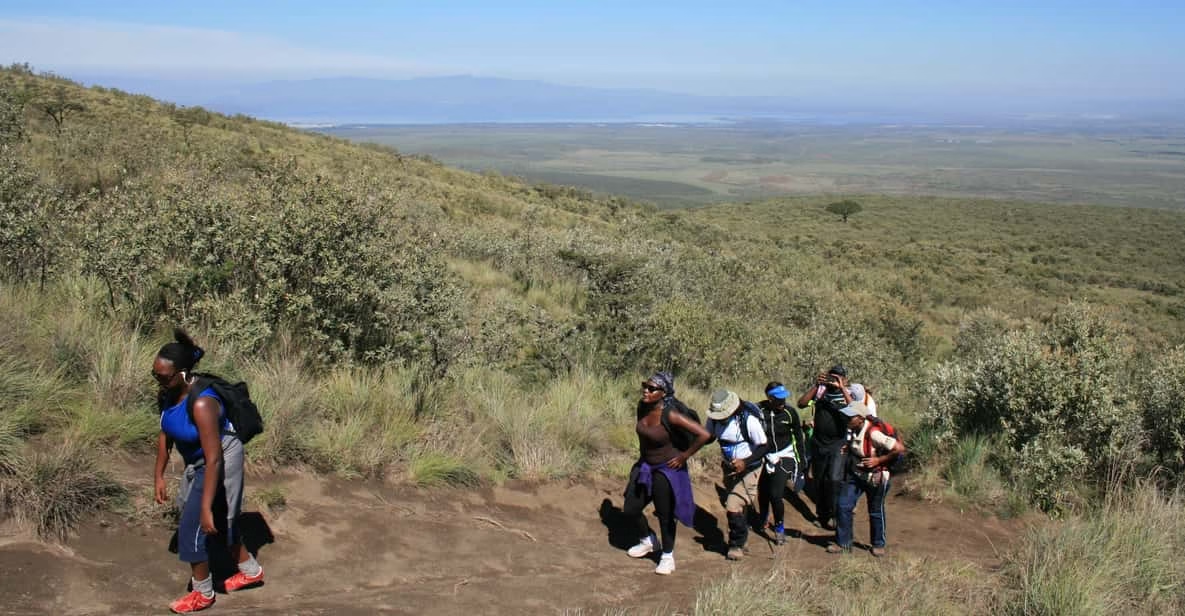
The hike begins at the park gate, located at 2,150 meters above sea level. A single trail leads hikers to the rim, covering about 3.1 kilometers. From there, a 7.2-kilometer loop around the crater rim challenges trekkers with steep ascents and descents.
The round trip takes about 4 to 5 hours, depending on fitness levels and the pace. The steep terrain, volcanic dust, and high altitude demand stamina and good hiking boots. However, the reward lies in the panoramic views of the Great Rift Valley, Lake Naivasha, and the forested crater floor.
Some visitors descend into the crater, although this is only recommended with a trained guide due to the rugged terrain.
What to See and Do
Mount Longonot offers more than just hiking. Birdwatchers spot raptors circling overhead, including eagles and vultures. Wildlife such as giraffes, buffaloes, and zebras roam the lower slopes. Inside the crater, forest cover hosts baboons and antelope.
Photographers capture the grandeur of the Rift Valley, especially at sunrise or sunset. Nature lovers enjoy the silence, broken only by wind and birdsong. Fitness enthusiasts use the hike for training and cardio challenges.
Travel Tips for Visiting Mount Longonot
- Start early to avoid the midday sun and enjoy cooler temperatures.
- Carry enough water—at least 2 liters per person.
- Wear proper hiking shoes, a hat, and sunglasses.
- Apply sunscreen and dress in layers to adapt to the changing altitude.
- Hire a guide if unfamiliar with the terrain or hiking in a group.
- Entry fees vary depending on citizenship: international visitors pay around USD 26, while East African citizens pay less.
Accommodation Near Mount Longonot
While many visitors return to Nairobi the same day, those who want to explore further can stay in Naivasha, a nearby town with a range of lodges, campsites, and hotels. Options like Lake Naivasha Resort, Fisherman’s Camp, and Enashipai Resort offer relaxation after a strenuous climb.
Best Time to Visit
Mount Longonot is open year-round, but the dry months (January to March and July to October) offer the best hiking conditions. During the rainy seasons, the trail becomes slippery and visibility drops. Clear skies in dry months give better views of the crater and the surrounding valley.
Key Highlights at a Glance
- Mount Longonot is located in Nakuru County, about 60 km from Nairobi.
- The hike to the crater rim and around the summit covers about 10.3 km.
- The mountain features a vast forested crater and steep trails.
- Wildlife includes zebras, buffaloes, giraffes, and several bird species.
- Naivasha provides nearby accommodation for extended stays.
- The dry season (Jan–Mar, Jul–Oct) is ideal for visiting.
Plan Your Hike to Mount Longonot
Whether you’re craving panoramic views, a physical challenge, or a quick escape into nature, Mount Longonot delivers. It’s one of Kenya’s best-kept secrets for outdoor lovers. Pair it with a visit to Lake Naivasha or Hell’s Gate for a full Great Rift Valley experience.