
Maiko National Park
Maiko National Park: Exploring Congo’s Remote Wilderness
Deep in the heart of the Democratic Republic of Congo lies one of Africa’s least explored and most biodiverse rainforests—Maiko National Park. Isolated by rugged terrain and dense jungle, Maiko is a stronghold for some of the world’s rarest wildlife, including Grauer’s gorillas and the elusive okapi. While few travelers reach this remote region, those who do discover a place of wild beauty, scientific importance, and conservation urgency.
Where Is Maiko National Park?
Maiko National Park spans nearly 11,000 square kilometers across three provinces—Nord-Kivu, Tshopo, and Maniema—in northeastern D.R. Congo. Established in 1970, the park lies along the western edge of the Albertine Rift and sits within the Congo Basin, one of the largest and most vital rainforest ecosystems on the planet.
The park’s landscape is shaped by lowland rainforest, winding rivers like the Lindi and Oso, and a network of wetlands and forested plateaus. Its isolation has preserved both wildlife and habitat—but has also limited access, infrastructure, and oversight.
Unique Wildlife and Biodiversity
Maiko is a biological treasure trove, home to species that are found nowhere else in the world. The park is a sanctuary for many endangered, endemic, and rarely seen species, some of which remain poorly studied due to the park’s inaccessibility.
Key species include:
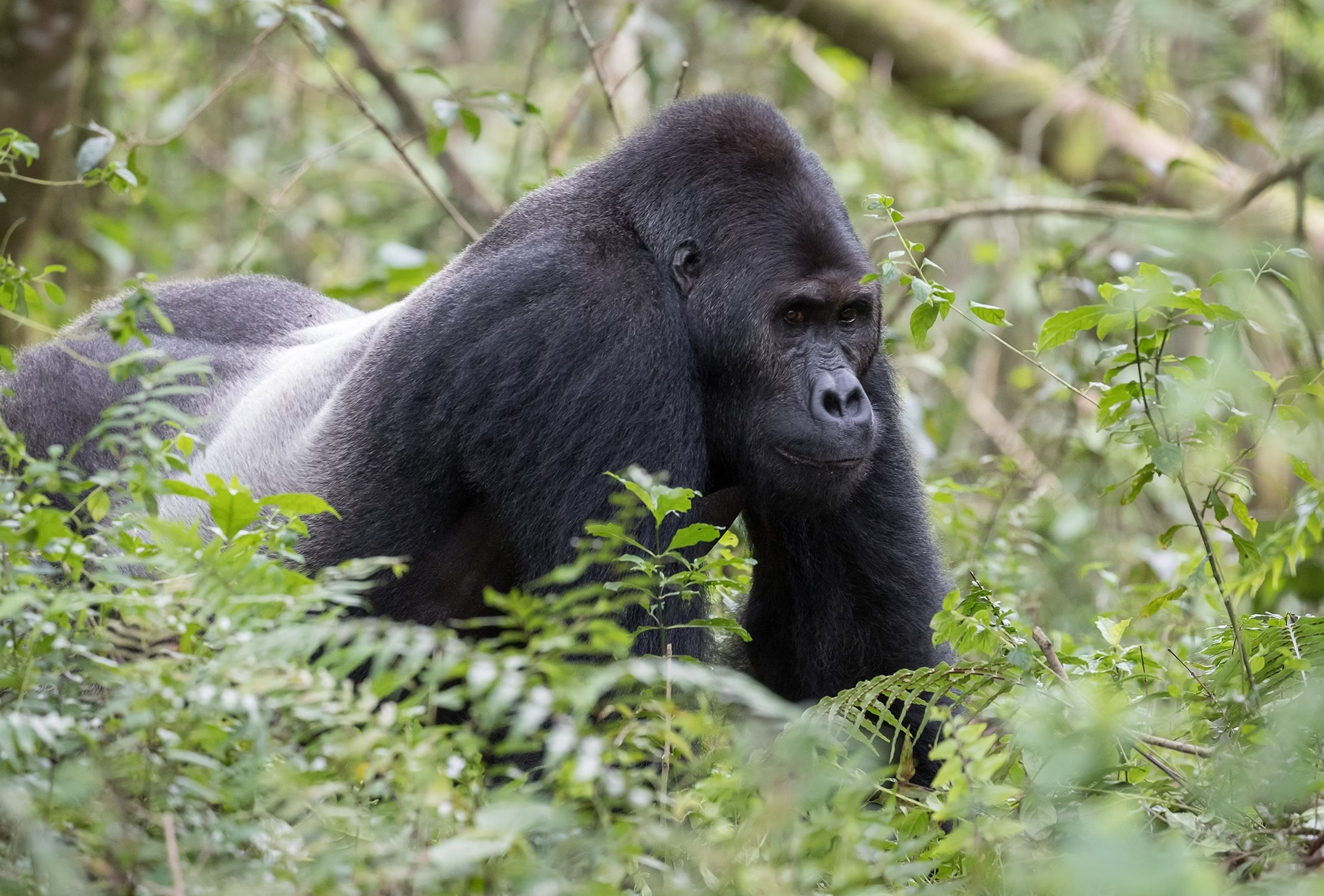
- Grauer’s Gorillas – Also known as eastern lowland gorillas, these are the largest of all gorilla subspecies and a flagship species for conservation in eastern Congo.
- Okapi – A shy, forest-dwelling relative of the giraffe, recognizable by its striped legs and reddish coat.
- Congo Peafowl – A beautiful and elusive bird that is both endemic to the Congo and the country’s national bird.
- Forest Elephants – Smaller and more elusive than their savanna cousins, these elephants are important seed dispersers in the rainforest.
- Eastern Chimpanzees – Intelligent and social primates that roam the forest canopy in tight family groups.
- Aquatic Genet – A rare and semi-aquatic carnivore that thrives in the wetland zones.
Birdwatchers also flock to Maiko for its more than 400 bird species, including several that are endemic or near-endemic to the Albertine Rift.
Safari and Adventure Activities in Maiko
Tourism in Maiko is extremely limited due to poor infrastructure and ongoing security concerns. However, for adventurous travelers, conservationists, and researchers, the park offers a deep wilderness experience.
Things to do in Maiko include:
- Gorilla and chimpanzee tracking – In select regions where habituation and monitoring have occurred, gorilla and chimpanzee treks are possible with the help of experienced guides.
- Birdwatching – With binoculars in hand, you will explore an avian paradise few birders have ever seen.
- Nature walks – Guided treks along narrow forest trails expose you to the sights, sounds, and scents of an untouched rainforest.
- Community and cultural interaction – Nearby indigenous groups, including the Mbuti pygmies and Bila people, maintain forest-based traditions and ecological knowledge.
Conservation and Threats
Maiko’s isolation has been both a blessing and a curse. It has shielded the park from mass tourism, but it has also allowed illegal mining, poaching, and armed group activity to take hold in certain areas.
- Armed Groups: Rebel militias like the Simba and Interahamwe have used parts of the park as a refuge, which complicates ranger patrols and long-term conservation planning.
- Mining Pressure: Illegal extraction of gold, coltan, and other minerals disrupts the forest and displaces wildlife.
- Lack of Infrastructure: Very few roads and ranger posts exist, limiting the park’s ability to respond quickly to threats.
Despite these issues, international partners like the Dian Fossey Gorilla Fund and the Wildlife Conservation Society (WCS) are supporting research missions, ecological monitoring, and ranger training in hopes of stabilizing the region.
How to Visit Maiko National Park
Maiko is not a typical safari destination. Reaching the park involves flying into towns like Kisangani, Goma, Beni, or Butembo, followed by multi-day overland travel through rough terrain.
Because the park is remote and conditions are challenging, visits should be arranged through trusted conservation groups or specialized tour operators who work closely with park authorities and local communities.
Key Travel Tips:
- Plan with a professional outfitter who understands the local security landscape
- Travel only during the dry season for better road conditions
- Bring waterproof gear, durable boots, and camping supplies
- Be ready for an expedition-style experience, not a luxury lodge safari
Best Time to Visit
The best time to visit Maiko is during the dry seasons:
- June to September
- December to February
These months offer better trail conditions and clearer wildlife tracking opportunities. The rest of the year brings heavy rains that can wash out paths and make access nearly impossible.
Why Visit Maiko National Park?
Maiko is wild Africa in its purest form. It’s not polished, comfortable, or easy—but it’s real. The rainforest hums with life. Every step feels like discovery. And every sighting of a gorilla, okapi, or rare bird is hard-earned.
For serious conservationists, photographers, and wilderness lovers, Maiko offers something few places on Earth can still provide: a chance to experience nature before it changes—and maybe even help protect it.