
Facts about Mount Kilimanjaro
Facts About Mount Kilimanjaro—Elevation, Deaths, Weather, History, and Records
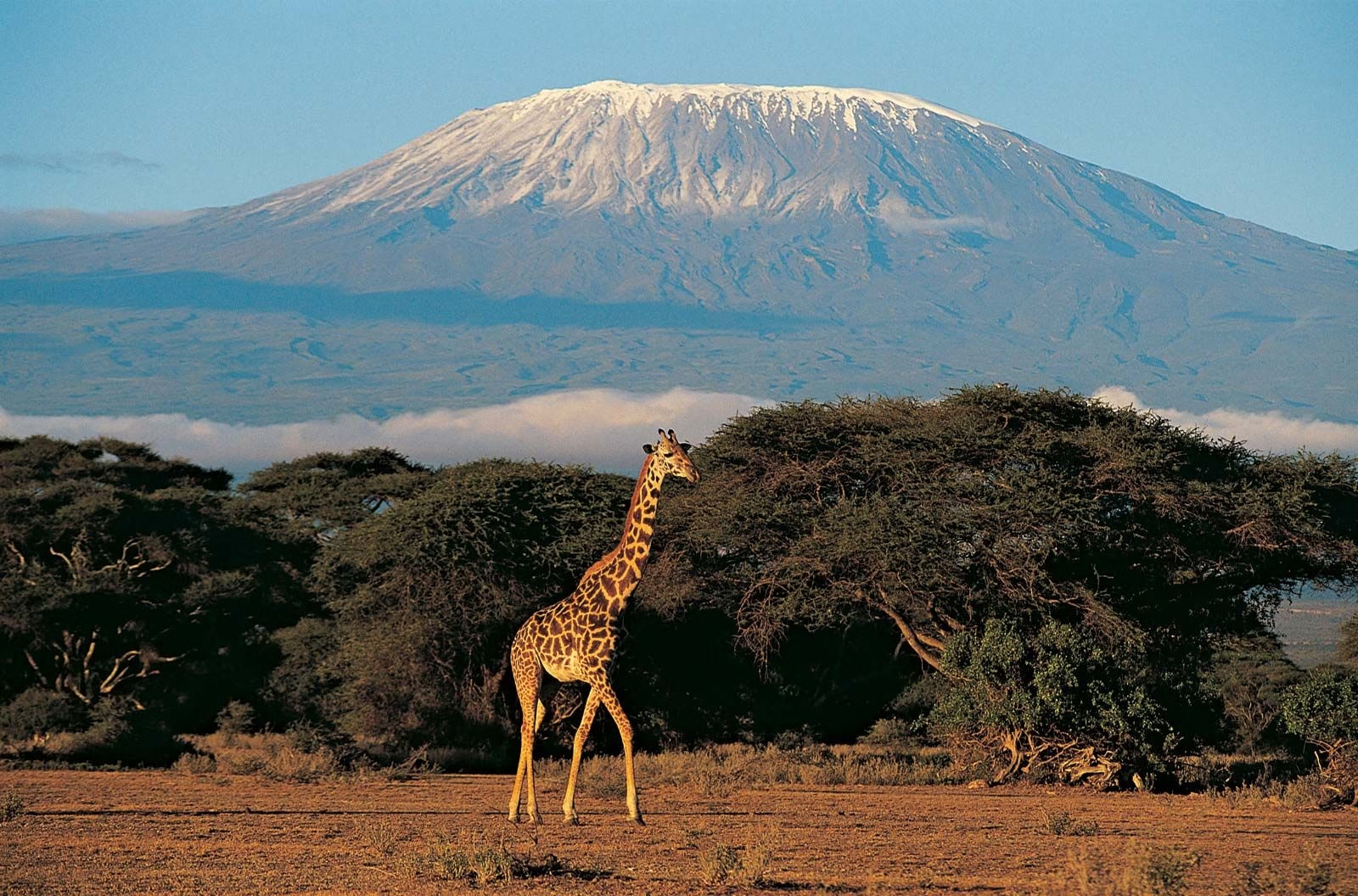
Facts about Mount Kilimanjaro. Mount Kilimanjaro is Africa’s tallest mountain and one of the most famous peaks in the world. Rising dramatically above the plains of northern Tanzania, Kilimanjaro is not just a mountain—it’s a natural wonder, a physical challenge, and a symbol of Africa’s wild beauty.
Whether you are a climber, researcher, or just curious, here are the most important facts about Kilimanjaro, covering its elevation, weather, death rates, history, and climbing records.
Elevation and Location
Mount Kilimanjaro stands at 5,895 meters (19,341 feet) above sea level. That makes it the highest mountain in Africa and the tallest free-standing mountain in the world.
It is located in northeastern Tanzania, near the border with Kenya. Kilimanjaro is a stratovolcano with three main volcanic cones:
- Kibo (the highest and the only one with glaciers)
- Mawenzi
- Shira
Only Kibo remains dormant; Mawenzi and Shira are extinct.
Climate and Weather
Despite its equatorial location, Kilimanjaro has five ecological zones—each with its own climate:
- Cultivation zone – Farmland at the base
- Rainforest zone – Warm, humid, and green
- Heather/moorland – Cooler with open views
- Alpine desert – Dry, windy, and rocky
- Arctic summit zone – Ice, snow, and freezing temperatures
The summit temperatures can drop below -20°C (-4°F) at night. Rain is common in the lower zones, especially from March to May and November.
Best months to climb: January to March and June to October.
Deaths and Risks
Climbing Kilimanjaro is not a technical climb, but it’s still dangerous. The biggest risk is altitude sickness, which can affect anyone regardless of fitness.
- An estimated 3 to 10 deaths occur annually.
- The main causes include acute mountain sickness (AMS), hypothermia, heart conditions, and accidents.
- Kilimanjaro has a success rate of about 65% overall, depending on route and duration.
Choosing longer routes, like the Lemosho or Machame 7-day trek, helps with acclimatization and reduces risk.
History and Exploration
Mount Kilimanjaro has long been known to local communities, particularly the Chagga people, who live around its lower slopes. In pre-colonial times, few believed a snow-capped mountain could exist in Africa.
- The first recorded European sighting was in 1848 by German missionary Johannes Rebmann.
- The first successful summit was in 1889, led by Hans Meyer and Ludwig Purtscheller.
- The mountain was declared a national park in 1973 and a UNESCO World Heritage Site in 1987.
Climbing Records
Mount Kilimanjaro has inspired climbers from all walks of life to push limits and break records.
- Fastest ascent and descent: Karl Egloff (Switzerland) – 6 hours, 42 minutes (2014)
- Youngest summiter: Coaltan Tanner (USA) – Age 6
- Oldest summiter: Anne Lorimor (USA) – Age 89
- First amputee summiter: Sibusiso Vilane (South Africa) – Right leg amputee
People have summited for charity, awareness, and even music concerts. In 2014, a group held the highest-ever soccer match at Kilimanjaro’s summit.
Kilimanjaro’s Glaciers Are Disappearing
Once fully covered in ice, Kilimanjaro’s glaciers are rapidly melting. Scientists estimate that more than 85% of the ice has disappeared in the last century due to climate change.
At current rates, the summit glaciers may vanish entirely within a few decades. This makes each climb not just an adventure—but a moment in environmental history.
Routes to the Summit
There are seven main trekking routes, each with different scenery, difficulty, and acclimatization potential:
- Marangu Route – Easiest and most popular, nicknamed the “Coca-Cola route”
- Machame Route – More scenic and challenging
- Lemosho and Shira Routes – Great for acclimatization and fewer crowds
- Rongai Route – Approaches from the north
- Umbwe Route – Steep and direct; for experienced hikers only
- Northern Circuit – Longest and most gradual; high success rate
Plan Your Kilimanjaro Trek
Climbing Mount Kilimanjaro is a personal challenge and a global experience. Whether you’re a first-time hiker or seasoned adventurer, reaching Uhuru Peak is unforgettable.
Choose a licensed, ethical trekking company. Prepare physically and mentally. Take your time to acclimatize. Respect the mountain and its guides. And know that the view from the top is more than just a photo—it’s a victory over self-doubt and a moment of awe above the clouds.