The black rhinoceros, a critically endangered species, is one of Africa’s most iconic and intriguing animals. Known for its unique adaptations and behavior, the black rhino plays an essential role in maintaining the ecological balance of its habitat. Here are five fascinating facts about this remarkable creature.
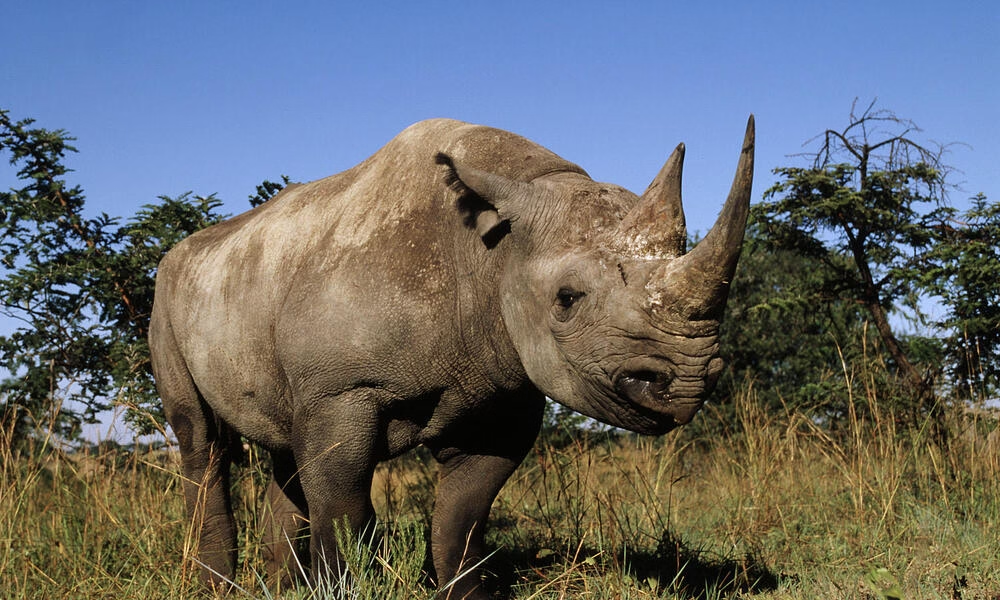
Black rhinoceros Portrait of a male
1. Black Rhinos Are Not Actually Black
Despite their name, black rhinos are not black in color. Their skin is usually gray, and the name “black rhino” is used to distinguish them from the larger white rhino. The term likely originated as a contrast to the “white” rhino, which was named for its wide mouth (“wijde” in Dutch). Black rhinos may appear darker or lighter depending on the soil or mud they wallow in.
2. Black Rhinos Have a Prehensile Upper Lip
One of the black rhino’s most distinctive features is its pointed, prehensile upper lip. This lip acts as a gripping tool, allowing the rhino to pluck leaves, twigs, and fruit from bushes and trees. Unlike the white rhino, which grazes on grass with its wide, flat mouth, the black rhino’s feeding habits are adapted for browsing vegetation at higher levels.
3. They Are Solitary and Territorial
Black rhinos are solitary animals, with males and females typically coming together only for mating. Males establish territories that they mark with dung piles and urine. They are highly territorial and will aggressively defend their space from intruders, including other rhinos. Their solitary nature and temperament make them less social compared to the more docile white rhino.
4. Black Rhinos Have Poor Eyesight but Excellent Senses of Smell and Hearing
Black rhinos have relatively poor eyesight and can only detect movement from a short distance. However, their other senses are incredibly acute. They rely heavily on their sense of smell and hearing to detect threats and locate food. Their ears are capable of rotating independently, helping them pinpoint sounds from different directions.
5. They Can Charge at Speeds of Up to 35 Miles Per Hour
Despite their large size and stocky build, black rhinos are remarkably fast and agile. When threatened or provoked, they can charge at speeds of up to 35 miles per hour (56 kilometers per hour). Their unpredictable and aggressive nature, combined with their speed, makes them formidable opponents when cornered.
Conservation Status
The black rhino is critically endangered due to poaching and habitat loss. Conservation efforts, such as anti-poaching patrols and translocation programs, are helping to stabilize populations in protected areas. While their numbers remain low, the black rhino symbolizes hope and resilience in the fight to protect Africa’s wildlife.