
- Gecko Safaris
- No Comments
Banyankole People of Uganda.
Banyankole People of Uganda: Culture, Traditions, and Way of Life
The Banyankole are one of Uganda’s major ethnic groups, primarily found in the western districts of Ankole, covering areas such as Mbarara, Bushenyi, Kiruhura, Ibanda, Isingiro, and Ntungamo. They are part of the larger Bantu-speaking communities of East Africa and are known for their rich cultural heritage, distinct traditions, and historical significance in Uganda.
Origins and History of the Banyankole
The Banyankole, a Bantu ethnic group, historically lived in the Ankole Kingdom, where the Omugabe (king) ruled. Their cattle-keeping traditions, especially the rearing of long-horned Ankole cattle, shaped their economy and social status.
Before the abolition of monarchies in Uganda in 1967, the Omugabe of Ankole was a central figure, maintaining political and cultural authority over his people. However, the kingdom was not restored when other Ugandan kingdoms were reinstated in the 1990s, although some Banyankole still recognize their cultural heritage.
Social Structure of the Banyankole
The Banyankole traditionally had a dual social structure, divided into two major groups:
- The Bahima (Pastoralists): These were mainly cattle herders, known for keeping the prestigious Ankole long-horned cattle. The Bahima valued cattle as a symbol of wealth and status.
- The Bairu (Agriculturalists) were primarily crop farmers, growing crops such as millet, beans, sweet potatoes, and bananas (matoke).
Although historically there were social distinctions between the Bahima and Bairu, intermarriage, modernization, and urbanization have reduced these differences.
Language of the Banyankole
The Banyankole speak Runyankore, a Bantu language closely related to Rukiga, Runyoro, and Rutooro. It is one of the major languages spoken in Uganda and is widely understood in the western region.
Culture and Traditions of the Banyankole
1. Marriage and Family Life
Marriage in Banyankole culture was traditionally arranged, with bride price (often in the form of cattle) playing a key role. The Bahima valued virginity, and young women were expected to be trained in household duties before marriage.
Polygamy was historically common, especially among wealthy cattle owners, but today, many Banyankole practice monogamy due to modern influences and religious beliefs.
2. The Importance of Cattle
Cattle were central to Banyankole life, especially among the Bahima. The Ankole cattle, with their impressive long horns, were symbols of wealth, social status, and pride. Milk and dairy products such as ghee (eshabwe) were staple foods.
Even among the Bairu (farmers), cattle were still important, but crop farming played a bigger role in their daily life.
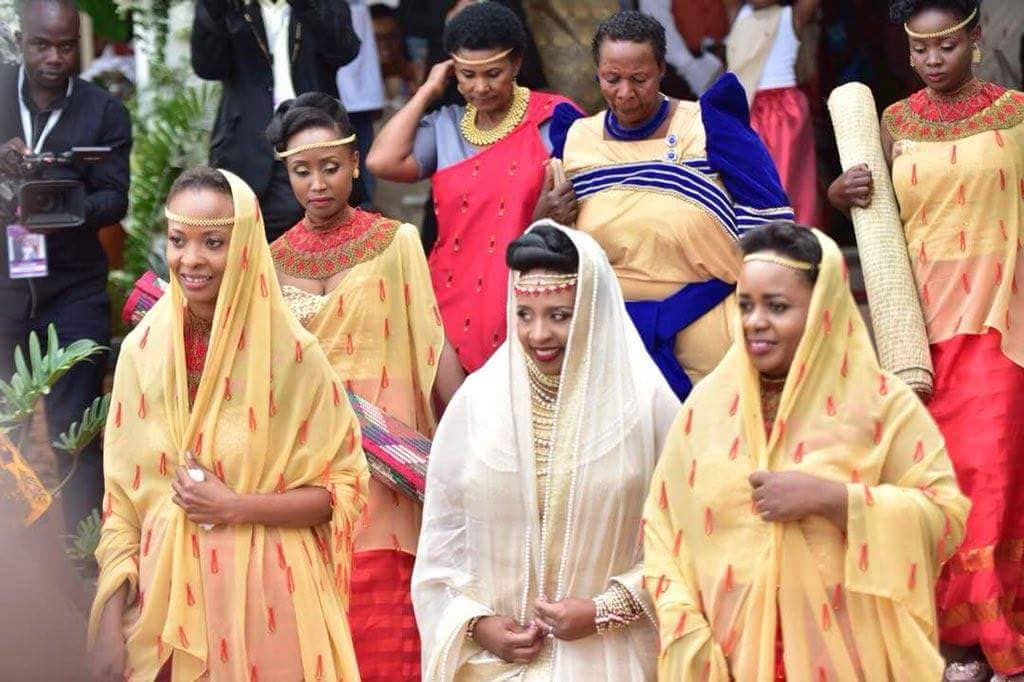
3. Traditional Attire
- Men traditionally wore “kanzu” (a long white robe), especially on formal occasions.
- Women wore elegant “suuka” (a long, flowing dress wrapped around the body), often accessorized with beads.
- Today, modern clothing is widely worn, but traditional attire is still common during ceremonies and cultural events.
4. Food and Cuisine
The Banyankole diet consists mainly of milk, bananas, millet, sweet potatoes, beans, and meat. Popular traditional foods include:
- Eshabwe: a ghee-based sauce eaten with matoke or millet.
- Akaro: millet bread.
- Omukamo: fresh milk, often drunk in large quantities.
Religion and Beliefs
Before the introduction of Christianity and Islam, the Banyankole practiced traditional African religion, worshipping ancestral spirits and gods. With colonization, Christianity became widespread, and today, most Banyankole are Christians (Anglicans, Catholics, and Pentecostals), with a small number practicing Islam.
However, some traditional beliefs persist, including respect for elders, spiritual healing, and belief in ancestral spirits.
Festivals and Ceremonies
- Empaako Naming Ceremony – Similar to other Bantu communities, Banyankole families give children a pet name (Empaako) as a form of respect.
- Initiation Ceremonies: In the past, young boys were introduced to cattle-keeping traditions through initiation rites.
- Traditional Weddings: A grand ceremony where families exchange gifts, with emphasis on cattle as bride price.
Tourism and Cultural Heritage
Visitors to Uganda can experience Banyankole culture through:
- Cultural visits to Ankole farms: see the famous long-horned Ankole cattle.
- Igongo Cultural Center (Mbarara): Learn about Banyankole traditions, history, and cuisine.
- Lake Mburo National Park is a great place to see Ankole cattle coexisting with wildlife.
Plan your tour today.
The Banyankole people are a proud and culturally rich community in western Uganda. Their traditions, especially those related to cattle-keeping, social structure, and food culture, have shaped Uganda’s identity. While modernization has influenced many aspects of their lives, the Banyankole heritage remains strong, making them an essential part of Uganda’s diverse cultural landscape.