African Deserts | Location, History, Countries, Wildlife & Key Facts
African deserts. Africa is home to some of the most iconic and diverse deserts on Earth. These vast, arid lands cover over 40% of the continent. Each desert has a unique story shaped by climate, geology, people, and wildlife.
What Makes a Desert in Africa?
Deserts receive less than 10 inches (250 mm) of rain each year. In Africa, deserts are not just sand. Some have gravel plains, rocky plateaus, or salt flats. Others sit near coastlines or highlands. All African deserts share low rainfall, sparse vegetation, and extreme conditions.
Major Deserts in Africa
Sahara Desert
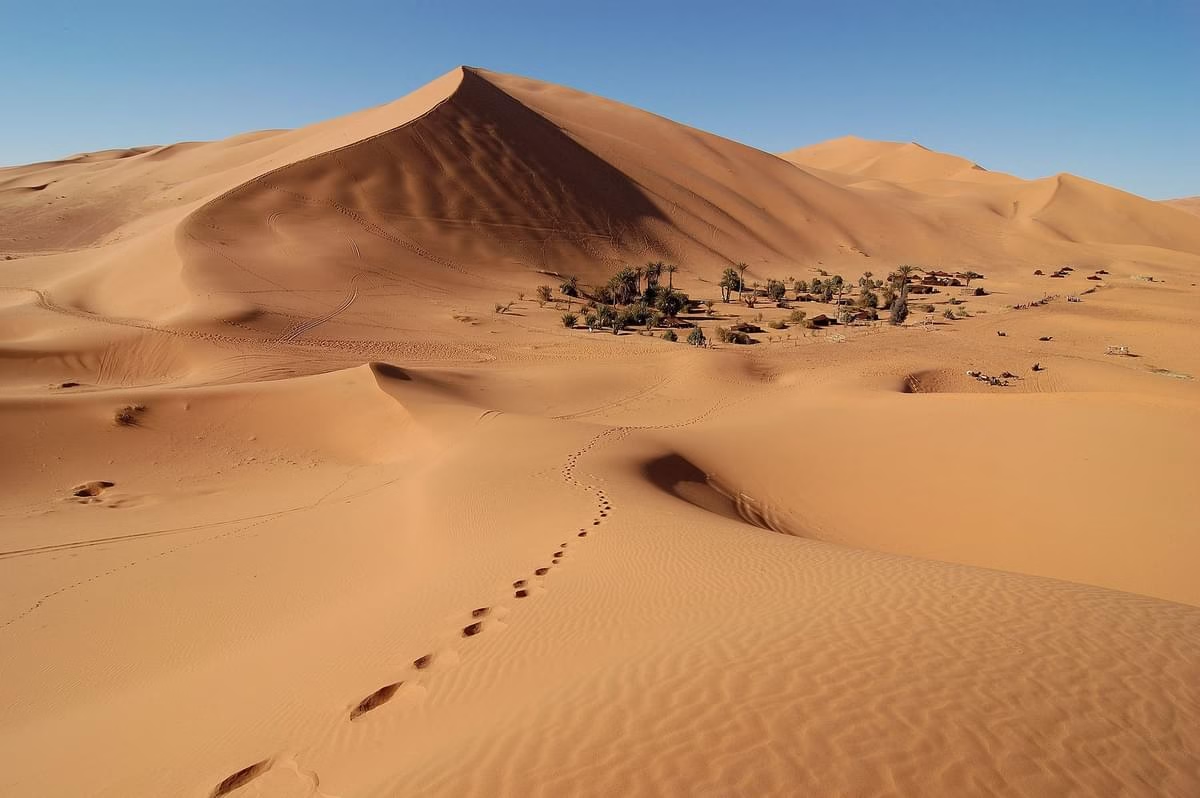
The Sahara is the world’s largest hot desert. It covers about 3.6 million square miles across 11 countries. These include Algeria, Egypt, Libya, Mali, and Sudan. The landscape features dunes, rock plateaus, and salt flats. Around 7,000 years ago, the Sahara was green. Shifting climate made it arid. Ancient trade routes once crossed this region, linking West Africa with the Mediterranean.
Kalahari Desert
The Kalahari is a semi-arid desert in Botswana, Namibia, and South Africa. It spans about 350,000 square miles. It gets more rainfall than most deserts and supports grasses and shrubs. Wildlife is abundant here—lions, giraffes, cheetahs, and meerkats live in the Kalahari. Indigenous San people have lived in this area for thousands of years.
Namib Desert
The Namib is the world’s oldest desert. It lies along Namibia’s coast and stretches over 1,200 miles. Sand dunes tower over 1,000 feet high. Fog from the Atlantic Ocean provides moisture. Animals such as oryx, desert elephants, and beetles thrive here. Popular tourist sites include Sossusvlei and the Skeleton Coast.
Danakil Desert
The Danakil lies in Ethiopia, Eritrea, and Djibouti. It is one of the hottest and most inhospitable places on Earth. Temperatures often exceed 120°F (49°C). The terrain includes salt flats, lava lakes, and sulfur springs. The Afar people harvest salt here using traditional tools and camel caravans.
Libyan Desert
This desert sits in Libya, Egypt, and Sudan. It is one of the driest parts of the Sahara. Few people live here. Rock art and ancient tools lie hidden beneath the sand. It holds secrets of past human life and meteorite impacts.
Wildlife in African Deserts
African deserts host life adapted to extreme conditions. In the Sahara, fennec foxes use big ears to cool off and hear prey underground. The addax antelope lives months without water. Snakes and lizards glide over sand or burrow for shelter.
The Kalahari supports larger animals like meerkats, cheetahs, and bat-eared foxes. The Namib has unique fog-dependent insects and oryx. Every desert animal shows amazing survival skills.
People and Culture
Deserts have shaped human culture for thousands of years. Trans-Saharan trade routes once connected empires. Cities like Timbuktu and Ghadames flourished with trade, learning, and religion.
In the Kalahari, the San people use click languages and live off the land. In the Danakil, Afar salt miners carry heavy slabs across desert plains. Their lifestyle remains one of Africa’s oldest surviving traditions.
Environmental Challenges
Desertification threatens many regions. Overgrazing, deforestation, and poor land use worsen the problem. The Sahel region, just south of the Sahara, faces growing aridity each year.
Wildlife habitats shrink due to farming, mining, and urban sprawl. Groundwater dries up in places that depend on it. Tourism also harms fragile dune ecosystems if not controlled.
To fight this, the African Union launched the Great Green Wall. It’s a large-scale tree planting effort to stop desert spread and restore degraded land.
Key Desert Facts
- The Sahara was green during the African Humid Period over 7,000 years ago.
- The Namib gets moisture from ocean fog, not rain.
- The Danakil Desert is a live geological zone, where Earth’s crust splits apart.
- The Kalahari isn’t a true desert—many areas grow grass and shrubs.
Desert Countries in Africa
Several countries include desert regions. These include Algeria, Egypt, Libya, Sudan, Mauritania, Chad, Mali, Niger, and Morocco. Namibia and Botswana hold most of the Namib and Kalahari deserts. Ethiopia, Djibouti, and Eritrea make up the Danakil zone. South Africa also includes parts of the Kalahari.
Plan Your Desert Safari in Africa
African deserts are more than empty sand. They offer epic landscapes, stargazing, wildlife, and cultural encounters. Ride a camel through Moroccan dunes. Track lions in the Kalahari. Hike among the red dunes of Sossusvlei. Or visit the surreal salt lands of the Danakil.
Choose local guides, travel responsibly, and support eco-tourism. You’ll discover beauty, silence, and awe in every direction.