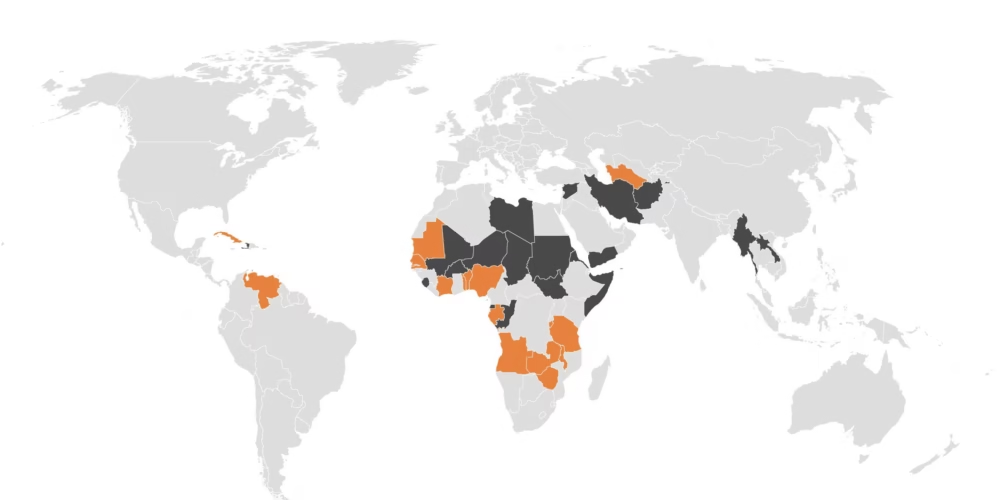

26 African Countries Under Full or Partial U.S. Travel Ban (Post-December Update)
26 African Countries Under Full or Partial U.S. Travel Ban (Post-December Update)
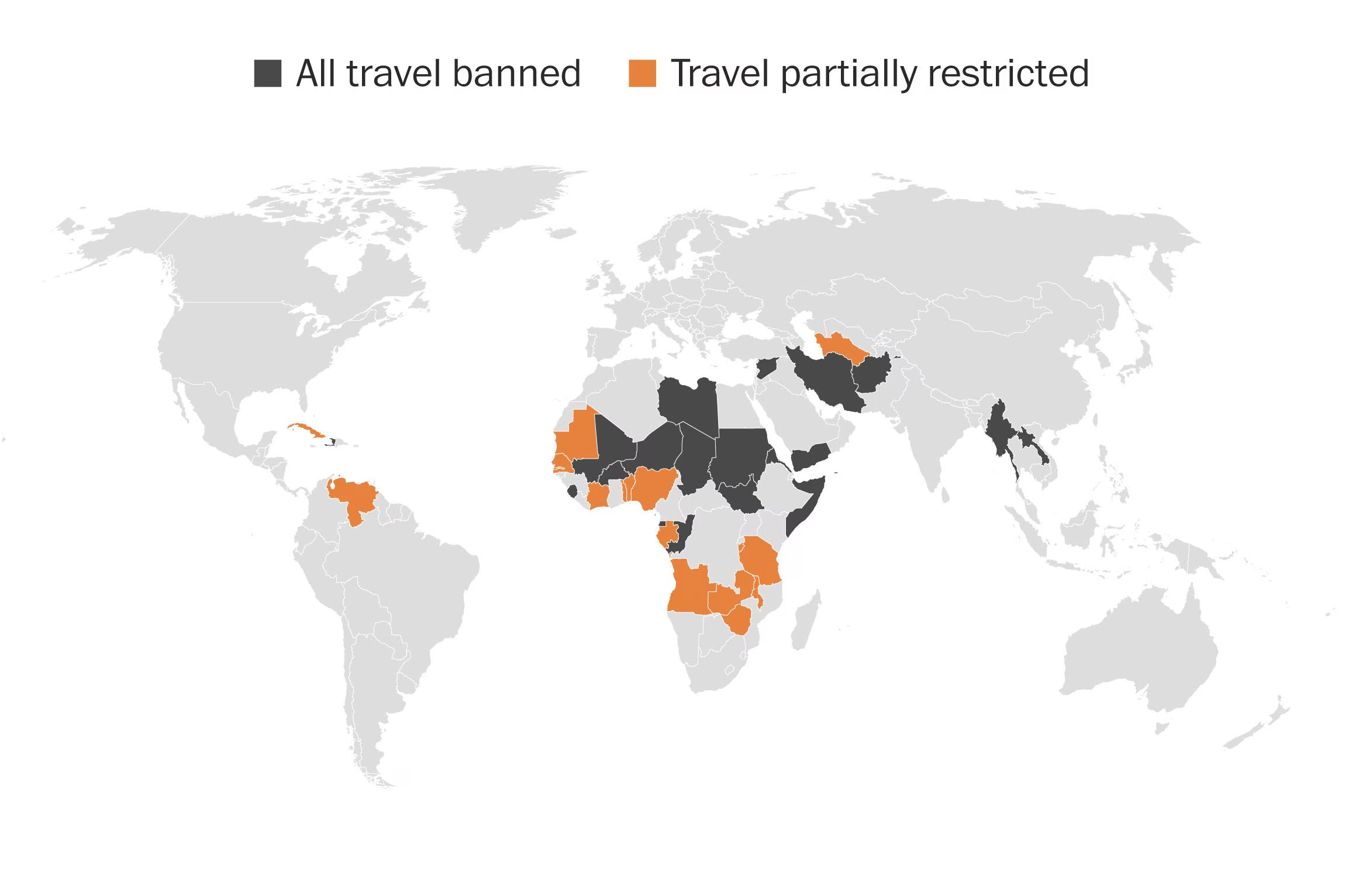
Following the December update to U.S. entry and visa restriction policies, a total of 26 African countries are now subject to either full travel bans or partial visa restrictions. These measures focus on immigration controls, security vetting gaps, passport integrity concerns, and cooperation on repatriation, rather than general travel advisories.
This guide presents the information in a clear, policy-focused structure, separating full bans from partial restrictions and explaining what each category means in practical terms.
Understanding the Difference: Full vs. Partial Travel Restrictions
A full U.S. travel ban means that most immigrant and non-immigrant visas are suspended. Entry into the United States is largely prohibited, with only narrow exceptions such as diplomats, certain humanitarian cases, or individuals holding valid visas issued before the ban took effect.
A partial travel restriction limits specific visa categories, commonly affecting tourist (B-1/B-2), student (F, M), exchange (J), or certain immigrant visas. Other categories may remain available, but applicants face tighter scrutiny, longer processing times, or outright suspension depending on the visa type.
African Countries Under Full U.S. Travel Ban
Nationals of the following 12 African countries face near-total suspension of U.S. entry and visa issuance, subject to limited exceptions:
Burkina Faso
Mali
Niger
South Sudan
Sierra Leone
Chad
Republic of the Congo
Equatorial Guinea
Eritrea
Libya
Somalia
Sudan
Travel from these countries to the U.S. is currently severely limited, even for family reunification, education, or business purposes.

African Countries Under Partial U.S. Travel Restrictions
The following 14 African countries are affected by selective visa suspensions, typically targeting tourist, student, and some immigrant categories:
Angola
Benin
Burundi
Côte d’Ivoire
Gabon
The Gambia
Malawi
Mauritania
Nigeria
Senegal
Tanzania
Zambia
Zimbabwe
Cameroon
Applicants from these countries may still qualify for U.S. visas, but eligibility depends on visa class, consular discretion, and evolving policy enforcement.
What This Means for Travelers, Students, and Businesses
For African travelers, these restrictions do not represent a blanket prohibition on all movement, but they significantly reshape access to U.S. visas. Tourist travel faces the greatest impact, followed closely by student and exchange programs. Business, diplomatic, and humanitarian travel may still proceed in limited circumstances, but processing times are longer and approval rates lower.
Importantly, these measures are policy-based and subject to change, depending on bilateral cooperation, security benchmarks, and administrative reviews.
Broader Context and Implications
The inclusion of 26 African countries highlights a growing shift toward region-wide risk assessments, rather than country-specific incidents. West, Central, East, and Southern Africa are all affected, underscoring how passport systems, overstay data, and migration management now play a central role in U.S. visa policy.
For African governments, addressing documentation integrity and repatriation cooperation remains key to easing future restrictions.
Plan Your Safari
If you are traveling within Africa or planning multi-country African itineraries, these U.S. restrictions do not affect tourism inside the continent. Gorilla trekking, wildlife safaris, cultural tours, and regional travel across East, West, Central, and Southern Africa continue normally. Planning ahead and staying informed ensures smooth international connections where applicable.