
Chimpanzee Facts – Habitat, Diet and Mating
Chimpanzee Facts – Habitat, Diet and Mating
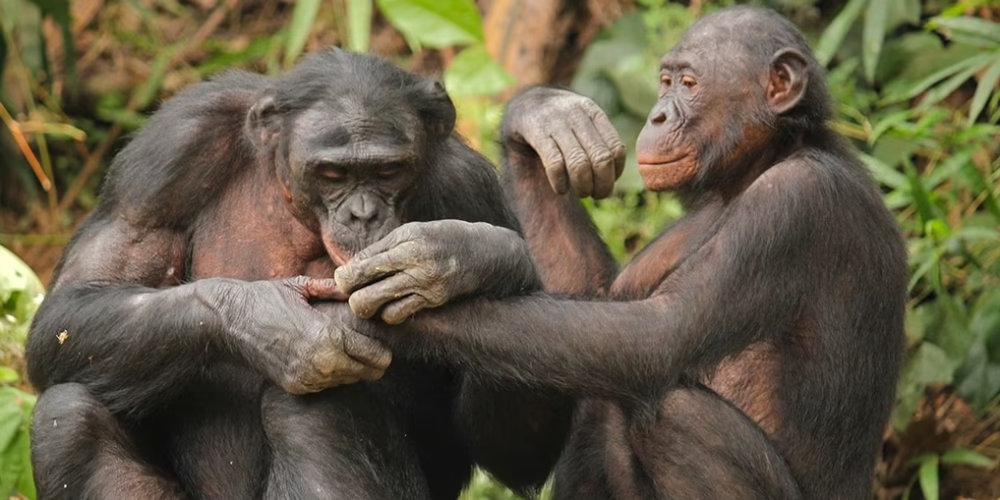
Chimpanzees are among the most intelligent and fascinating primates on Earth. Sharing more than 98% of their DNA with humans, they exhibit remarkable emotional depth, communication skills, and problem-solving abilities. Observing chimpanzees in their natural habitat is one of the most exciting wildlife experiences in Africa. Understanding their habitat, diet, and mating behavior helps travelers appreciate just how closely related we are to these complex and social creatures.
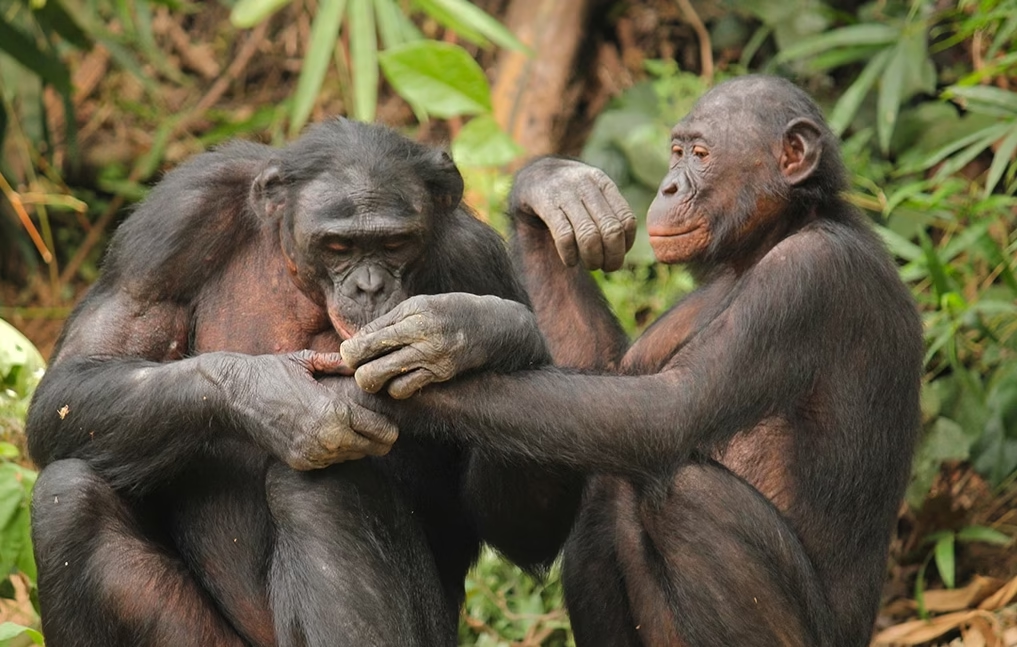
Chimpanzees are native to the tropical forests and woodlands of central and western Africa. Their range stretches from Uganda and Rwanda to the Democratic Republic of Congo, Gabon, Cameroon, and across to West Africa. In East Africa, chimpanzees thrive mainly in Kibale Forest National Park, Budongo Forest, and Kyambura Gorge in Uganda, and in Nyungwe National Park in Rwanda.
They prefer dense rainforests but can also survive in savanna-forest mosaics where food and shelter are abundant. Chimpanzees are both terrestrial and arboreal — they spend much of their time on the ground but sleep and build nests in trees. These nests, woven from leaves and branches, are constructed daily and provide a safe place for resting and protection from predators.
Chimpanzee habitats are vital ecosystems supporting hundreds of plant and animal species. However, deforestation and human encroachment have fragmented many of their territories, making conservation efforts in places like Uganda and Rwanda essential for their long-term survival.
Where to See Chimpanzees in Africa
Chimpanzee trekking is one of the most sought-after wildlife activities in East Africa. The best destinations to encounter these remarkable primates in their natural environment include Uganda, Rwanda, and Tanzania.
In Uganda, the most famous location is Kibale Forest National Park, often called the “Primate Capital of the World.” It has over 1,500 chimpanzees, offering the highest success rate for sightings. Budongo Forest Reserve near Murchison Falls National Park provides both trekking and habituation experiences, while Kyambura Gorge in Queen Elizabeth National Park gives visitors a chance to combine game drives with chimp tracking.
In Rwanda, chimpanzees are found in Nyungwe Forest National Park, one of Africa’s oldest rainforests. Trekking here offers an immersive experience through dense canopies, waterfalls, and rich biodiversity.
For travelers exploring Tanzania, Mahale Mountains and Gombe Stream National Parks are exceptional sites to see wild chimpanzees along the shores of Lake Tanganyika, where Jane Goodall began her groundbreaking research.
All these destinations can be visited through well-organized tours by Gecko Safaris Africa, ensuring ethical, guided, and memorable chimpanzee encounters.
Diet and Feeding Habits
Chimpanzees are omnivorous, meaning they eat both plant and animal matter. Their diet is extremely diverse and changes depending on the season and habitat. Fruits make up the largest portion of their diet, supplemented with leaves, seeds, flowers, and bark. When fruits are scarce, they eat nuts, insects, and small vertebrates.
What makes chimpanzees particularly fascinating is their ability to use tools while feeding. They use sticks to extract termites from mounds, leaves as sponges to drink water, and stones to crack open nuts. These behaviors show advanced intelligence and problem-solving skills that are rare among non-human species.
Chimpanzees also engage in cooperative hunting, particularly for smaller animals like colobus monkeys. Males often work together, coordinating their actions with remarkable precision — a behavior that mirrors human teamwork and strategy. This social cooperation not only provides food but also strengthens the bonds between members of the troop.
Mating and Reproduction
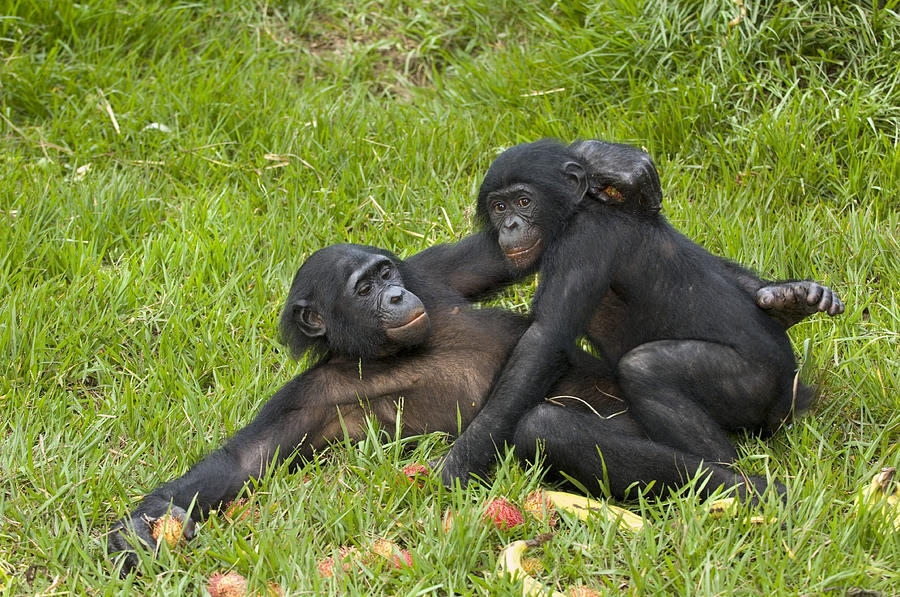
Chimpanzee mating behavior is complex and deeply influenced by their social structure. Unlike gorillas, which have a dominant silverback mating with several females, chimpanzees live in large multi-male, multi-female groups known as fission-fusion societies. Within these groups, both males and females may have multiple partners, and mating opportunities often depend on hierarchy, alliances, and social grooming.
Females reach sexual maturity between ten and thirteen years of age. When a female is in estrus, her body shows clear signs through a swelling around the genital area, which signals fertility to males. During this period, she may mate with several males to increase the chances of conception and to prevent aggression toward her offspring later on.
Pregnancy lasts about eight months, after which a single infant is born. The mother is solely responsible for nursing and protecting the young, carrying the baby close to her chest during the first few months. As the infant grows, it begins riding on her back and learns essential survival skills by observing and imitating adults.
The long parental care—which can last up to five years—helps young chimpanzees develop strong social and cognitive abilities. Bonds between mothers and their offspring remain close throughout life, and even adult chimpanzees maintain affectionate relationships with their family members.
Social Structure and Communication
Chimpanzees live in social groups ranging from twenty to over a hundred individuals, though they often move in smaller sub-groups during the day. Their social life revolves around grooming, cooperation, and communication. They use a wide range of vocalizations, facial expressions, and gestures to express emotions such as excitement, anger, or affection.
Dominance within a group is usually determined by strength, intelligence, and social alliances. Alpha males maintain leadership through both power and diplomacy, ensuring peace within the community while securing access to mating opportunities.
Conservation Importance
Chimpanzees play a key role in maintaining forest ecosystems. By dispersing seeds through their droppings, they contribute to forest regeneration and biodiversity. However, their numbers continue to decline due to habitat loss, poaching, and disease transmission from humans.
In Uganda and Rwanda, conservation efforts supported by organizations and responsible tour operators have made a big difference. National parks like Kibale and Nyungwe have become safe havens for these primates, allowing travelers to observe them up close while supporting local communities and research programs.
Conclusion
Chimpanzees are not just wildlife icons — they are intelligent beings with emotions, social systems, and relationships that mirror our own. Watching them interact in the wild is both humbling and inspiring. From their ingenious use of tools to their complex courtship behaviors, every encounter reveals something profound about life and evolution.
For travelers eager to experience chimpanzees in their natural forest homes, Gecko Safaris Africa offers guided chimpanzee trekking safaris in Uganda and Rwanda. Our tours provide safe, ethical, and unforgettable experiences with expert guides who bring you face-to-face with these incredible primates.
Plan your primate adventure today and book your safari with us at Contact Us — where conservation meets exploration.